
Unbiased headlines. Facts, not spin.
Unbiased Headlines is an independently owned news organization. We bring you the facts, not opinions, written fresh from 110+ named sources. Sources linked so you can verify it yourself.
 politics
Major Story (7/10)
Blanche Says DOJ Has No Plan to Interfere With State Certification, Won't Rule Out a 'Doomsday' Scenario
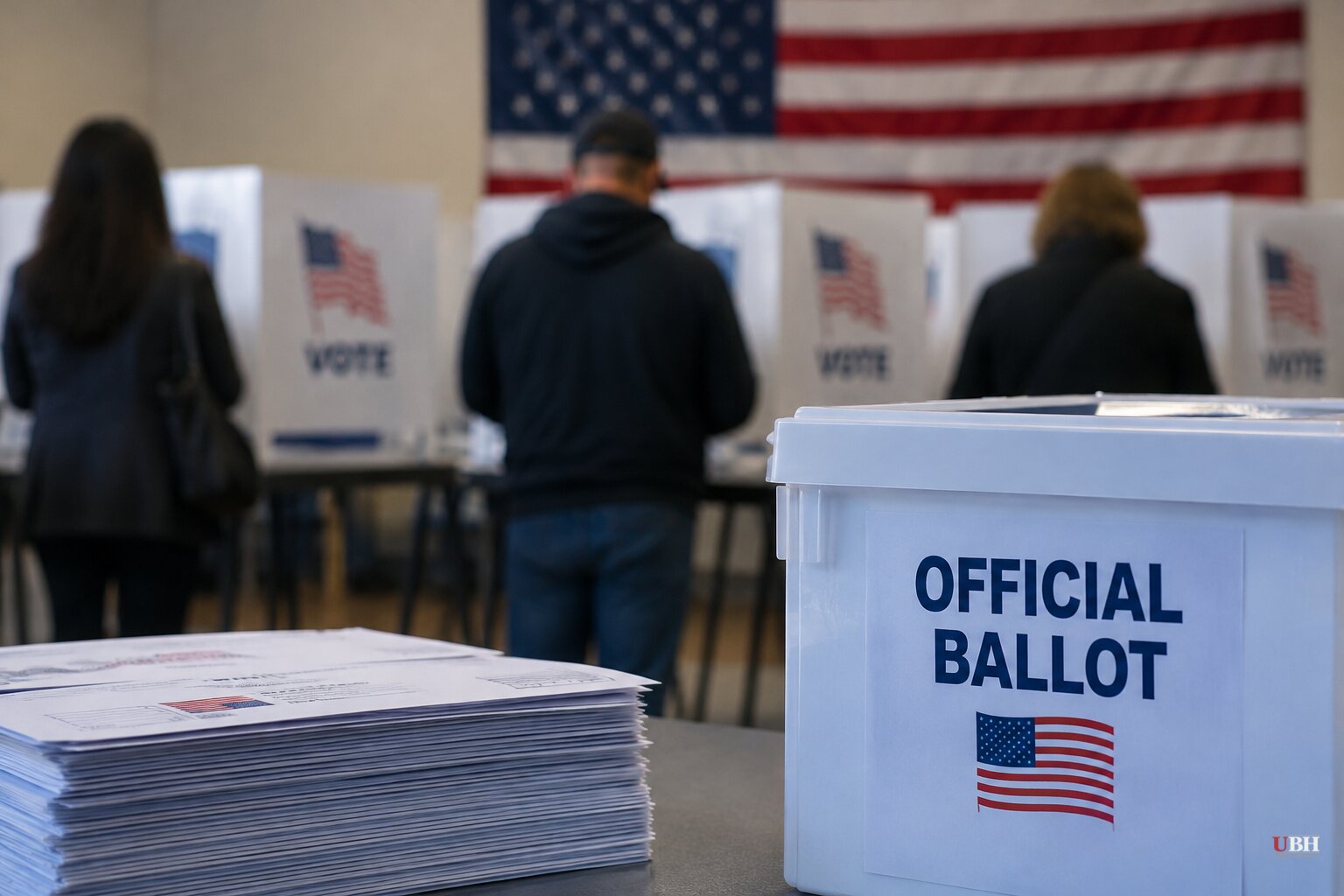
Since the Justice Department notified counties in at least five states that it plans to monitor the Nov. 3 midterms, the question has shifted to what the department might do once voting ends. Attorney General Todd Blanche addressed that on Thursday, Oct. 22, and did not close the door.
Speaking to reporters in Norfolk, Va., Blanche was asked whether there was any scenario in which the department would weigh in on state certification or try to block states from certifying.
"Is there any scenario? Yes. Of course, there are scenarios that we could all come up with hypothetically, you know, some doomsday scenario, for example," Blanche said.
He added: "It is not DOJ's intention, and it's never our intention, to improperly interfere with elections or the state certification process. But to say that there's no circumstances that we would ever do that, of course I'm not going to say that."
He also said: "Am I planning my days around the election to be somewhere to not certify? Of course not, no." And he said it would be improper to make "conclusory statements about what's going to happen in the future because I have no idea what's going to happen in the future."
What the law says
U.S. elections are run and certified by state and local officials. The Justice Department's election role is limited, chiefly to enforcing civil rights protections and prosecuting individuals who violate election law.
Private citizens and candidates can sue to challenge ballots or results. No federal statute gives the department power to challenge ballots or delay certification. Democracy Docket, a voting-rights outlet, says the federal government has no authority over certification at all.
Blanche did not cite any legal authority for a department move on certification. He framed the answer as a refusal to make an absolute promise, not as a plan.
Litigation against states
NBC News reported this week, citing unnamed sources, that the department is weighing more election-related lawsuits against states, possibly before or after Election Day. That would follow the department's suit against California. The suit seeks to compel state officials to review 18,000 registered voters the department suspects could be noncitizens.
California mails a ballot to every registered voter automatically. So do Colorado, Hawaii, Nevada, Oregon, Utah, Vermont and Washington state, along with Washington, D.C. President Donald Trump has repeatedly targeted mail voting in his fraud claims, though he votes by mail himself in Florida.
Voting experts quoted by NBC describe noncitizen voting as relatively rare. The administration's position is that it is a real problem that has been undercounted.
The department's case
Blanche has argued that the monitoring and the noncitizen-voting push are routine enforcement. In an Oct. 6 interview with The Epoch Times, he said the department has monitored elections since the 1960s and is "not monitoring Republicans" or Democrats, but "every state." Assistant Attorney General Harmeet Dhillon said in September the department plans to send 1,000 monitors, which she called the largest such effort in its history.
Blanche said the department has indicted nearly 100 people in 15 states in its noncitizen-voting effort. Of critics who point to the small number of cases, he said: "At some point, the critics have to accept the fact that we have a problem." He called a voter ID law an easy fix that would give investigators "a lot less to investigate."
On Fox News Sunday, he called it "completely false" that armed federal agents would monitor the elections. "They're going to be election monitors as they are every single time," he said.
The concern from Democrats
Democrats and voting-rights groups point to a pattern of answers they say leave too much open. At his July confirmation hearing, Blanche would not commit to keeping immigration agents away from polls, saying only he would "follow the law." Homeland Security Secretary Markwayne Mullin said in September that ICE arrests at polling places were possible.
A dozen Democratic senators then wrote to Mullin, Blanche and Defense Secretary Pete Hegseth, saying that deploying agents at polling places would be illegal. Last week, Sens. Alex Padilla, Dick Durbin and Sheldon Whitehouse asked Blanche to commit that the department would not seize ballots or voting machines before states certify results.
The Washington Post reported this week that a group of former national security officials has advised state governments and members of Congress on how to prepare if the administration tries to interfere in the midterms.
One day before the Norfolk remarks, Blanche told the New York Post podcast "Pod Force One" that there was a "misperception" of independence between the Justice Department and the White House. "I work for President Trump," he said.
What comes next
States have until after Nov. 3 to count and certify results under their own laws and deadlines. Whether the Justice Department files additional suits against states before or after Election Day, as NBC's sources describe, remains undecided. Blanche has said he is not planning to be anywhere to block a certification.
The Padilla, Durbin and Whitehouse request on ballots and voting machines also stands as a direct test. The department has not made that commitment in the remarks Blanche has given so far.
Sources used for this briefing
8 links from 8 independent newsrooms (syndicated copies of the same report count once)
These are the sources it draws on, linked so you can verify.


