
Unbiased headlines. Facts, not spin.
Unbiased Headlines is an independently owned news organization. We bring you the facts, not opinions, written fresh from 110+ named sources. Sources linked so you can verify it yourself.
 politics
Major Story (8/10)
Macron Says 'Illegitimate' Protests Will Be Banned as French 10-Year Yield Rises Above U.S. Treasury Yield
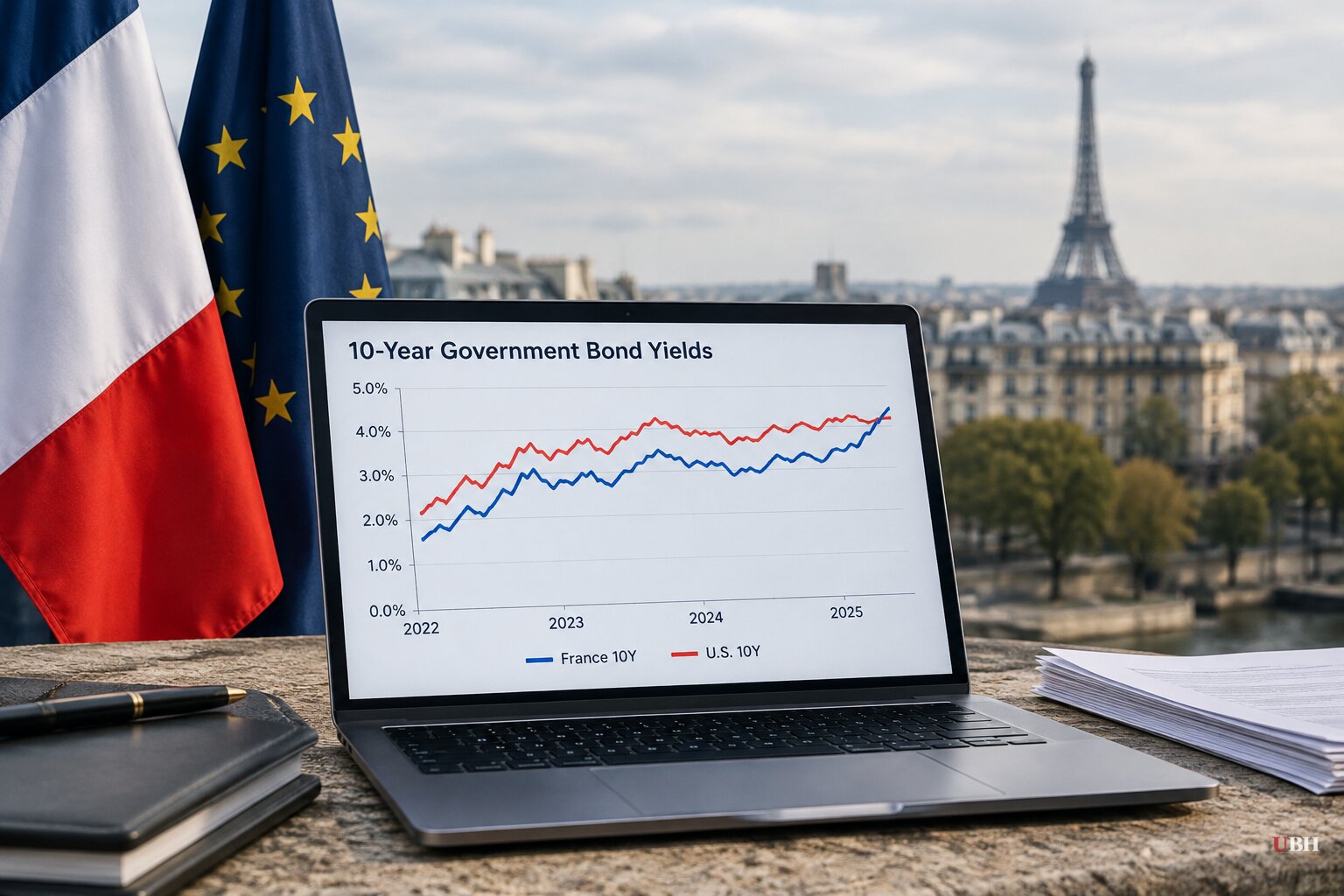
French President Emmanuel Macron said Thursday, Oct. 22, that "illegitimate" protests will be banned in the coming days. He blamed "seditious" ultra-left groups and vandals for the Oct. 17 riots and looting. The announcement came as France's 10-year bond yield climbed above the U.S. 10-year Treasury yield for the first time since 2013.
Speaking after a morning meeting with intelligence chiefs and senior ministers, Macron said union-organized demonstrations would still be allowed, though they could be rerouted to protect businesses. Prefects, the government's regional representatives, can ban gatherings by groups lacking what he called the "legitimacy" to hold them.
"Last Saturday we had political and seditious acts by ultra-left groups whose aim is to bring down the Republic," Macron said.
He also said a defence council will meet Friday under his chairmanship, and that "we will take further decisions."
What the government is admitting
Macron acknowledged "shortcomings" in the response to last weekend's unrest, citing "an element of surprise." He said the government must apply those lessons this weekend.
The numbers back that up. Interior Minister Laurent Nuñez had expected about 200,000 people in the streets on Oct. 17. Authorities counted 550,000, and organizers claimed about 800,000. Nearly 60,000 security personnel were deployed, yet looting and arson still hit shops and public buildings in Paris, Bordeaux, Marseille, Lyon and elsewhere.
In Limoges, a deliberately set fire badly damaged the historic city hall. Two people have since been arrested in that arson attack, according to French officials.
Nuñez said Wednesday that some military forces would be deployed to help maintain order. For Saturday, Oct. 24, soldiers from the Sentinelle force and elite police and gendarmerie units such as RAID and GIGN are set to reinforce security.
Bans, curfews and what is planned
Protests planned for Thursday in Paris, Lyon, Lille and Grenoble were banned. The Paris ban runs until 8 p.m. local time and covers the Elysée palace, both houses of parliament, the main train stations and the hardest-hit downtown districts. Paris police cited the risk of a repeat of the street violence.
All Saturday protests in Lyon are banned. Some other Saturday marches are also off the table, local authorities said.
Student groups say they will keep mobilizing despite the autumn school break. The UNEF student union has called for Saturday rallies. The Yellow Vest movement has filed plans for a march through central Paris.
In Orleans, authorities are bracing for trouble because the far-right National Rally is due to hold an annual meeting there while unions and left-wing groups plan counter-demonstrations.
Shops in central Paris are boarding up windows. Hermes said it has stepped up security at its French stores. A third straight night of local curfews passed without major incidents.
Some see the demonstration bans as an infringement on the right to protest. Student groups are pressing ahead regardless.
Who was actually behind the violence
Macron's "ultra-left" framing is the government's account. The Paris police prefecture described people detained in the days after the riots as "essentially young people from the suburbs looking for looting opportunities." The French political class has split into a blame game, with the government pointing at far-left groups.
Protesters themselves cited the cost of living, school conditions, fuel prices and the state of public services. Reuters described the unrest as exposing a deeper malaise over energy costs and household budgets.
Trump, Washington and the foreign reaction
Macron told reporters Wednesday that foreign disinformation prompted comments "as unacceptable as they were stupid from many people, including foreign leaders." He clarified that he meant Trump "among others."
Trump had posted on Truth Social that the unrest was the work of "migrants, jihadists, and Communists" and told Europe to close its borders. Vice President JD Vance and Speaker Mike Johnson have also cited France on the campaign trail ahead of the U.S. midterms. They argue Democratic immigration policies would raise similar tensions.
Iran's Foreign Minister Seyed Abbas Araghchi urged Macron to listen to the protesters' demands. Rights groups say Iranian authorities killed hundreds of people in a recent crackdown on demonstrations there.
Macron has also faced criticism at home for a Gulf tour this week. Fox News reported that he attended a Celine Dion concert in Nanterre on the Friday night before the riots.
The bond market
The yield on France's 10-year government bonds rose 11 basis points Thursday morning to 5.113%, a fresh 24-year high, CNBC reported. That put it above the 10-year U.S. Treasury yield for the first time since 2013.
Investors doubt France will pass the fiscal consolidation needed to shrink its deficit. Parliament is debating the 2027 budget. The government lacks a majority and may resort to special powers.
The next checkpoints are Friday's defence council and Saturday's marches in Paris, Lyon and other cities. Both will show whether the new bans hold and whether the weekend passes more quietly than the last.
Sources used for this briefing
8 links from 8 independent newsrooms (syndicated copies of the same report count once)
These are the sources it draws on, linked so you can verify.


