
Unbiased headlines. Facts, not spin.
Unbiased Headlines is an independently owned news organization. We bring you the facts, not opinions, written fresh from 110+ named sources. Sources linked so you can verify it yourself.
 politics
Major Story (8/10)
Israel Votes Oct. 27 With No Bloc Near 61 Seats, and Netanyahu's Rivals Share His View of Iran
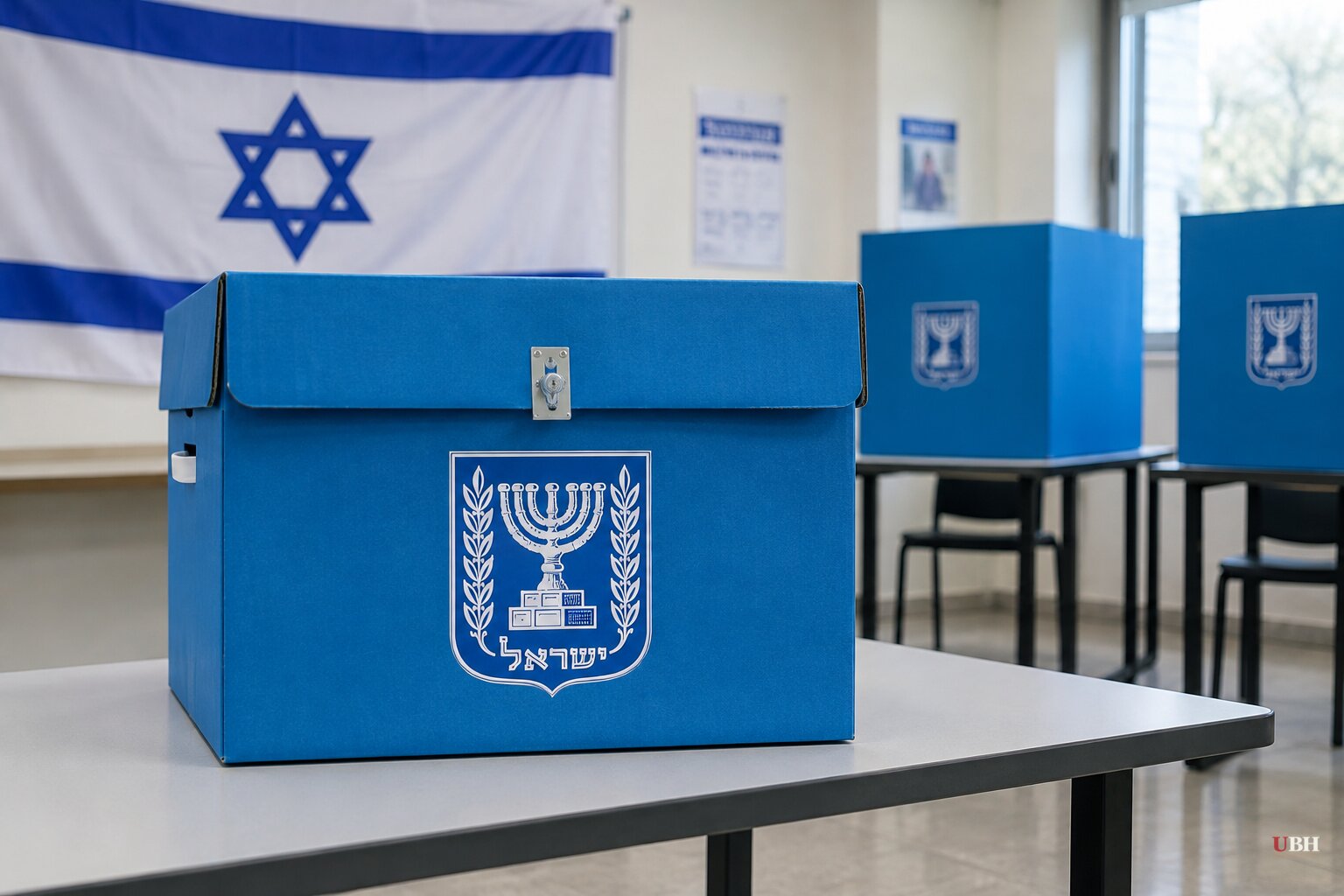
Israel holds its first general election since the Oct. 7, 2023 Hamas attack, and the wars that followed in Gaza, Lebanon and Iran, with polls open Tuesday, Oct. 27 from 7 a.m. to 10 p.m. in most places.
The vote is largely a referendum on Prime Minister Benjamin Netanyahu. Voters are weighing whether he bears responsibility for the failures that let Hamas kill roughly 1,200 people and take 251 hostages, or deserves credit for the military response that followed. His corruption trial is a lesser factor.
How the vote works
Israelis vote for parties, not a prime minister. The 120-seat Knesset needs 61 seats for a majority, and no party has ever won that outright. About 7.3 million citizens are eligible, according to Israel's Central Elections Committee. Any party under 3.25 percent of the national vote gets nothing, which is why small parties merge before every election.
After the results, parties have 28 days to assemble a 61-seat coalition, with a possible extension of up to 14 days. If nobody manages it, the country votes again.
Polls show neither Netanyahu's Likud-led bloc nor the opposition anywhere near 61. Likud faces former military chief Gadi Eisenkot's new centrist Yashar party. Former Prime Minister Naftali Bennett and opposition leader Yair Lapid are running a joint slate.
Smaller parties may decide it. Itamar Ben-Gvir's Jewish Power is a key member of Netanyahu's bloc. Shas and United Torah Judaism are the Orthodox partners. Avigdor Lieberman's Yisrael Beiteinu, Yair Golan's Democrats, and the Arab parties Ra'am and the Joint List could all matter if neither side gets close.
Netanyahu has been prime minister for nearly 19 of the past 30 years. Gadi Taub, co-host of Tablet's "Israel Update" podcast, told Fox News Digital voters will ask who can best continue the war against Iran's regional network: "The job is not finished."
Eylon Levy, a former Israeli government spokesman, described an electorate angry about Oct. 7 responsibility and about the economic and social cost of the wars since.
Where the challengers differ
On security, the gap is narrow. Reporting carried by the New Zealand Herald, from The New York Times, says Netanyahu, Eisenkot and Bennett all see Iran as the gravest threat and all reject a Palestinian state.
Mairav Zonszein, an Israel analyst at the International Crisis Group, said opposition politicians "tacked to the right during a lot of the wars as a way to criticise Netanyahu." On the Palestinian issue, she said, "the political consensus has never been more united."
The differences are in degree. Eisenkot, who left Netanyahu's wartime cabinet saying the prime minister lacked a clear strategy, says security zones in Lebanon, Syria and Gaza are "a tool and leverage to advance Israel's national interests, not to stay there for generations." His son and two nephews were killed serving in Gaza.
Gaza is the sharpest test. A year after Trump declared a ceasefire, Israeli forces control about 70 percent of the strip. Hamas still has armed fighters and runs the rest, where most residents live. Netanyahu says Israel will not rebuild or withdraw until Hamas is fully disarmed.
Eisenkot has promised that within 18 months of taking office Hamas "will no longer rule the Gaza Strip," through Trump's framework or military means. His line against the prime minister: "As long as Benjamin Netanyahu is in power, Hamas will remain in power."
Bennett has vowed not to "move a millimetre from the Yellow Line," the boundary of the Israeli-controlled area, until Hamas is completely disarmed.
What analysts expect on Iran
A Reuters analysis quotes regional policymakers and analysts who say the election may change Israel's leader but not its strategy. They describe a doctrine built on breaking Iran, holding buffer zones beyond Israel's borders and using force to deter enemies.
Aviv Bushinsky, a former Netanyahu adviser, was blunt. "If Netanyahu is elected, he'll do whatever he thinks he wants to do," he said. "The wars against Iran, Hamas and Hezbollah will continue."
The analysts cited by Reuters say a Netanyahu win backed by far-right partners could embolden him to step up the war with Iran and tighten Israel's grip on the West Bank. On Sunday, Netanyahu said Israel must prioritize "prevention and offence over containment and defence," including pre-emptive strikes to thwart emerging threats.
Washington's stake
President Trump has put his weight behind the incumbent. His endorsement said "Iran has been systematically destroyed, both Militarily and Financially, and unless they change their ways, rapidly, we will soon finish the job." He also warned that replacing Netanyahu could leave Washington confronting Tehran alone.
Netanyahu answered in a call with Trump: "Donald, you said we have a job to finish, and we'll finish it together."
War Secretary Pete Hegseth made an unannounced Monday visit to Israel and met Netanyahu at Ovda Air Base. He declined to disclose the conversation. He told reporters: "We've done historic devastation to their military capabilities, but if they're not willing to give it up and the president asks to go even further, we're prepared."
The New York Times has reported that U.S. and Israeli planners have drafted a short, intense campaign of about three days, to follow the Nov. 3 U.S. midterms. Trump has pledged no new American strikes before that date and has not authorized an offensive.
The calendar is the open question. Israel votes Oct. 27, and coalition bargaining typically takes weeks. The U.S. buildup is expected to be in place by early November. Whoever is negotiating to lead Israel's government on Nov. 3 may be the one facing a decision on Iran.
Sources used for this briefing
7 links from 7 independent newsrooms (syndicated copies of the same report count once)
These are the sources it draws on, linked so you can verify.


