
Unbiased headlines. Facts, not spin.
Unbiased Headlines is an independently owned news organization. We bring you the facts, not opinions, written fresh from 110+ named sources. Sources linked so you can verify it yourself.
 politics
Major Story (8/10)
Federal Judge Bars DHS Election Field Interviews of Suspected Citizens in 9 States
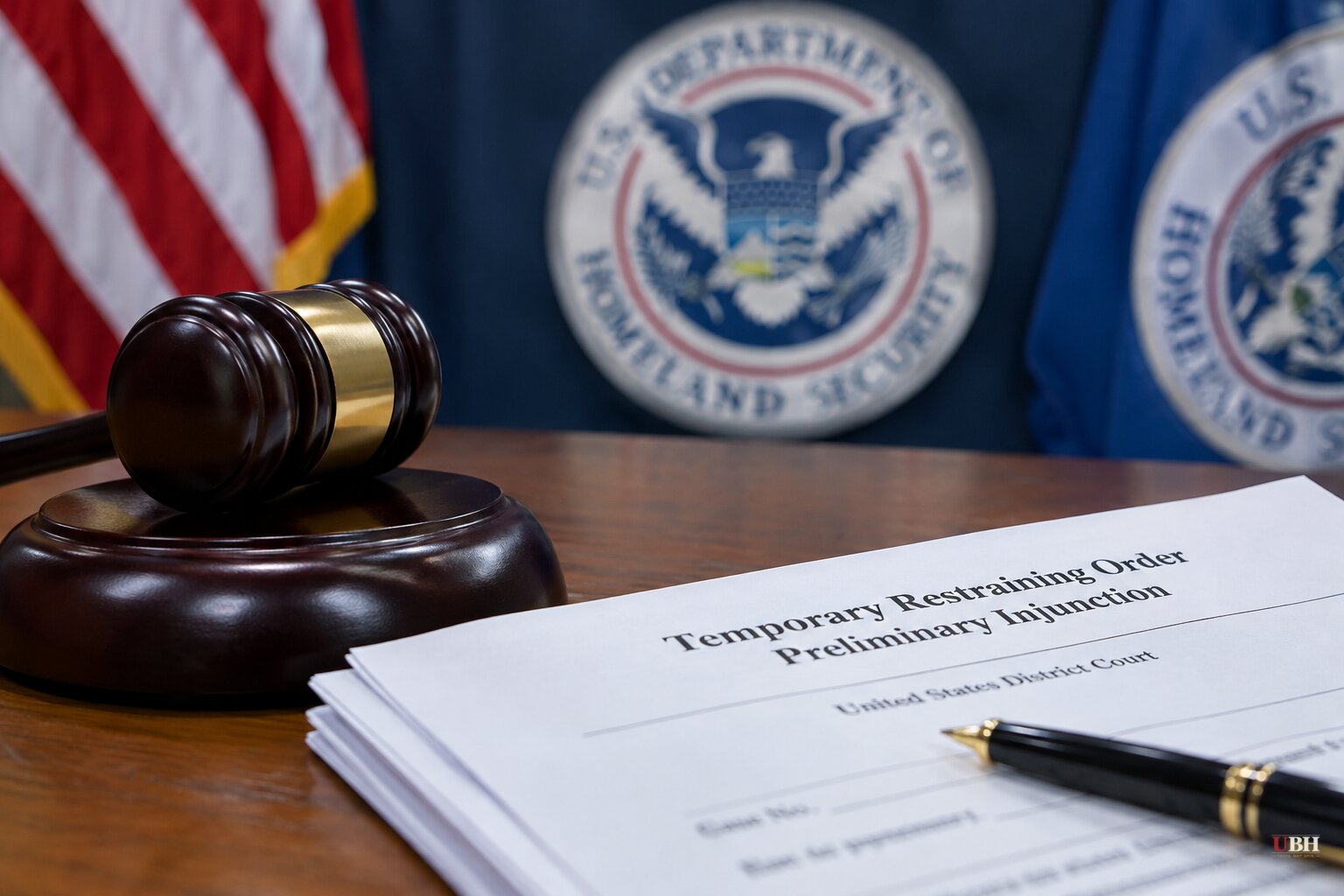
Since CBS News reported on Oct. 21 that Homeland Security Investigations agents have been knocking on doors in at least six states asking about immigration status and voting, the program has landed in federal court. A judge has now ordered part of it to stop.
U.S. District Judge Araceli Martínez-Olguín of the Northern District of California granted a preliminary injunction on Oct. 21. It bars DHS election-related field operations and interviews involving people federal officials "know, suspect or should reasonably know or suspect are U.S. citizens."
The order covers California, Connecticut, Georgia, Missouri, Nevada, New York, Pennsylvania, Washington and Wisconsin. Those are the nine states targeted by a DHS enforcement surge aimed at noncitizen voting.
What the judge ordered
The order is stayed until 5 p.m. Friday, Oct. 23. That gives the administration time to appeal. Once it takes effect, it is set to last through Election Day on Nov. 3.
The plaintiffs are the California Nurses Association, National Nurses United, the City and County of San Francisco, Santa Clara County and the Voto Latino Foundation. The judge found the nursing unions likely to succeed on their claim that the enforcement actions violate the Voting Rights Act's protections against intimidation tied to voter assistance and mobilization.
She wrote that there is an "objectively reasonable fear" that these law enforcement practices could intimidate U.S. citizens taking part in voter mobilization efforts.
The ruling is narrower than a blanket halt. The judge said it does not prohibit federal authorities from investigating unlawful voting in federal elections. It limits operations that risk targeting eligible citizens and chilling the people who help others register and vote.
The data problem
The core of the ruling is the quality of the target list. The judge wrote that "at issue here is the reliance on admittedly flawed and incomplete data to create a list of individuals for HSI to interview in the months leading up to an election."
She noted that no federal database records the citizenship status of U.S. residents. "Even under the best conditions, there is a high likelihood of error in review," she wrote.
Then there is the pace. According to the ruling, agents during the surge were ordered to complete a minimum of 40 suspected-subject reviews. Officers were to take no more than twelve minutes to clear a person from the target list using commercial databases. Those time limits, the judge wrote, "further exacerbate the risk of error."
She also wrote that DHS's data alleging hundreds of thousands of possible illegal voters "is widely known to inadvertently include U.S. citizens." In her words, that "leaves citizens afraid that their name will be wrongly included in the hundreds of thousands identified for investigation."
The judge weighed the competing interests directly. "The public's interest in safe elections, free from interference or intimidation, far exceed Defendants' purported interest in combating unlawful voting by non-U.S. citizens," she wrote.
Beau Tremitiere, an attorney with Protect Democracy, which represents the groups that sued, said the order is "a serious protection: the current policy targets known naturalized citizens." He said it should also force DHS to stop presuming others are viable targets when there are signs of citizenship.
The administration's side
The DOJ did not respond to a request for comment on the ruling. CNN said it had reached out to DHS.
The administration points to a growing docket of cases. U.S. Attorney Bill Essayli said at a California press conference that the Justice Department has charged 113 noncitizens across 20 states with illegal voting and registration offenses in the last seven weeks. In California, the DOJ announced arrests of 28 green card holders in a sweep dubbed "Operation Protect the Vote."
"This is not a conspiracy theory. This isn't made-up stuff. These are facts," Essayli told reporters.
One defendant, 72-year-old Belizean national Alexander Muñoz, is accused by prosecutors of falsely claiming citizenship, registering in 2019 and voting in 2020, 2022 and 2024. Those are allegations. Court records on any conviction have not been cited.
DHS Secretary Markwayne Mullin has said the administration is probing 1,620 cases of noncitizen voting. House Republicans have separately pressed New Jersey Gov. Mikie Sherrill, a Democrat, over roughly 6,600 noncitizens they say were registered through the state's motor-vehicle system, about 400 of whom cast ballots.
The administration's critics describe the scale differently. Studies and prosecutions have documented noncitizen ballots as rare, according to the Fox News account of the push. Charged cases so far number in the low hundreds nationwide, against a federal target list in the hundreds of thousands.
Other fronts in the same fight
The injunction is one of several legal collisions over federal election-integrity efforts. On Oct. 15, the Justice Department sued to force California to set aside ballots returned by more than 20,000 registered voters whom federal investigators labeled "likely noncitizens," pending citizenship verification. Prosecutors noted that California mails a ballot to every registered voter.
In a separate suit filed in federal court in Washington, D.C., the League of Women Voters, the Electronic Privacy Information Center and the League of United Latin American Citizens allege DHS has obtained voter files from at least 47 states and handled them in violation of federal law. The complaint says officials in 30 states had earlier refused federal demands for voter information. It asks the court to declare the collection illegal and order DHS to delete the data.
DHS has not publicly answered those allegations in the sources available as of Oct. 22.
What happens next
The clock is short. The order bites at 5 p.m. Friday, Oct. 23, unless an appeals court or the district judge pauses it. The DOJ has not said whether it will seek emergency relief.
If it does not, agents in nine states, including California and Pennsylvania, will have to stop interviewing people they have reason to believe are citizens for the final stretch before Nov. 3. Who counts as someone they "should reasonably suspect" is a citizen is the question the injunction leaves for DHS to answer.
Sources used for this briefing
5 links from 5 independent newsrooms (syndicated copies of the same report count once)
These are the sources it draws on, linked so you can verify.


