
Unbiased headlines. Facts, not spin.
Unbiased Headlines is an independently owned news organization. We bring you the facts, not opinions, written fresh from 110+ named sources. Sources linked so you can verify it yourself.
 politics
Major Story (7/10)
Supreme Court Hears Colorado Catholic Preschool Funding Case Nov. 3
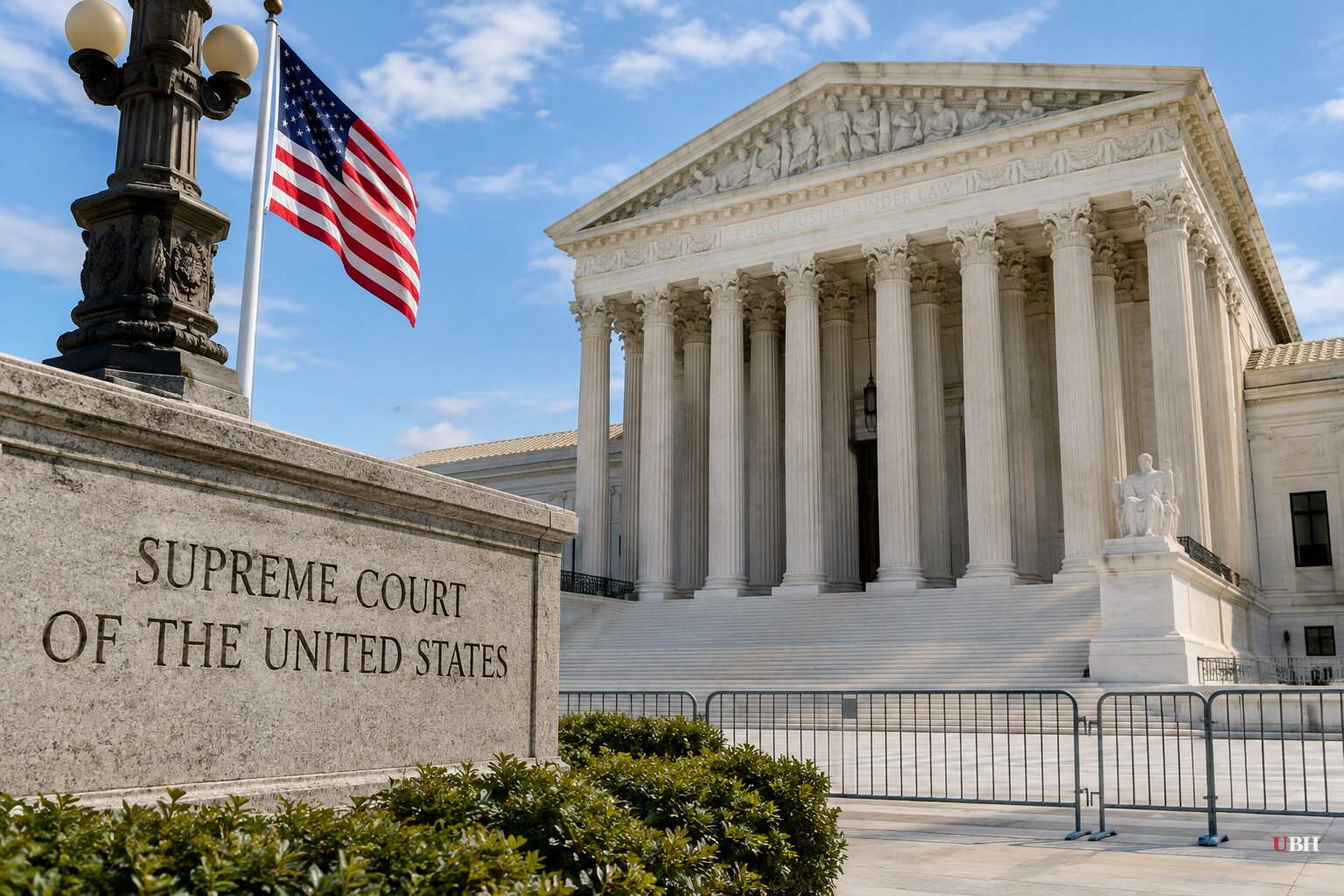
The U.S. Supreme Court will hear oral arguments on Nov. 3 in a case that asks whether a state can condition public preschool money on a nondiscrimination pledge that a Catholic school says it cannot sign.
The case is St. Mary Catholic Parish v. Roy. The parties are two Archdiocese of Denver parishes, St. Mary in Littleton and St. Bernadette in Lakewood, along with the archdiocese and Catholic parents, against Colorado officials.
What Colorado's program requires
Colorado launched its Universal Preschool Program in 2023. It provides up to 15 hours a week of funded pre-K for the state's four-year-olds and began as a ballot measure. Public and private providers, including faith-based schools, can participate if they follow program rules.
One rule says each provider must give eligible children "an equal opportunity to enroll and receive preschool services regardless of race, ethnicity, religious affiliation, sexual orientation, gender identity, lack of housing, income level, or disability."
The parishes say they can't comply. In their filing to the Supreme Court, they say they would otherwise be eligible providers and are "excluded solely because of their religious exercise." They describe that exercise as ensuring enrolling families support Church teaching on sex and marriage, and treating four-year-olds according to their biological sex.
The families
The human cost, as the parents tell it, is money. Dan and Lisa Sheley have seven children, four of them at St. Mary, and all four went through its preschool. Dan Sheley told CBS Colorado the couple estimates they lost out on about $24,000 in pre-K funding. Parent Erika Nagle put her own figure at $18,000.
Lisa Sheley said the school accepts "any student that is willing to follow our Catholic morals and beliefs." She said the ballot measure was titled "Universal for All" and that she understood it to mean "the school of your choice." Nagle called the exclusion of Catholic families "shocking."
Colorado's position
The state's Department of Early Childhood declined to comment on active litigation. In court filings, it said the equal-opportunity requirements "ensure that all Colorado parents, Catholic parents as well as same-sex parents, know that their children will not be turned away, because of their protected-class status, from the publicly-funded preschool that best meets their families' needs."
The lower courts agreed with the state. A federal district court and the 10th Circuit both ruled that Colorado was not targeting Catholic schools for their faith. They treated the requirement as a neutral rule that applies to everyone who takes public money.
The 10th Circuit also distinguished the program from earlier Supreme Court cases. Colorado does not bar religious schools outright, the court noted. Faith-based providers can apply if they follow the same rules as everyone else.
The precedents the schools lean on
The parishes point to a run of Supreme Court decisions on religion and public money. Trinity Lutheran v. Comer came in 2017. In Espinoza v. Montana Department of Revenue (2020), the Court held that a state "cannot disqualify some private schools solely because they are religious."
In Carson v. Makin (2022), the Court said a state's antiestablishment interest "does not justify enactments that exclude some members of the community from an otherwise generally available public benefit because of their religious exercise."
Damon Root of Reason expects the Court to follow that pattern and hold that a state offering an educational benefit "must make some sort of accommodation for the religious views of the recipients." That is his prediction, not a ruling. Colorado's argument is that those cases involved exclusion because of religious status, while its rule applies to conduct, and that is the distinction the 10th Circuit relied on.
Colorado's record at the Court
The case is the latest from a state that keeps landing in front of the justices. Mark Satta, a Wayne State University law and philosophy professor, notes that the Court has heard fewer than a dozen cases weighing free speech or religious freedom against LGBTQ protections over 30 years. Five came from Colorado.
The first was Romer v. Evans in 1996, where the Court struck down a 1992 state constitutional amendment, passed with roughly 53% of the vote, that barred anti-discrimination protections for gay, lesbian and bisexual people. Justice Anthony Kennedy wrote that it appeared to stem from animus.
Since then, Colorado has defended its own LGBTQ protections three times and lost each time. In Masterpiece Cakeshop v. Colorado (2018), the Court ruled 7-2 for a baker, on narrow procedural grounds. In 303 Creative v. Elenis (2023), it ruled 6-3 that a web designer had a free speech right to decline certain work. In March 2026, Chiles v. Salazar produced an 8-1 ruling against Colorado's ban on conversion therapy for minors.
St. Mary differs from those cases in one respect. Nobody is being fined or ordered to speak. The case turns on whether a state can attach conditions to a voluntary subsidy, and whether a condition that touches religious practice counts as a penalty on that practice.
What happens next
Arguments are set for Nov. 3. A decision is not expected that day. The justices will have to decide whether Colorado's rule is a neutral condition on taxpayer money, as the district court and 10th Circuit found, or an exclusion of Catholic providers because of their religious exercise, as the parishes argue. The answer will govern what other states can require of religious schools that take public funds.
Sources used for this briefing
7 links from 6 independent newsrooms (syndicated copies of the same report count once)
These are the sources it draws on, linked so you can verify.


