
Unbiased headlines. Facts, not spin.
Unbiased Headlines is an independently owned news organization. We bring you the facts, not opinions, written fresh from 110+ named sources. Sources linked so you can verify it yourself.
 politics
Notable (6/10)
Event date: October 19, 2026 ·
Polish Sejm Sends Content-Blocking Bill to President Nawrocki, Who Can Sign, Veto or Refer It to the Constitutional Tribunal
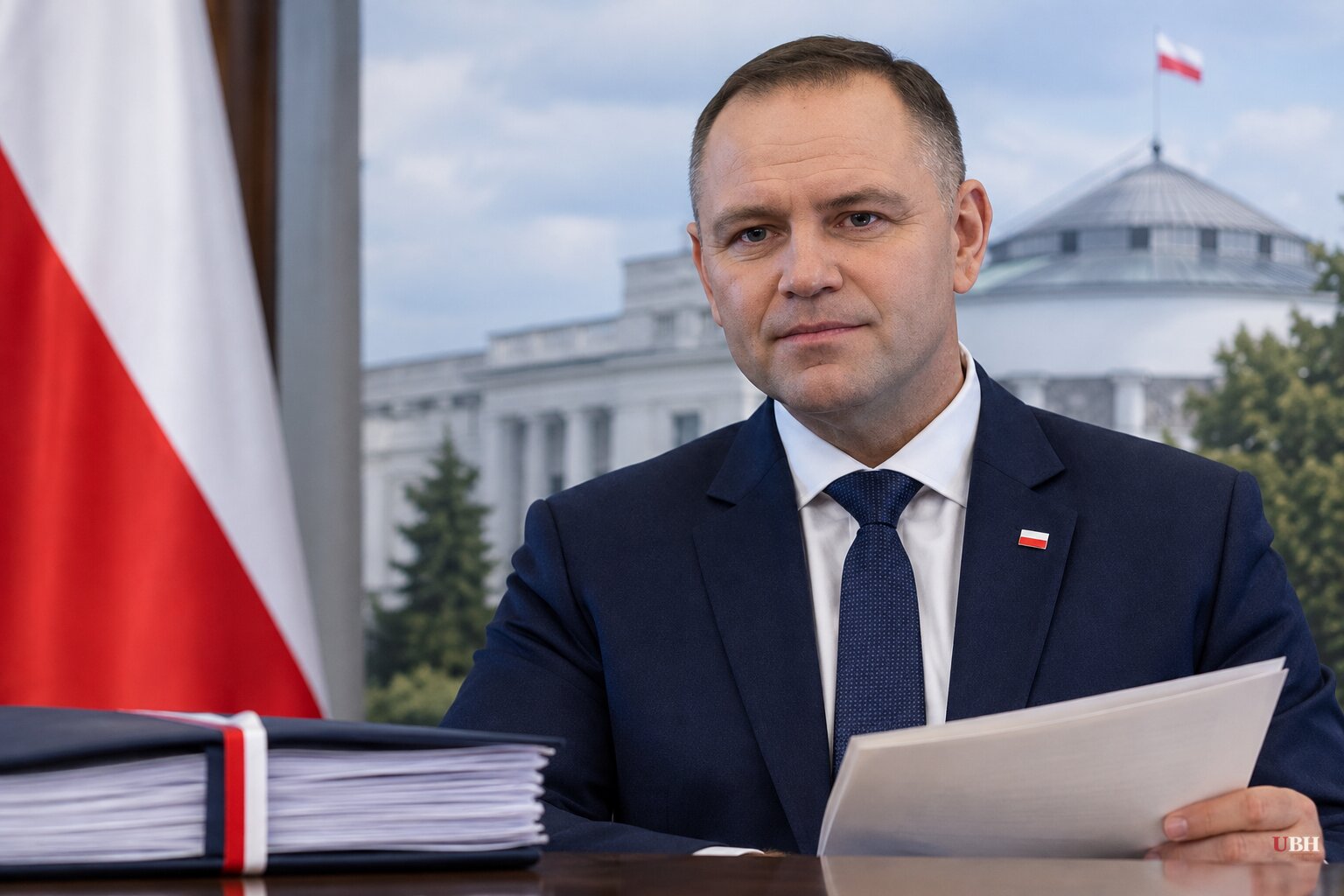
Poland's lower house of parliament finished its work on a content-blocking bill on Thursday, Oct. 22. The Sejm adopted nine of the ten amendments the Senate made, which sends the measure to President Karol Nawrocki.
He can sign it, veto it, or refer it to the Constitutional Tribunal.
What the bill does
The bill amends Poland's Act on Providing Electronic Services (Sejm print no. 2693). It sets up an administrative fast-track for ordering platforms to block or remove content that is illegal under Polish law.
The president of the Office of Electronic Communications (UKE) can issue a blocking order within 48 hours of a request. The chair of the National Broadcasting Council (KRRiT) has parallel authority over video-sharing platforms.
Requests can come from prosecutors, police, the National Tax Administration, the Border Guard, ordinary users and copyright holders, according to Tech Times. Platforms must comply and blocked domains go into a UKE-maintained register.
A user whose content is blocked can ask for reinstatement, but only after going through the platform's own complaint process first.
For content depicting the sexual abuse of minors, orders are enforceable immediately. The bill also covers identity theft, fraud and copyright infringement.
The no-court-order provision
The sharpest dispute is over one Senate amendment. It covers content involving violence or unlawful threats based on race, national or ethnic origin, or religion, including threats and harassment on social media. For those cases, the UKE president or the KRRiT chair decides, not a court.
Tech Times describes the category as speech promoting political violence and says no other EU member state has adopted an administrative fast-track that expressly covers it without a prior court order. That comparison is Tech Times' own claim.
The Senate also adopted an opposition amendment that shortens the evidence deadline in the most serious cases subject to immediate enforcement. Platforms get 24 hours instead of 14 days. Content authors get 24 hours instead of two days.
The Senate also cut the gap between publication and entry into force from six months to three.
The objections
The opposing position comes from Nawrocki and from Poland's Supreme Court. Tech Times reported that Nawrocki called a narrower version of the bill "censorship" about nine months ago, and that he vetoed an earlier, combined DSA implementation bill on January 9, 2026, saying he could not sign legislation that amounts to "administrative censorship." It also reported that the Supreme Court flagged the bill as a threat to press freedom and that critics say it goes beyond what the EU's Digital Services Act (DSA) requires.
Dariusz Stefaniuk, vice-chairman of the Law and Justice (PiS) parliamentary caucus, called the provision "absolute censorship" from the floor and announced his party's opposition, Tech Times reported. The governing coalition pushed it through regardless.
The quotes and positions come from those parties as relayed by Tech Times. This article has not seen the Supreme Court's opinion or Nawrocki's original statement.
The bill's backers have an argument of their own. The Ministry of Digital Technologies drafted it to create a procedure for quickly restricting access to illegal content. Poland's delay in implementing the DSA has already exposed it to fines of up to PLN 40 million, about $10.3 million, according to Tech Times. The most urgent categories include child sexual abuse material and fraud, where speed matters.
A user can also petition for reinstatement. Whether that safeguard is fast or meaningful enough is the open question.
A parallel speech dispute
A separate Polish case shows how raw the speech fight already is. The District Prosecutor's Office in Szczecin opened an investigation into events on Oct. 16 outside the Constitutional Tribunal in Warsaw. The case began after Interior Minister Marcin Kierwiński reported suspected crimes against police officers and the prime minister.
Investigators are examining whether TV Republika called for the private information of a female police officer to be published, which could have endangered her or her relatives. They are also looking at whether on-screen tickers and reporter statements contained insulting wording about officers and about Prime Minister Donald Tusk. A third strand covers possible threats to bring criminal cases against officers in order to stop lawful police actions.
No charges have been announced. TV Republika's response was not given in the material reported.
Minister Waldemar Żurek said freedom of speech does not mean permission to break the law or endanger police officers and their families.
At the Friday protest, one female police officer was injured. A knife was found on a detained man during a search. Tribunal head Bogdan Święczkowski has asked Police Chief Commander Marek Boroń to explain the legal grounds for efforts to establish the identity of, and get explanations from, judges and Tribunal staff near the building.
That case is a criminal investigation under existing law, not an application of the new bill. It shows that the government and its political opponents are already clashing over where lawful speech ends.
What happens next
Nawrocki has not said what he will do with the bill. A veto sends it back to parliament. A referral to the Constitutional Tribunal, which is itself at the center of a political dispute, would hold up a law that Poland is under EU pressure to finish.
A signature starts the three-month clock to entry into force, and UKE and KRRiT would then hold orders-in-48-hours authority over a speech category that no court reviews in advance.
Sources used for this briefing
4 links from 4 independent newsrooms (syndicated copies of the same report count once)
These are the sources it draws on, linked so you can verify.


