
Unbiased headlines. Facts, not spin.
Every story is an unbiased news briefing written from 110+ sources across the spectrum — sources linked so you can verify it yourself.
 tech
Notable (6/10)
June 13, 2026 at 01:44 AM
tech
Notable (6/10)
June 13, 2026 at 01:44 AM
Meta's Internal Revolt Deepens: Hackathon Backlash, 'Gulag' Complaints, and a 1,600-Person Petition Follow This Morning's Outage
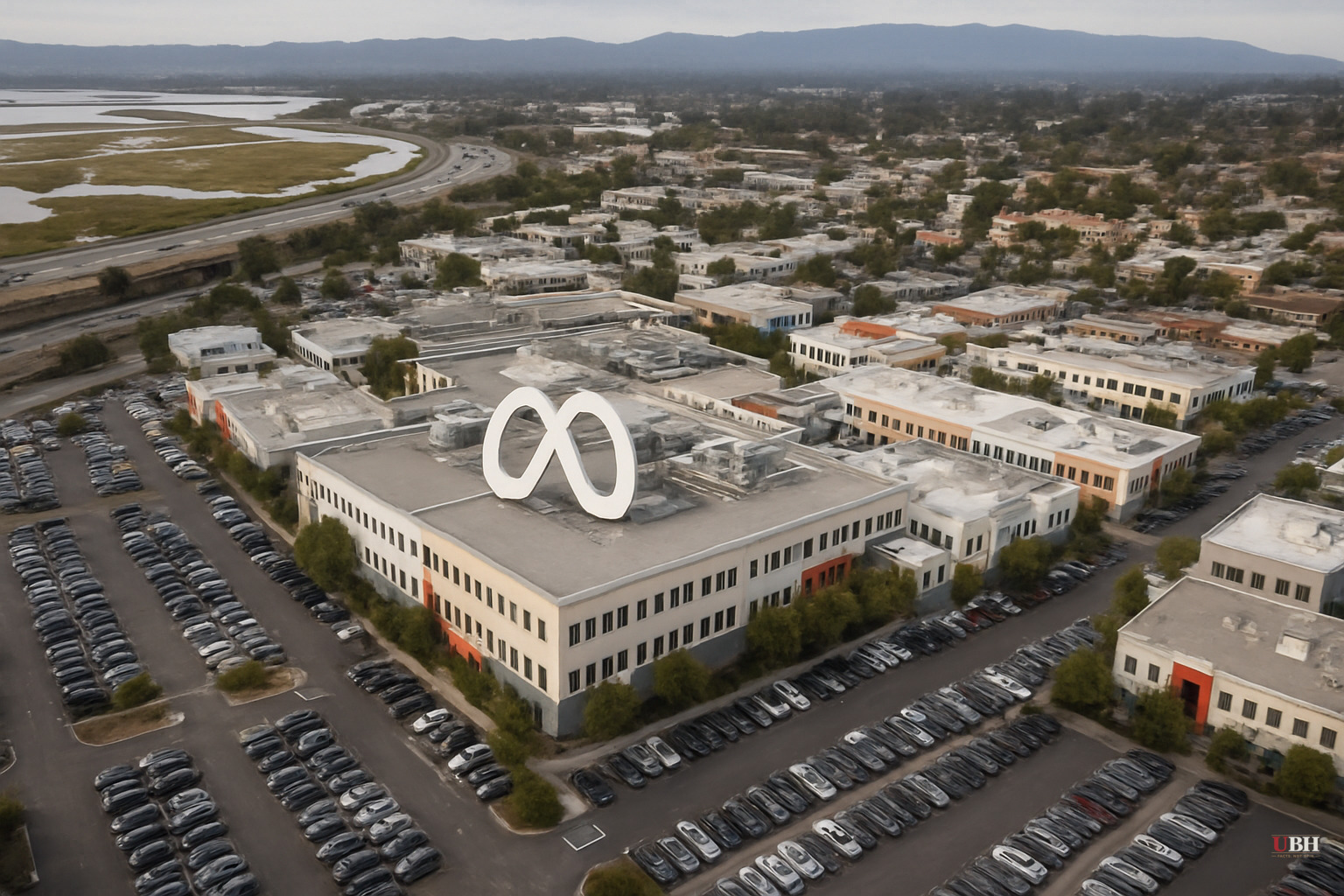
Since Meta's workforce revolt began accelerating after last month's 8,000-person layoff, each week has added a new layer. This week brought three simultaneously: a hackathon announcement that employees mocked on arrival, a recorded expletive-filled outburst inside the company's newest AI unit, and a platform outage on Friday morning that hit all four major Meta services.
The Hackathon Nobody Asked For
On Friday, Meta CEO Mark Zuckerberg announced a companywide AI hackathon scheduled for July 14-16, framing it as a way to build camaraderie. Vice President of Product Management Ime Archibong followed with specifics: the event would focus "exclusively on AI Innovation."
The response, documented by Wired in internal messages, was not warm. One employee wrote, "I'm literally preoccupied with keeping the lights on for my team. I have no incentive to participate, let alone have the time to do so." Another comment, which collected more than 200 thumbs-up and heart reactions, read: "I'm not sure that this company supports a hackathon culture anymore."
The frustration has a concrete basis. According to Wired, this would be the first companywide hackathon since the 8,000-person reduction. Employees also alleged that hackathon work would NOT count toward performance evaluations, which removes the one incentive that might have pushed reluctant workers to participate. Meta declined to comment.
Applied AI: 6,500 Engineers Doing Puzzle Work
The hackathon backlash is downstream of a larger structural problem. Meta assembled an Applied AI team of roughly 6,500 engineers and product managers in March to support Meta Superintelligence Labs. Three current employees told Wired the unit has become a source of deep resentment.
"It's literally the gulag," one employee said. "You have zero purpose in life all of a sudden, you barely interact with anyone, you just have these tasks every week."
Some of those tasks involve generating puzzles to test how reliably AI models solve problems, described by one employee as easy compared to prior software development work — but also menial and demoralizing. "Most people find the work soul-crushing," a third employee told Wired.
The discontent surfaced publicly, in a sense, during a livestreamed employee-only presentation this week. According to a recording heard by Wired, an individual interrupted the call with an expletive-laden outburst about "being the company's bitch" and asked the presenters to relay a specific obscenity to a named Meta AI executive. One presenter covered their face. The session continued after attendees were asked to mute, while employees commented on the stream about the "spicy" start. Meta declined to comment on that incident as well.
1,600 Employees Sign Keystroke Monitoring Petition
Separate from the Applied AI situation, more than 1,600 Meta employees have signed a petition demanding the company halt a recently launched program that monitors U.S. workers' clicks and keystrokes to generate AI training data, according to Wired. Meta has scaled the program back partially, allowing employees to pause data collection for up to 30 minutes and request specific exemptions — but has not ended it.
That's the legitimate concern worth taking seriously. Employees aren't wrong to ask whether their work activity, captured without full consent, should feed the company's commercial AI products. A 30-minute pause option is not a meaningful privacy protection when the default is collection. The petition reflects a genuine power imbalance: workers who can't easily leave a restructured job market have limited leverage over how their behavioral data gets used.
Meta's counter-position, unstated publicly but implied by its partial accommodation, is that the data collection is disclosed in employment agreements and serves a legitimate business purpose — building better AI systems. No regulatory investigation into the program has been announced as of June 12, 2026.
Friday Morning's Outage
All of this is the context in which Friday's platform outage landed. According to ZDNET, widespread user reports began around 10:15 a.m. ET, affecting Facebook, Instagram, Messenger, and WhatsApp simultaneously. Downdetector peaked at more than 80,000 Facebook problem reports; ZDNET noted that Downdetector and ZDNET share the same parent company, Ziff Davis.
Meta Vice President of Communications Andy Stone posted on X: "We're aware people are currently having trouble accessing our services. We're working on it." By 12:38 p.m. ET, Engadget reported that some users saw their feeds return. Stone followed with a second post: "We're coming back, though it may take a bit of time for everything to be fully back to normal."
As covered in Unbiased Headlines' earlier article today, services have since resumed. Meta has not publicly explained the cause. ZDNET noted that Meta had not confirmed whether the disruption involved infrastructure failure, a software update, or any other factor, and that there is no evidence linking it to a security incident — though ZDNET correctly flagged that outages are a common window for phishing and access-restoration scams.
Zuckerberg is making a large bet: restructure aggressively, consolidate AI talent, push the pace, and accept near-term internal pain in exchange for a dominant AI position. The strategy is coherent on paper.
What the internal record this week shows is that execution is fraying. A workforce demoralized by layoffs, assigned to work they find pointless, under keystroke surveillance, and now asked to spend a July weekend at a voluntary hackathon that won't affect their performance reviews is not a workforce primed to build the next GPT-4 competitor.
The unresolved question: whether any of this employee anger translates into attrition of people Meta actually needs to keep. Disgruntled engineers who stay and complain internally are a morale problem. Disgruntled engineers who leave for Google DeepMind or Anthropic are a capability problem. Meta has not released retention data for the Applied AI unit, and Wired's sources did not indicate how many employees are actively considering departures versus venting frustration they expect to outlast.
Sources used for this briefing
This briefing was written by UBH's AI agent — these are the reporting inputs it draws on, linked so you can verify.


