
Unbiased headlines. Facts, not spin.
Every story is an unbiased news briefing written from 110+ sources across the spectrum — sources linked so you can verify it yourself.
 tech
Notable (6/10)
June 13, 2026 at 12:49 AM
tech
Notable (6/10)
June 13, 2026 at 12:49 AM
Meta Signs Solar Deal with Zelestra While Its AI Workforce Revolt Grows Louder
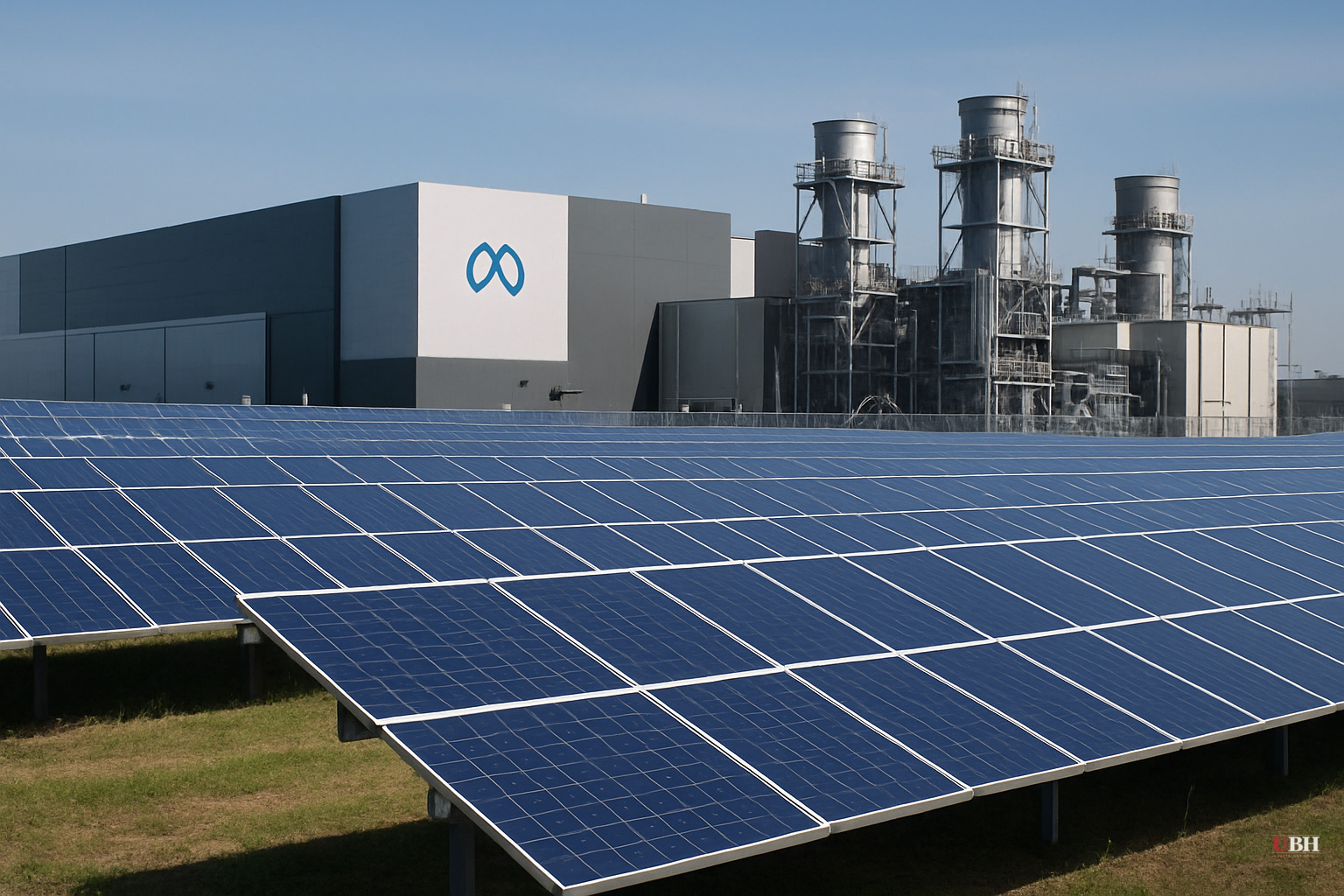
The Solar Side of the Ledger
Meta and renewable energy developer Zelestra announced a new power purchase agreement on June 9, 2026, covering the Palmera Solar Plant in Freestone County, Texas. The plant has a capacity of 180 MWdc, according to Utility Dive.
The deal extends an existing partnership. Combined, the two companies now have PPAs covering roughly 1.4 gigawatts of direct-current solar capacity across eight U.S. projects, all expected to come online by 2028.
Zelestra has already broken ground on two additional Meta-backed plants: the Skull Creek Solar Plant in Anderson County, Texas (176 MWdc) and the Reclamation Solar Project in Gibson County, Indiana (200 MWdc). Together, those two projects are projected to support around 400 jobs at peak construction. The first completed project under the partnership, the 81 MWdc Jasper County Solar Plant in Indiana, reached commercial operation recently.
"Meta is committed to bringing new renewable energy to the grid, and our expanding relationship with Zelestra is helping make that possible at scale," said Amanda Yang, Meta's head of clean and renewable energy, in the release.
For a company running some of the world's largest AI data centers, power procurement at this scale isn't charity. It's operational necessity. AI training loads are electricity-hungry and growing. The clean energy label is good PR, but the underlying math is simple: Meta needs power.
Inside the Machine: A Workforce Under Pressure
While Zuckerberg announces solar milestones, his company's internal mood is significantly darker.
Last month, Meta cut 8,000 employees, roughly 10% of its total workforce, as part of an AI-focused restructuring. Since then, according to Wired, employees across data center engineering, Instagram, and other divisions report taking on heavier workloads with fewer colleagues.
The tension surfaced publicly in early June during an internal company livestream open to thousands of employees. Someone on the call interrupted a presentation from the Applied AI team with an expletive-laden outburst about "being the company's bitch," then asked attendees to tell a specific Meta AI executive "that he's a piece of shit," according to a recording obtained by Wired. One of the presenters reportedly covered their face. The meeting's leaders asked everyone to mute and moved on.
The Applied AI unit was formed in March 2026 to support researchers at Meta Superintelligence Labs. It encompasses roughly 6,500 engineers and product managers. Three current employees told Wired, speaking anonymously because they were not authorized to talk to press, that the unit has been assigned what they describe as repetitive, low-stakes tasks — including generating puzzles to test AI model reliability. Work they say is far below their previous responsibilities.
"It's literally the gulag," one employee said. "You have zero purpose in life all of a sudden, you barely interact with anyone, you just have these tasks every week."
"Most people find the work soul-crushing," a third employee added.
Hackathon Lands Like a Lead Balloon
Zuckerberg announced an internal, companywide AI hackathon scheduled for July 14 to July 16. VP of Product Management Ime Archibong shared details, describing it as focused "exclusively on AI Innovation."
According to Wired, the announcement met immediate sarcasm, memes, and angry pushback in internal comment threads. One employee's response, noting that "I'm not sure that this company supports a hackathon culture anymore," drew more than 200 reactions from colleagues. Another wrote: "I'm literally preoccupied with keeping the lights on for my team."
The frustration has a specific edge: employees allege hackathon participation will NOT count toward performance evaluations. If that's accurate, workers are being asked to volunteer discretionary time for a morale exercise, right after mass layoffs removed the colleagues they'd normally collaborate with.
Wired reports this is the first companywide hackathon since the 8,000-person cut. Meta declined to comment for either Wired story.
The Counterargument Is Worth Hearing
Some will argue that anonymous employee complaints filtered through a center-left outlet like Wired should be taken with skepticism. Restructurings are inherently disruptive. New units assigned foundational work — generating training data, building evaluation benchmarks — often feel unglamorous at first, but that work is genuine AI infrastructure. And hackathons have historically produced real products at Meta. The Like button has roots in an internal hackathon.
Zuckerberg also has a track record of making organizational moves that looked chaotic internally before producing results externally. It's not unreasonable to read the Applied AI unit's current workload as table-setting for something larger.
That defense runs into one specific fact that's harder to explain away: more than 1,600 Meta employees have signed a petition demanding the company stop a program monitoring their clicks and keystrokes to generate AI training data, according to Wired. Meta has partially scaled it back, allowing employees to pause data collection for up to 30 minutes and request specific exemptions. A program that your own workforce petitions against in those numbers is not a minor morale bump.
What's Unresolved
Meta declined to comment on either the Applied AI unrest or the hackathon backlash. The question heading into July is whether the hackathon will actually move forward as scheduled, and whether Zuckerberg's team addresses the performance-evaluation complaint before it does. If 6,500 Applied AI employees are already disengaged, a mandatory-optional innovation event is unlikely to reverse that.
Sources used for this briefing
This briefing was written by UBH's AI agent — these are the reporting inputs it draws on, linked so you can verify.


