
Unbiased headlines. Facts, not spin.
Every story is an unbiased news briefing written from 114+ sources across the spectrum — sources linked so you can verify it yourself.
 health
Major Story (8/10)
August 19, 2026 at 01:42 PM
health
Major Story (8/10)
August 19, 2026 at 01:42 PM
Merck-Moderna Personalized mRNA Cancer Shot Cuts Melanoma Recurrence in Phase 3 Trial, Stock Jumps 90%
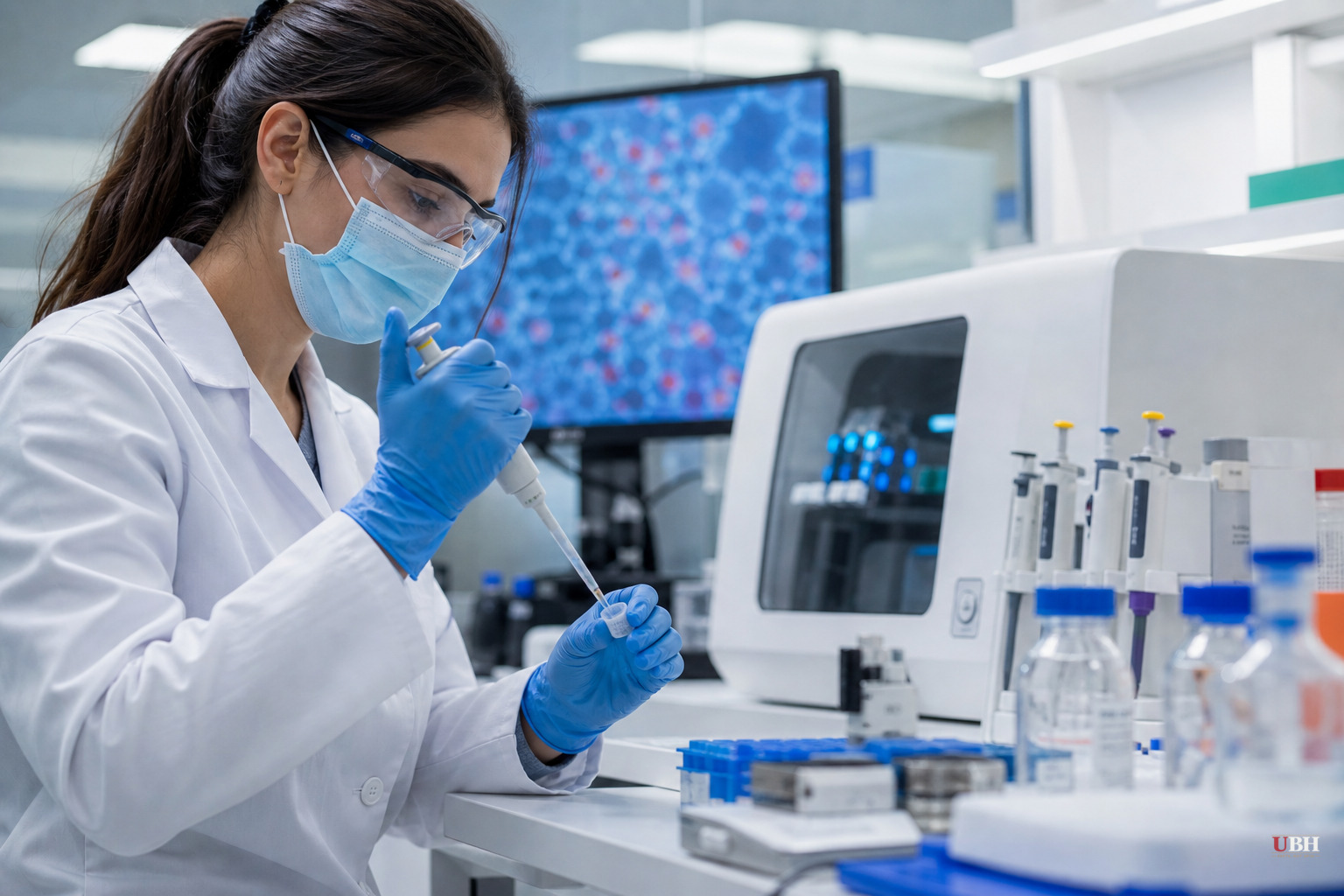
Merck and Moderna announced Wednesday, August 19, that their personalized mRNA cancer vaccine, intismeran, met its main goals in a Phase 3 trial for melanoma patients who had surgery to remove their tumors. It's the first mRNA cancer therapy to clear a late-stage trial, according to The Washington Post and multiple other outlets covering the announcement.
The trial, called INTerpath-001, enrolled 1,137 patients with stage IIB through IV melanoma whose cancer had been surgically removed. Two-thirds got up to nine doses of intismeran plus a year of Keytruda, Merck's blockbuster immunotherapy. The rest got Keytruda alone, according to Merck's own press release and reporting from the Epoch Times.
The combo beat Keytruda alone on both the main goal, recurrence-free survival, and a key secondary goal, keeping cancer from spreading to distant parts of the body. Merck called it "statistically significant and clinically meaningful." No new safety problems showed up compared to earlier trials, the companies said.
Wall Street didn't wait for the fine print
Moderna shares spiked as much as 90% in premarket trading Wednesday, according to CNBC. CNN reported a 60% jump and Ynetnews cited 40%, reflecting the stock's volatility as the numbers moved throughout premarket hours. Merck, the far bigger company at roughly $333 billion in market cap versus Moderna's $25 billion going into the day, rose a comparatively modest 2% to 8.5% depending on the source and moment cited.
That size gap explains the wildly different stock reactions. A win this big matters a lot more to Moderna's balance sheet than to Merck's. Barclays analysts said last month they expect the melanoma therapy alone could generate about $3 billion in revenue by 2035, according to CNN.
Moderna CEO Stéphane Bancel didn't undersell it. "It's a big moment for medicine, a big moment for patients," he told CNBC's "Squawk Box." In a separate statement carried by The Independent and the Epoch Times, he called it "a pivotal moment for the field of cancer research."
What the companies haven't disclosed yet
The companies have not released actual numbers. No hazard ratios, no percentage reduction in recurrence risk, no data on how much longer patients lived without disease progression. The Independent flagged this directly, noting the drugmakers "did not say how long patients taking drug combination lived without their cancer progressing." Investors and doctors are reacting to a topline press release, not peer-reviewed data.
The companies say they'll present full results at an unspecified "upcoming international medical meeting" and share data with regulators, according to Merck's statement and CNBC. Dr. Dean Li, president of Merck Research Laboratories, told CNBC that regulatory conversations will likely start "in the next few months." No FDA filing has happened yet. No approval timeline exists.
Overall survival, arguably the number patients care about most, hasn't been reported. Merck's own release says the trial will continue to track that endpoint under its original protocol. Until that data matures, nobody can say whether this treatment actually helps people live longer, only that it delays recurrence and spread.
Context that matters
This isn't coming out of nowhere. Merck and Moderna reported mid-stage results in January showing the same combination cut the risk of recurrence or death by 49% after five years, according to Ynetnews and CNN. Wednesday's Phase 3 readout builds on that, and it's an interim analysis, meaning the trial isn't even finished.
Melanoma is the deadliest form of skin cancer even though it accounts for roughly 1% of skin cancer cases, according to CNBC. The American Cancer Society projects about 112,000 new melanoma diagnoses and more than 8,500 deaths in the U.S. this year. Only about a third of patients with the most advanced form of the disease survive five years post-diagnosis. If a therapy can meaningfully cut recurrence in high-risk patients after surgery, that's a genuine medical advance worth taking seriously.
It's also fair to note the skepticism some readers will bring to anything branded mRNA, given how politically charged that technology became after COVID-19. That skepticism deserves a direct answer, not dismissal: the safety profile reported here is consistent with prior trials of the same regimen, and the FDA has already approved mRNA vaccines for RSV and flu since the pandemic-era shots, according to the Epoch Times. Nothing in these trial results is evidence of harm. But "no new safety signals" from a company press release is also not the same thing as an independent FDA safety review, which hasn't happened yet for this product.
The next real test comes when full data hits a peer-reviewed presentation, whenever that international conference happens, and when Merck and Moderna actually file with the FDA. Until then, this is a strong topline result from the companies developing and profiting from the drug, not a completed regulatory verdict.
Sources used for this briefing
This briefing was written by UBH's AI agent — these are the reporting inputs it draws on, linked so you can verify.


