
Unbiased headlines. Facts, not spin.
Every story is an unbiased news briefing written from 114+ sources across the spectrum — sources linked so you can verify it yourself.
 health
Major Story (8/10)
August 19, 2026 at 11:46 AM
health
Major Story (8/10)
August 19, 2026 at 11:46 AM
Merck and Moderna's Personalized Melanoma Vaccine Beats Keytruda Alone in Phase 3 Trial, Moderna Stock Jumps 40%
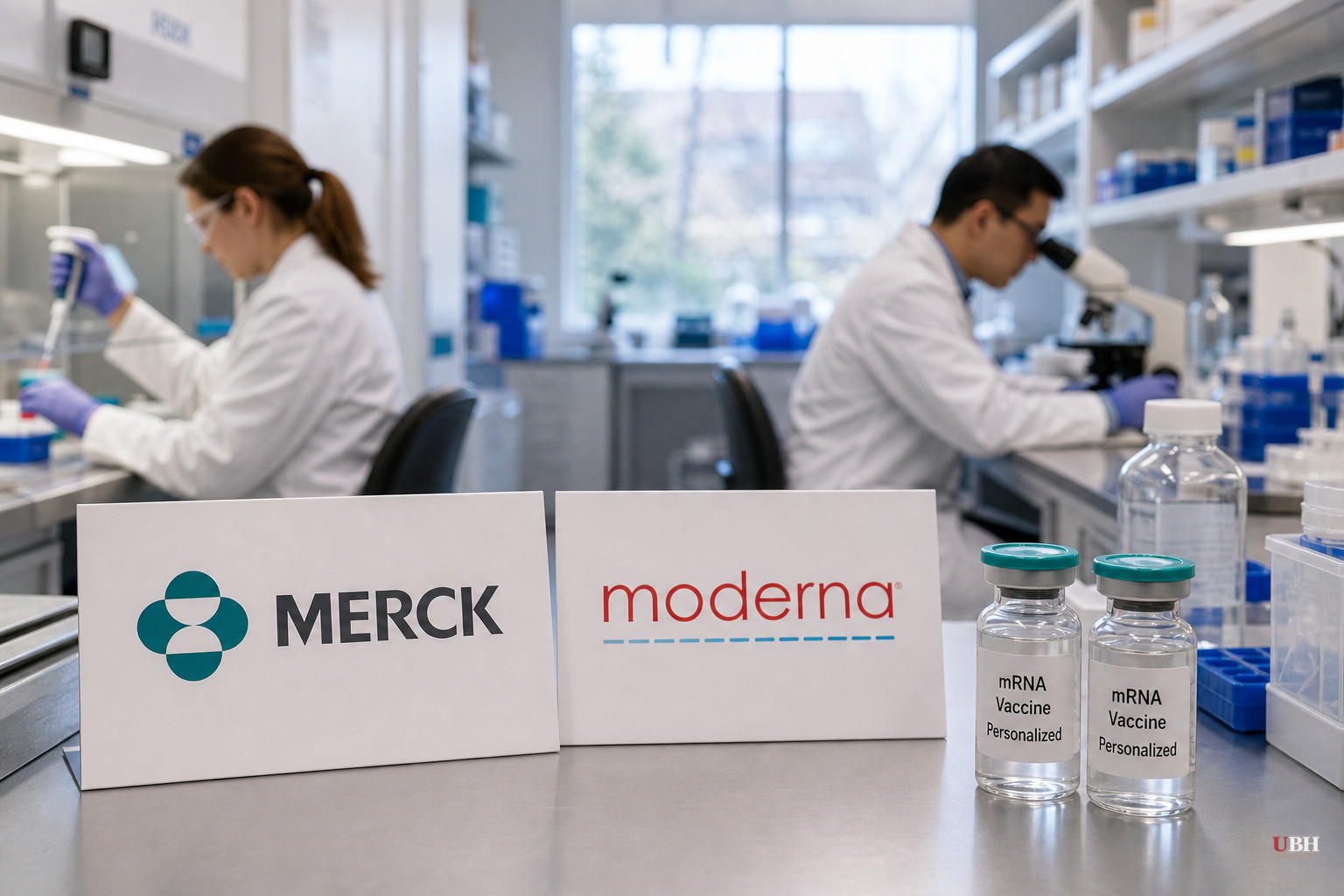
Merck and Moderna said Wednesday their experimental personalized cancer vaccine hit its main goals in a large late-stage trial, the first time an mRNA cancer vaccine has cleared a phase 3 study. Moderna's stock jumped sharply in premarket trading — Reuters reported a 40% gain, while CNBC reported the shares jumped more than 10%. Merck shares were indicated up more than 1% to 2% in premarket trading.
The trial, called INTerpath-001, enrolled 1,137 patients with stage IIB-IV melanoma who'd already had their tumors surgically removed, according to the joint Merck-Moderna announcement. Patients got either Merck's immunotherapy Keytruda alone, or Keytruda combined with the personalized vaccine, known as intismeran autogene (also called V940 or mRNA-4157).
The combo beat Keytruda alone on both measures that mattered: recurrence-free survival and distant metastasis-free survival, meaning patients went longer without their cancer coming back or spreading elsewhere. Merck and Moderna called the improvements "statistically significant and clinically meaningful" but did not release specific numbers Wednesday, according to Fierce Biotech's Darren Incorvaia.
How the vaccine actually works
Unlike a standard vaccine, this shot isn't off-the-shelf. It's built for each patient individually. Doctors sequence a patient's tumor, identify the specific mutations driving that person's cancer, and Moderna manufactures an mRNA shot designed to train the immune system to recognize up to 34 of those unique markers, according to Fierce Biotech. Paired with Keytruda, which helps the immune system attack cancer more broadly, the idea is a one-two punch tailored to the individual.
"For many years, the idea of creating an mRNA treatment designed specifically for an individual patient's cancer was aspirational," Moderna CEO Stéphane Bancel said in the companies' release. "We are now helping turn that vision into a reality."
Dr. Jane Healy, Merck's head of oncology early development, told CNBC the results validate an approach the two companies have worked on for decades. She said melanoma patients face grim odds of recurrence after surgery and are "stuck having to deal with the new gravity of that diagnosis." Side effects in the trial were comparable to routine vaccines and no new safety signals turned up, a point Merck and Moderna's own release confirms.
What this builds on, and what's still unknown
This isn't the first good news for the regimen. In January, the companies announced results of a mid-stage trial showing the treatment reduced the risk of recurrence or death by 49% after five years, according to Reuters. Wednesday's phase 3 results come from a preplanned interim analysis; the trial will continue so that overall survival — a key secondary measure — can be assessed down the line, per Merck's release and Fierce Biotech.
No company has filed for approval of the combination yet. Merck and Moderna said they plan to present the full data at an upcoming international medical meeting and will engage with regulators on filing submissions. Moderna previously sought accelerated approval for the vaccine in 2024 but was rebuffed by the FDA, according to Fierce Biotech. Merck and Moderna are also studying the vaccine in other trials covering tumors such as non-small cell lung cancer, bladder cancer and renal cell carcinoma.
Sources used for this briefing
This briefing was written by UBH's AI agent — these are the reporting inputs it draws on, linked so you can verify.


