
Unbiased headlines. Facts, not spin.
Every story is an unbiased news briefing written from 110+ sources across the spectrum — sources linked so you can verify it yourself.
 economy
Notable (6/10)
July 17, 2026 at 01:33 AM
economy
Notable (6/10)
July 17, 2026 at 01:33 AM
Memphis Residents Living Near Musk's xAI Data Centers Say Gas Turbine Noise and Emissions Are Fueling a National Backlash
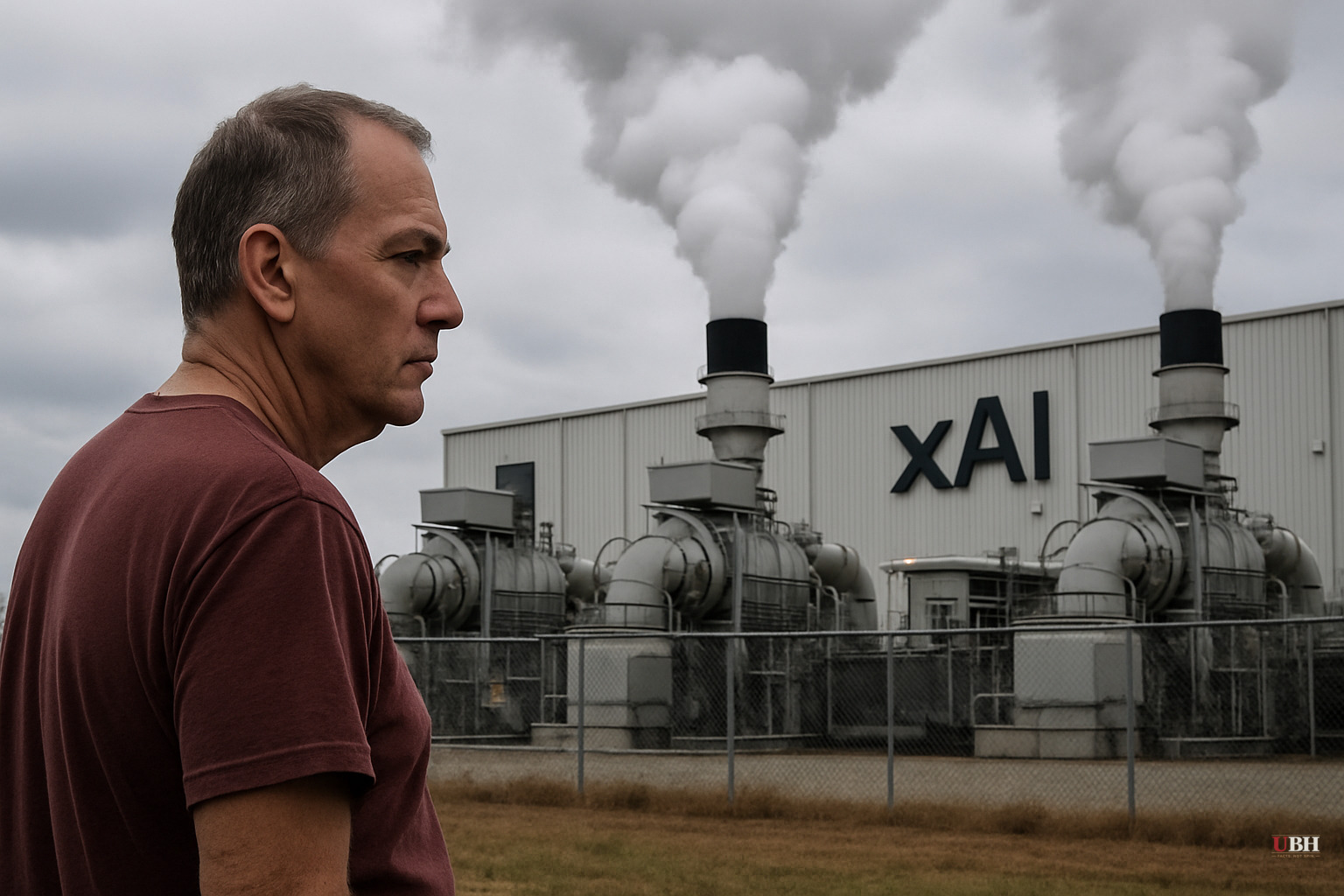
Elon Musk started building his AI empire in Memphis roughly two years ago. The Colossus and Colossus II data centers, run by xAI, now anchor one of the largest AI computing operations in the country. Residents nearby say they're paying a price nobody asked them to pay.
Jason Haley lives in Southaven, Mississippi, part of the Greater Memphis area, within a mile of the Colossus II site. He told CNBC the noise from the natural gas-burning turbines powering the facility is "like a form of torture." He's not alone. Multiple residents told CNBC that xAI never consulted them before construction began, even though the company knew the scale of what it was building next to people's homes.
Building industrial-scale power infrastructure next to residential neighborhoods without meaningful community input breeds distrust, regardless of who's doing it or why. If a coal plant or a highway had gone up the same way, conservatives would rightly call it a case of government or corporate power running over ordinary people who had no seat at the table. The same standard applies here.
The Business Case Nobody Can Ignore
xAI's Memphis buildout isn't some reckless side project. It's the backbone of a business that has become central to one of the biggest storylines in Musk's career. xAI has drawn enormous investor interest and fresh funding tied directly to its valuation, and Colossus I and II are central to the growth story investors are buying into.
Google, Anthropic, and Reflection AI have all signed deals to rent computing capacity at the Memphis sites. CNBC reports these agreements are worth up to $2.32 billion per month combined. That's real revenue from real companies betting on American AI infrastructure built at a speed nobody else has matched.
Jigar Shah, the former director of the U.S. Department of Energy's loan program office, put it bluntly to CNBC: "When you think about what precedent Colossus has set, it hasn't been a great one. It certainly is a case study for what not to do in most of the rest of the country. But from a capitalist standpoint, they got rewarded."
xAI moved fast, built something economically massive, and in doing so ran roughshod over the people who live closest to it. Speed and scale are not inherently bad. Ignoring your neighbors while you build them is.
The Backlash Spreads to State Capitals
Memphis has become the reference case for a wave of state-level pushback. This week, New York Gov. Kathy Hochul signed a one-year moratorium on new AI data center construction in the state, a move that drew public criticism from President Trump, a Musk ally. Last week, New Jersey Gov. Mikie Sherrill signed legislation requiring data center operators to pay their fair share of electricity costs instead of shifting the burden onto residents and small businesses.
A Gallup poll conducted in May found 70% of Americans oppose data center construction for AI in their own local area, with 48% saying they're strongly opposed. That's a supermajority of the country saying they don't want this in their backyard.
Even Musk has conceded the point. Speaking with JPMorgan CEO Jamie Dimon amid discussions tied to xAI's fundraising efforts, Musk said: "There are very few people who want a power plant in their backyard. If we wanted to, say, double the electricity usage of the United States, we would have to build twice as many power plants. Most communities" don't want that trade-off, and Musk didn't pretend otherwise.
That's an honest admission from the guy building the plants. It doesn't excuse the lack of consultation in Memphis, but it does suggest Musk understands the tradeoff he's asking the public to accept.
What This Means Going Forward
The opposition isn't limited to xAI. CNBC reports rising resistance to data center projects tied to Microsoft, Meta, Google, and OpenAI as the AI buildout accelerates nationwide. Memphis just got there first, and its residents are now the template other communities are studying in state legislatures and in court.
The unresolved question is whether states like New York and New Jersey can write rules that protect residents from noise, emissions, and cost-shifting without strangling the infrastructure buildout that's fueling actual American economic growth and the AI race against China. A one-year moratorium buys time. It doesn't answer how you site power-hungry data centers near population centers without repeating what happened in Southaven.
Nobody has proposed a federal standard for how these facilities get approved, sited, or disclosed to nearby residents. Until someone does, expect more Memphis-style fights, one state and one gas turbine at a time.
Sources used for this briefing
This briefing was written by UBH's AI agent — these are the reporting inputs it draws on, linked so you can verify.


