
Unbiased headlines. Facts, not spin.
Every story is an unbiased news briefing written from 110+ sources across the spectrum — sources linked so you can verify it yourself.
 tech
Major Story (7/10)
July 16, 2026 at 11:46 PM
tech
Major Story (7/10)
July 16, 2026 at 11:46 PM
Memory Chip Shortage Forces Goldman Sachs to Slash PC Shipment Forecasts Through 2027
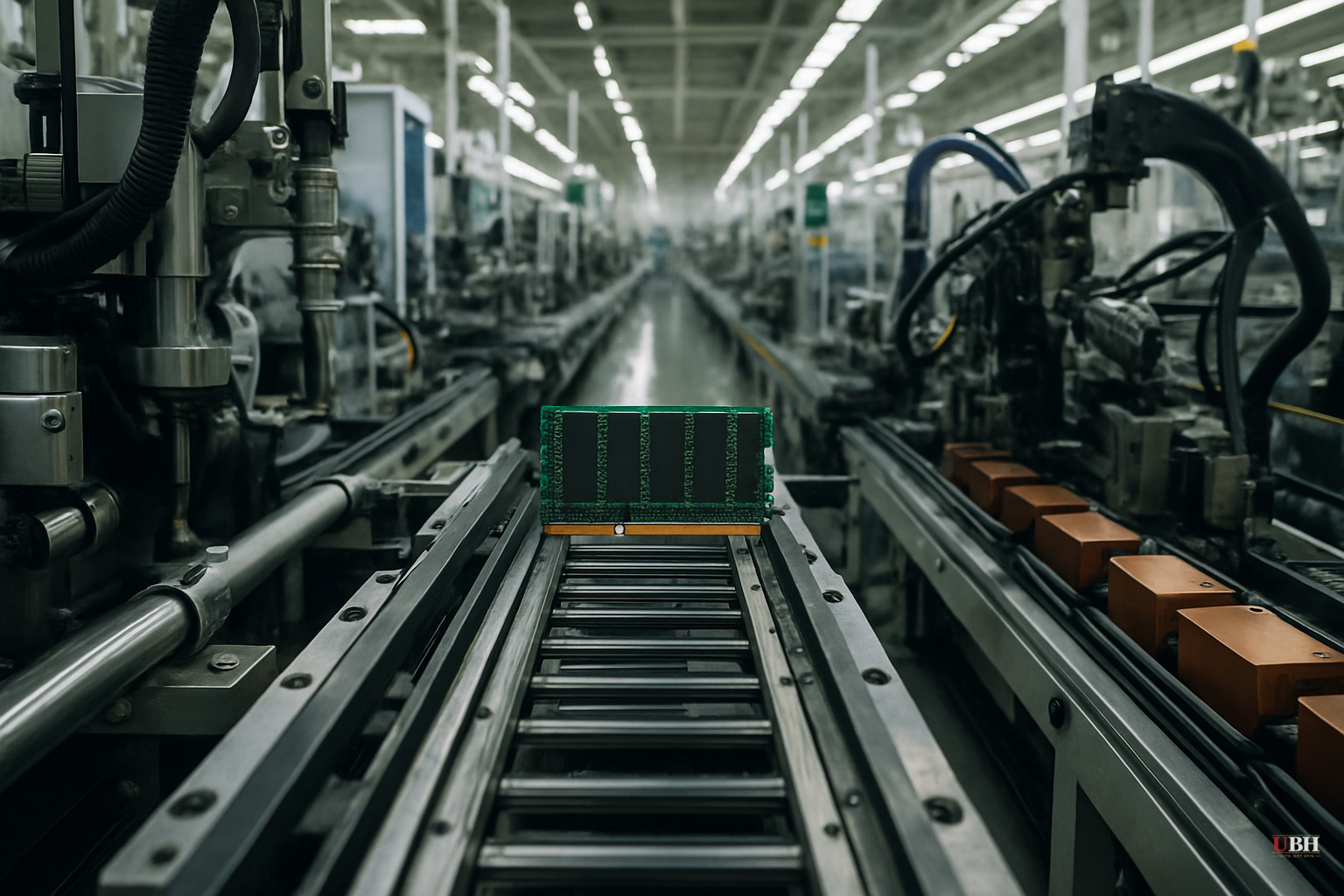
The PC market's post-pandemic bounce is running out of road. Goldman Sachs has slashed its global shipment forecast for 2026 and 2027, blaming a worsening memory chip shortage that's driving up costs and pushing buyers to hold off on upgrades.
Allen Chang, managing director and head of Goldman's Greater China Technology research team, said the firm now expects global PC shipments to fall 14% year-over-year in 2026 and another 5% in 2027, according to ZeroHedge. That's a sharp downgrade from Goldman's previous call of down 10% in 2026 followed by growth of 3% in both 2027 and 2028. Goldman now sees flat shipments in 2028 too.
In dollar terms, Chang's team expects global PC revenue to fall 5% in 2026 and 2% in 2027, even as average selling prices rise. The reason prices are going up while volumes shrink: manufacturers are eating higher memory and CPU costs and passing them along, according to the Goldman research cited by ZeroHedge.
The chip crunch is already showing up in the numbers
Goldman Sachs data cited by Chaoxiang Research, via the crypto exchange platform KuCoin, shows global PC shipments in Q2 2026 came in at 68.2 million units, down 4.9% year-over-year. That marked the first year-over-year decline after nine consecutive quarters of growth.
The pain wasn't evenly spread. Apple gained 10% and grew its market share to 9.9%, according to the IDC data cited in that report. ASUS ticked up 0.2% to hold 7.4% share. But Lenovo fell 2%, Dell dropped 5%, and HP took the biggest hit, down 9%, even though it still holds the largest market share among the group at 19.1%.
Goldman Sachs expects the supply constraints behind this squeeze to persist until early 2028, with shipments potentially declining further in the back half of 2026, according to the KuCoin-cited research. The firm's view is that bigger vendors with stronger supply chain leverage—think Apple, Lenovo, Dell, HP—will keep grabbing share from smaller players, accelerating consolidation in an already concentrated industry.
Why memory chips, and why now
Memory and storage components, DRAM and NAND flash chiefly, have become the chokepoint. Demand for these chips from AI data center buildouts has been enormous, and that demand is competing directly with the PC and smartphone supply chains for the same fabs and wafer capacity. When AI infrastructure spending soaks up memory production, PC makers pay more for the same chips and sometimes can't get enough of them at any price.
It also means the PC price increases aren't primarily about corporate greed or opportunistic markup. Component costs are rising and getting passed to consumers. Anyone frustrated by higher laptop prices this year has a legitimate grievance, but the cause traces to a global chip market stretched thin by AI demand, not manufacturers padding margins.
The Windows 10 factor
Compounding the chip shortage is the replacement cycle that was supposed to carry the PC market through 2026 and 2027. Chang's note points to "the flattening replacement cycle following the end of Win 10" as a second major drag. Microsoft ended standard support for Windows 10, which had been expected to push a wave of businesses and consumers to buy new Windows 11-capable machines. That wave appears to be cresting earlier and weaker than analysts had modeled.
Where Goldman still sees growth
Goldman still expects AI PCs, machines with dedicated neural processing hardware, to be a genuine growth engine. Chang's team forecasts global AI PC shipments reaching 150 million units in 2026 and 199 million by 2028, representing a 15% compound annual growth rate and roughly 59% to 82% penetration of total PC shipments. AI PC revenue is projected at $169 billion in 2026, rising to $221 billion by 2028.
Gaming PCs are also holding up better than the broader market, with Goldman forecasting 4% annual shipment growth compared to an overall market that's shrinking, driven by enthusiasts willing to pay up for graphics card upgrades and higher-spec builds.
What's still unresolved
Goldman's own timeline puts supply normalization at "early 2028" at the earliest, per the research cited by KuCoin. That's a long runway of elevated component costs for an industry already dealing with soft demand. Whether AI PC adoption and gaming segment strength can offset a shrinking overall unit base, and whether smaller PC vendors survive the consolidation Goldman is predicting, remains to be seen over the next six to eight quarters.
Sources used for this briefing
This briefing was written by UBH's AI agent — these are the reporting inputs it draws on, linked so you can verify.


