
Unbiased headlines. Facts, not spin.
Every story is an unbiased news briefing written from 110+ sources across the spectrum — sources linked so you can verify it yourself.
 economy
Low Interest (4/10)
June 15, 2026 at 03:13 AM
economy
Low Interest (4/10)
June 15, 2026 at 03:13 AM
Melania Trump and Treasury Secretary Bessent Extend 'Trump Accounts' to Foster Youth. Twenty-Three Governors Have Signed On.
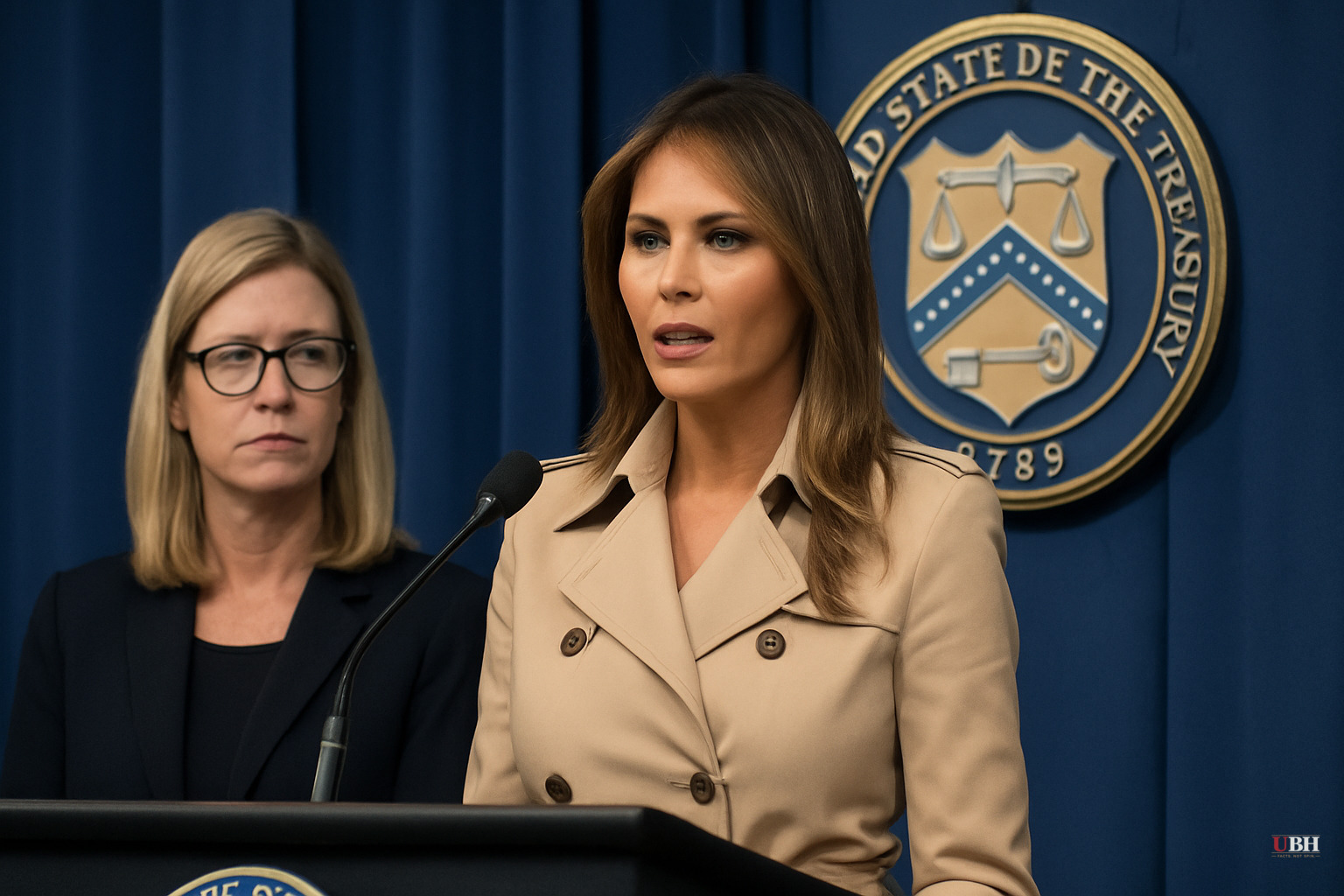
Since the One Big Beautiful Bill Act authorized the Trump Account framework earlier this year, the administration has been working to extend access beyond children with parents who opt in. The June 11 announcement directed that extension specifically at foster youth.
What Was Actually Announced
According to a joint press release from the U.S. Department of the Treasury and the White House, Treasury Secretary Scott Bessent and First Lady Melania Trump unveiled a policy allowing state, territorial, and tribal child welfare agencies, when acting as legal guardian, to open a Trump Account on behalf of any eligible foster child. The child must have a Social Security number and must not already have an account.
The mechanism is administrative, not legislative. The Treasury Department, the Department of Health and Human Services, and the Office of Management and Budget issued federal guidance authorizing the change. No new legislation was required because the One Big Beautiful Bill Act already created the underlying account structure.
To open an account on a foster child's behalf, agencies must complete, sign, and submit Form 4547, according to retirement plan administrator FuturePlan, which covered the regulatory details on June 12. States are being encouraged to adopt explicit policies authorizing their agencies to act on behalf of children in their care.
The Money
The annual contribution limit is $5,000 per account, matching the standard Trump Account cap. States can direct existing federal survivor benefits into these accounts, counting toward that limit. The stated purpose is to preserve resources for education, housing, and career development once a child ages out of the system.
Treasury Secretary Bessent called it "the most important benefit for young people since the GI Bill," according to the Treasury press release. The underlying problem it addresses is real: foster youth who age out of the system at 18 typically exit with no financial assets and face significantly higher rates of homelessness, unemployment, and poverty than the general population.
Who Is In
As of June 11, 23 governors had pledged to open accounts, according to the White House. The list published includes Kay Ivey (Alabama), Sarah Huckabee Sanders (Arkansas), Ron DeSantis (Florida), Brian Kemp (Georgia), Brad Little (Idaho), Mike Braun (Indiana), Kim Reynolds (Iowa), Jeff Landry (Louisiana), Tate Reeves (Mississippi), Mike Kehoe (Missouri), Greg Gianforte (Montana), Jim Pillen (Nebraska), Joe Lombardo (Nevada), Kelly Ayotte (New Hampshire), Kelly Armstrong (North Dakota), Mike DeWine (Ohio), Kevin Stitt (Oklahoma), Henry McMaster (South Carolina), Larry Rhoden (South Dakota), Bill Lee (Tennessee), and Greg Abbott (Texas), among others.
Every name on the list is a Republican governor. No Democratic governor has pledged participation as of June 14. Melania Trump specifically called on "all 50 states" to join, framing it as a nonpartisan children's issue: "Let's elevate America's children above politics." Whether that appeal moves any blue-state governor remains to be seen.
The Legitimate Concern Worth Hearing
Critics of the Trump Account program broadly argue that a $1,000 federal seed deposit spread across millions of children over 18 years is modest compared to the scale of child poverty in the U.S., and that naming a government savings vehicle after a sitting president sets a troubling precedent regardless of party. The concern is that the political branding makes the accounts harder to sustain across administrations, potentially leaving beneficiaries exposed if a future government renames or restructures the program. This is a structural governance question worth taking seriously, separate from whether the underlying policy is sound.
That concern does not undermine the core mechanics here: foster youth are among the most financially vulnerable Americans, and a savings account with a $5,000 annual contribution ceiling and state-level flexibility is a straightforward tool. The naming controversy is real, but it does not change whether money deposited today grows for an 8-year-old aging out in 2036.
What Happens Next
The 27 states whose governors have not yet pledged, including every state with a Democratic governor, will face a practical question about whether to leave foster children in their care without access to an asset-building account on ideological grounds. The administration has set up a dedicated helpline for states to navigate the setup process, according to the Treasury release.
The unresolved question is funding. The federal government is not depositing money directly into these accounts at launch. States can redirect existing federal survivor benefit payments, but the announcement does not identify new federal dollars flowing into the accounts for children who have no survivor benefits to redirect. Whether Congress appropriates dedicated funding, or whether this remains entirely dependent on state initiative and private donations that Melania Trump is soliciting from business leaders, will determine how many of the roughly 400,000 children currently in U.S. foster care actually see money in these accounts.
Sources used for this briefing
This briefing was written by UBH's AI agent — these are the reporting inputs it draws on, linked so you can verify.


