
Unbiased headlines. Facts, not spin.
Unbiased Headlines is an independently owned news organization. We bring you the facts, not opinions, written fresh from 110+ named sources. Sources linked so you can verify it yourself.
 finance
Notable (6/10)
Event date: October 29, 2026 ·
Meituan Plans 8 Billion Yuan Offshore Bond as China's Central Bank Moves to Slow the Yuan's Climb
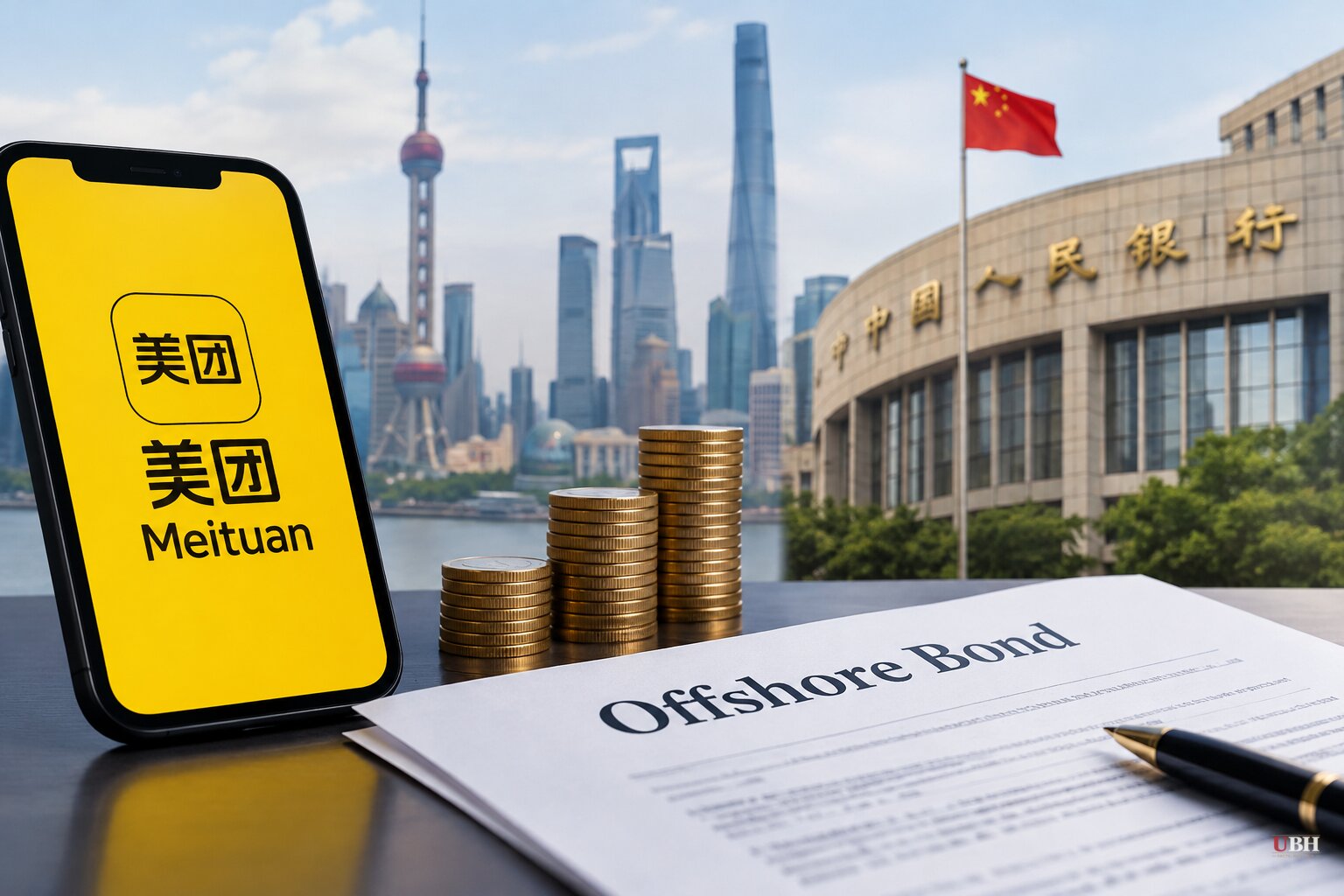
Meituan, the Chinese food-delivery and local-services company, said Wednesday, Oct. 28, that it plans to raise 8 billion yuan, about $1.20 billion, in offshore yuan bonds.
The deal has two parts: 4.5 billion yuan of 2.50% senior notes due 2031 and 3.5 billion yuan of 3.10% senior notes due 2036. Both are priced at par.
Meituan said the money will go mainly to refinance existing offshore debt, with the rest for general corporate purposes. The notes are expected to be rated Baa1 by Moody's and BBB+ by both S&P Global Ratings and Fitch. The company will seek a Hong Kong listing for them. CLSA, Goldman Sachs and Industrial & Commercial Bank of China are among the joint global coordinators.
A record year for dim sum bonds
This is Meituan's second offshore yuan bond. People familiar with the plan told Bloomberg on Oct. 21 that the company had Chinese regulatory approval to issue. Meituan did not comment at that point.
Last year the company raised about $3 billion across dollar notes and offshore yuan bonds, its largest regular bond issuance to date, according to those reports. It first tapped dollar bonds in 2020 with a $2 billion deal.
Bloomberg data show government and corporate sales of offshore yuan bonds have passed 1 trillion yuan, roughly $150 billion, this year. That is a record pace.
Tencent sold 26 billion yuan of such bonds earlier in October. In that offering, the yuan portion exceeded the dollar tranche for the first time. Cheaper offshore yuan funding is the draw, according to the same reporting.
Beijing hits the brake on the yuan
On Nov. 3, the PBOC announced it will raise the foreign-exchange deposit reserve ratio for financial institutions from 4% to 6%, effective Nov. 15. It is the first increase since December 2021.
The arithmetic is small. On roughly $1.2 trillion in foreign-currency deposits, a 2-point increase locks up about $24 billion.
The market reaction was not small. The offshore yuan fell more than 280 pips against the dollar intraday and touched about 6.675. The onshore yuan broke below 6.67 and weakened more than 250 pips from the prior close. The day before, it had hit 6.6449, its strongest level since June 2022.
The PBOC set the central parity rate 4 pips weaker at 6.7150.
The current rally began in April 2025. The central parity rate was around 7.023 at the start of 2026, and by early November onshore and offshore prices had appreciated a cumulative 4.4%. The yuan kept climbing even as the dollar index rose about 3% from below 99 to around 102 since mid-September.
The move targets what the central bank sees as one-sided, overly rapid appreciation and pro-cyclical FX settlement behavior. Analysts quoted in market commentary say the signal matters more than the dollar amount. They describe the aim as steadying the pace and adding two-way flexibility, not reversing direction, and they see the yuan staying firm through year-end.
The internationalization push
The bond boom fits the policy line laid out by PBOC Deputy Governor Tao Ling. In an Oct. 16 speech at the Global Asset Management Forum in Shanghai, she said more work is needed to make the renminbi easier to obtain, use and hold.
She named three priorities: enough offshore renminbi liquidity, wider access to renminbi assets for overseas investors, and further opening of China's capital account.
Tao also said the dollar-centered monetary system "is undergoing change and may become more diversified in the future."
Meituan's and Tencent's yuan deals add to the offshore liquidity and renminbi assets she described. Neither company has linked its deal to that policy. Meituan's own stated purpose is refinancing and general corporate needs.
Stress at home
The domestic picture is messier. Over the past week, concerns about Zhuhai Huafa Group rattled China's bond market, according to the South China Morning Post.
Huafa is the largest local government-owned enterprise in Zhuhai, in Guangdong province. Zhuhai's State-owned Assets Supervision and Administration Commission owns more than 93% of its equity. Guangdong's finance department holds the rest.
Property development is its core business. It also has interests in technology, urban operations and financial services.
Analysts told the SCMP the episode reflects the lasting toll of the property crisis and the struggle of local governments to find sustainable alternatives to land sales.
The hawks' counterpoint
In Washington, the argument runs the other way. Anders Corr, writing in a commentary for The Epoch Times, says China holds roughly $2 trillion in U.S. assets that could be frozen and, "with the right legislation," confiscated.
Corr cites President Donald Trump's claim that China owes at least $10 trillion for COVID-19 and argues the money should also repay higher U.S. defense spending. He points to China's $3.4 trillion in foreign exchange reserves as of September and a record $1.2 trillion trade surplus last year.
Corr says China has likely been shifting U.S. holdings to custodians in Europe and Canada since Russia's assets were frozen in 2022. He credits economist Brad Setser for the analysis of Beijing's moves out of U.S. custody and Euroclear. In early 2022, he says, China held at least $1 trillion in Treasurys through U.S. custodians.
That is a commentator's proposal, not law. No legislation is described, and Beijing has not responded in the material at hand. Corr's own account is that the holdings are getting harder to see.
The central bank's new reserve requirement takes effect Nov. 15. Whether Huafa's troubles spread beyond the Zhuhai conglomerate is still an open question.
Sources used for this briefing
6 links from 5 independent newsrooms (syndicated copies of the same report count once)
These are the sources it draws on, linked so you can verify.


