
Unbiased headlines. Facts, not spin.
Unbiased Headlines is an independently owned news organization. We bring you the facts, not opinions, written fresh from 110+ named sources. Sources linked so you can verify it yourself.
 finance
Major Story (7/10)
China Makes Share-Buyback Lending Permanent, Cuts Rate to 1% After CSI 300's Worst Month Since 2016
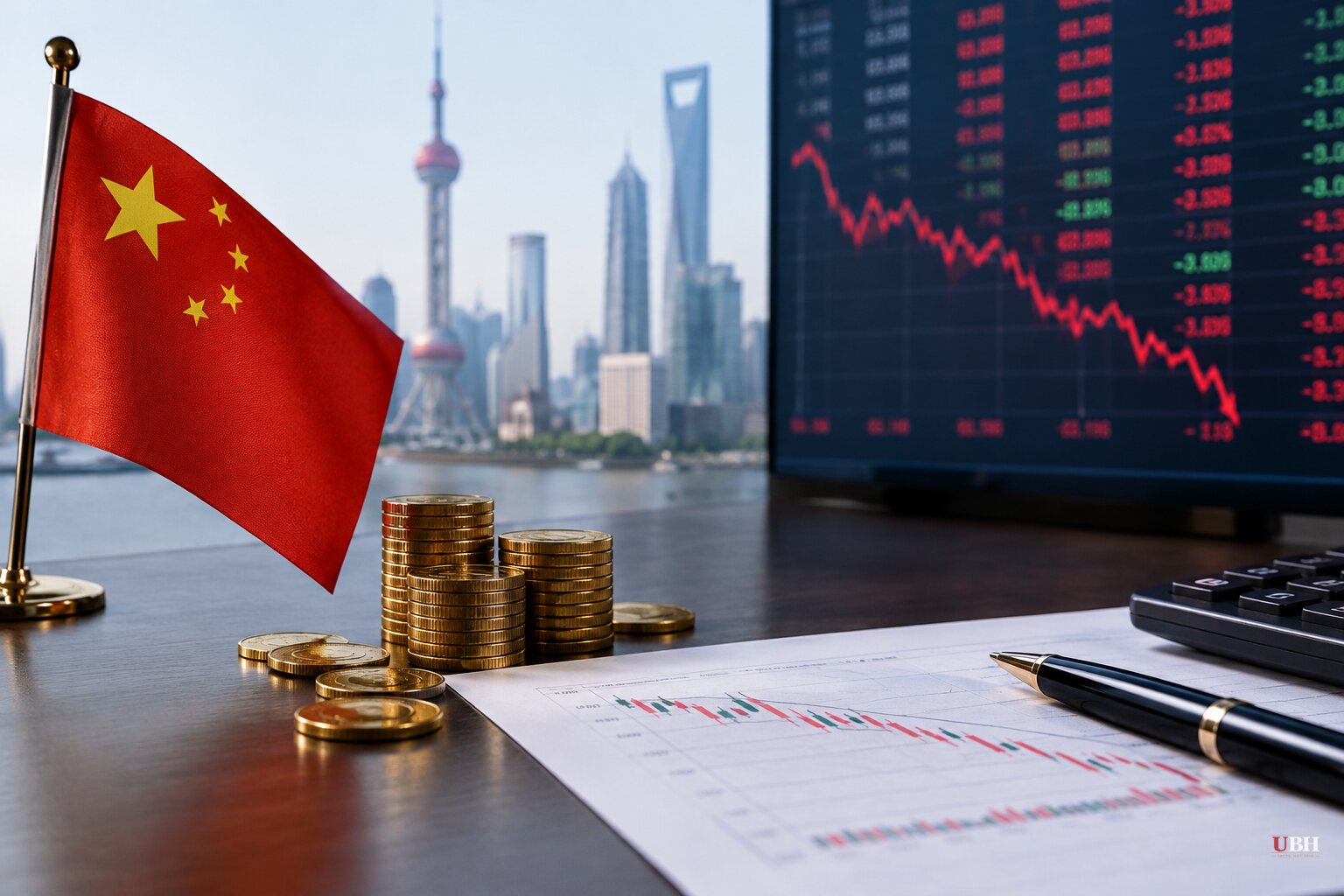
China's government is spending real money to stop its stock market from falling. So far it has not changed the underlying picture.
The CSI 300 index fell 8.5% in October, its worst month since early 2016. The benchmark has dropped more than 20% from its June peak, the usual definition of a bear market.
What Beijing did
Three of China's financial regulators announced that a lending program supporting share repurchases and increased shareholdings is now permanent policy rather than a temporary arrangement. The interest rate on the program was cut from 1.25% to 1%.
The People's Bank of China (PBOC) also began running overnight reverse repurchase operations every business day at 1.25%, according to state news agency Xinhua. The aim is to manage short-term liquidity.
The central bank also expanded a swap facility. Securities firms, fund managers and insurers can pledge bonds they already hold in exchange for more liquid assets, then use that funding to buy stocks without selling their existing holdings. The PBOC scheduled a new round of swaps for Tuesday, Nov. 3, potentially channeling more than 100 billion yuan (about $15 billion) into equities. It said 31 securities and fund companies had applied for swaps worth more than 100 billion yuan.
Authorities also eased curbs on leveraged trading, according to analysts who spoke to Channel NewsAsia.
Last week, Beijing put roughly $19 billion into exchange-traded funds, according to Bloomberg data. That was its largest intervention since early 2025.
How deep the losses run
The tech-heavy STAR 50 index has fallen about 40% in under four months. That wiped out roughly $480 billion in market value, according to The Epoch Times.
The names that led the rally have given back much of it. Unitree, the world's largest humanoid robot maker by sales, jumped 600% in its Shanghai debut in August. Its shares have since halved. Memory chipmaker CXMT became Shanghai's top-weighted stock three months after listing. Its valuation is down nearly 30% from its August peak.
Hong Kong has been hit too. The Hang Seng index was down more than 12% for the year as of CNN's latest reading. China, India and Indonesia are the region's worst-performing markets this year.
Why analysts doubt it will hold
Gary Ng, senior economist for Asia Pacific at Natixis, attributes the selloff to "a repricing of crowded AI trades, weak domestic demand, and the lack of stimulus."
Lorraine Tan, director of equity research in Asia at Morningstar, said "any measure to address the stock market sentiment tends to be short-lived if there are no policies to address underlying key issues." She pointed to excess capacity in many sectors and said the lack of fiscal spending this year has been a drag. She said measures are needed to boost domestic consumption.
Xu Zhen, a senior finance professional in China, was blunter in comments to The Epoch Times. "The Chinese Communist Party (CCP) does not do charity for stock investors," he said, calling the daily reverse repo operations a market placebo. He argued Beijing's main concern is that continued losses could set off panic selling and threaten financial stability, not the losses of individual investors.
Xu also said the government had hoped to steer household savings into equities to help fund its AI ambitions. A long downturn makes that harder.
Davy Jun Huang, a U.S.-based political economist and former CNTV columnist, told The Epoch Times that falling prices and a weak economy can feed each other. Lower household wealth, tighter corporate financing and stress at institutions holding stocks as collateral could produce a cycle of less investment, less hiring and less spending.
Analysts cited by CNA describe the latest package as aimed more at preventing further losses than starting a lasting rally. They say that would take stronger growth, better corporate earnings and returning investor confidence. China is also dealing with sluggish consumption and a long-running property debt crisis.
Some stabilization in Hong Kong
The picture was not uniformly bleak on Wednesday, Nov. 4. The Hang Seng Index closed up 1.7%, or 394 points, at 23,920, recovering from morning losses on gains in technology and healthcare shares.
Hong Kong's private-sector activity also returned to expansion in October. The S&P Global PMI rose to 50.2 from 49.2 in September, its strongest reading in three months.
JPMorgan expressed optimism about Chinese AI models, and Citi pointed to resilient demand for semiconductor equipment. Semiconductor Manufacturing International rose 7.27%, Lenovo 5.39% and MiniMax 4.88%.
A single session does not make a trend. The CSI 300 had closed down 1% on Thursday, Oct. 29, even after the ETF purchases.
CNN reports that Beijing's own AI-linked tech champions helped drive a record trade surplus this year, yet could not escape the selloff. It adds that analysts see little spillover for global markets for now, though they warn a collapse of the debt-fueled AI boom could hit tech stocks worldwide.
What to watch
Beijing has made its market backstop permanent. It has not announced new fiscal spending or consumption support, which Natixis and Morningstar analysts name as the missing pieces. Whether it does will decide if the liquidity measures buy time for a real recovery or only slow a decline.
Sources used for this briefing
6 links from 6 independent newsrooms (syndicated copies of the same report count once)
These are the sources it draws on, linked so you can verify.


