
Unbiased headlines. Facts, not spin.
Unbiased Headlines is an independently owned news organization. We bring you the facts, not opinions, written fresh from 110+ named sources. Sources linked so you can verify it yourself.
 finance
Major Story (8/10)
Lockheed and L3Harris Shares Fall 6.9% as Analysts Warn a Democratic Congress Could Squeeze the Pentagon Budget
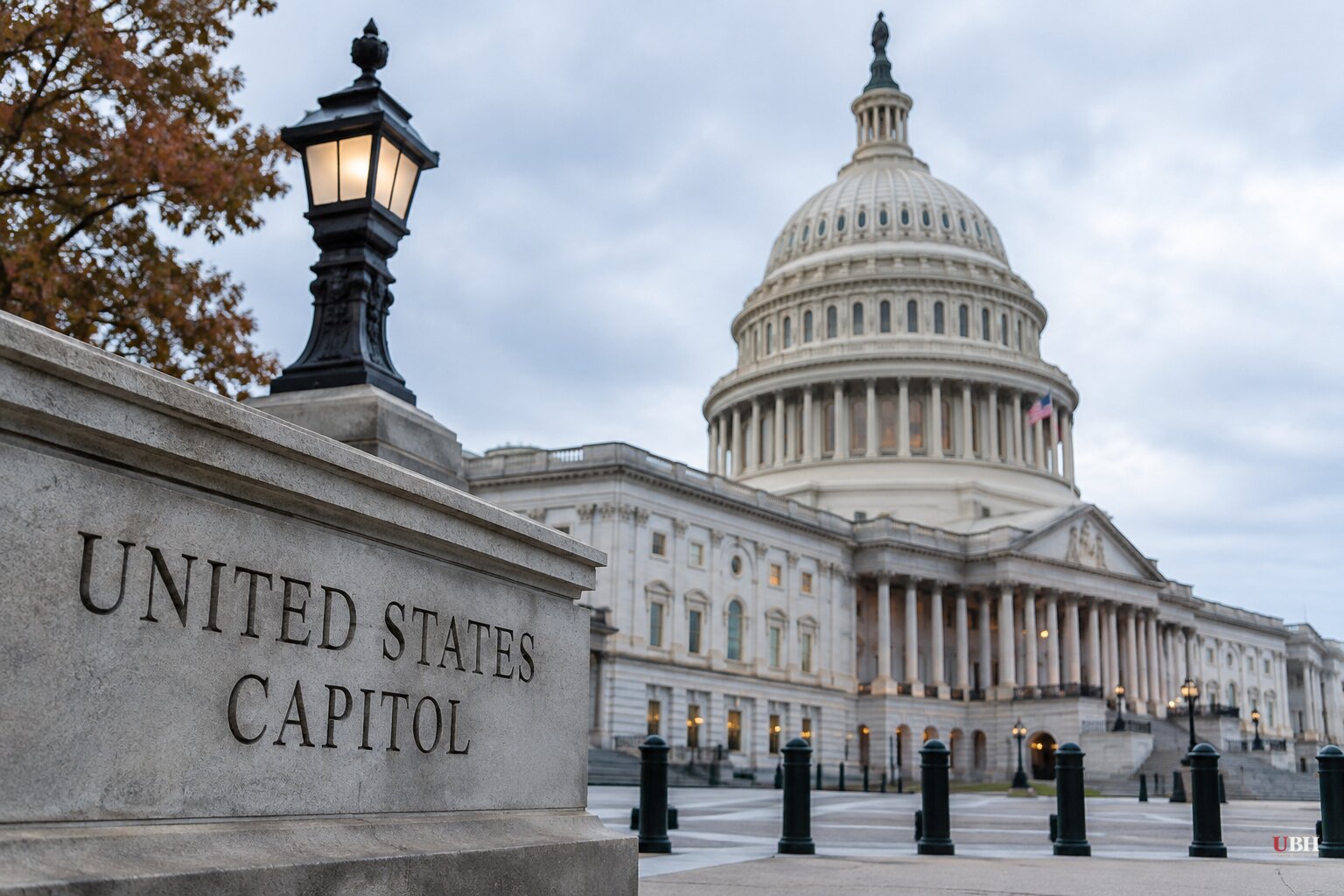
Since Democrats won majorities in the House and Senate in the Nov. 3 midterms, markets have been sorting winners from losers. Defense contractors are the clearest losers so far.
Lockheed Martin and Northrop Grumman each fell more than 3% in premarket trading Wednesday, Nov. 4. By midday, figures compiled by rallies.ai showed Lockheed and L3Harris Technologies each down 6.9%, Huntington Ingalls down 4.9% and RTX down 3.1%. General Dynamics and Northrop also traded lower.
The selling was not limited to the U.S. A Goldman Sachs basket of European defense companies slid as much as 4.1%, its biggest intraday drop in more than four months. BAE Systems fell as much as 5.9%. It draws close to half its revenue from the U.S.
The budget math
President Trump said on Jan. 7 that the 2027 military budget should be $1.5 trillion, not $1 trillion. The request that followed includes an increase of roughly 42% and puts $756.8 billion toward capabilities such as shipbuilding, Golden Dome missile defense, drones and munitions.
Jefferies analysts now expect the final 2027 figure to land closer to the House's roughly $1.15 trillion proposal than the administration's $1.5 trillion. The currently approved level is $901 billion.
TD Cowen policy analyst Roman Schweizer was blunter. He called the Democratic sweep the "toughest outcome for defense spending" and said "Trump 'branded' programs are dead," naming Golden Dome and Golden Fleet.
Schweizer said the 2-3 year outlook is what changes. He wrote that spending assumptions for fiscal 2027 and 2028 could move toward flat or low-single-digit growth. If there is no third reconciliation bill and a full-year continuing resolution, he said, fiscal 2027 could land closer to about $858 billion than $1.5 trillion.
Calendar and the Iran war
The current continuing resolution expires Dec. 11. Schweizer said another stopgap looks more likely than full-year appropriations, and that a shutdown remains possible if Trump and Democrats cannot strike a deal.
He also said Republicans now have more reason to spend limited floor time on reconciliation while they still control both chambers. The NDAA and appropriations bills could slip into early 2027, he wrote, and the GOP would know within two to three weeks whether reconciliation has a shot.
The Iran war is the other pressure point. Schweizer said he fully expects a Democratic Congress to seek another War Powers Resolution on Iran, or to use the NDAA and appropriations bills to restrict, condition or add oversight to Iran-related spending. That would not necessarily stop military action, he wrote, but it would add friction and could complicate supplemental funding.
A veto override remains a high hurdle. Schweizer said it becomes more conceivable if enough remaining Republicans weigh the 2028 cycle.
Keith Lerner, chief investment officer at Truist Advisory Solutions, said there are now "some more open questions about the path forward for the defense budget," including the status of "the various wars that are outstanding."
Not every program is exposed
The same analysts who flagged the risk also drew limits around it. Schweizer wrote that the biggest change is the budget topline and the administration's ability to execute major initiatives, "not the underlying requirement for defense investment." He also headed one section of his note "Dem sweep not necessarily bad for key priorities."
The analysts said nuclear modernization, including Northrop's B-21 bomber and the Sentinel ICBM replacement, is "least at risk." Munitions, readiness and allied replenishment have drawn support from both parties and look safest from cuts. Lockheed's record $230.42 billion backlog includes a $35 billion THAAD interceptor contract tied to missiles the Pentagon and U.S. allies both want. RTX gets a cushion from a commercial aerospace business Congress does not control.
The slide predates the vote
The sector was already down before Election Day. The iShares U.S. Aerospace & Defense ETF closed at $207.76 on Oct. 19, 17.86% below its Aug. 14 close of $252.92. Higher interest rates and AI-driven swings in the broader market were also weighing on the group. Northrop closed that day at $510.65, 34% below its 52-week high. Lockheed closed at $548.23, 21% below its high.
Prediction markets had priced in the outcome. Polymarket contracts on Democratic control of the House traded at 0.915 on Oct. 20, and Senate contracts at 0.645. Part of Wednesday's drop reflects larger-than-expected majorities, per Schweizer's note, which said they give Democrats "much greater leverage" with the White House.
Data centers get their own test
The other sector under scrutiny is AI infrastructure. CIBC said in a six-page note Wednesday that it expects the "kneejerk reaction" to be near-term underperformance in AI industrial names. It cited Republican Gov. Greg Abbott's defeat in Texas. Governor-elect Gina Hinojosa has advocated a moratorium on new data-center construction and permits.
CIBC still expects "most or all of the scheduled data centers" to be built, citing jobs and tax revenue. Its list of 36 stocks it expects to benefit under a Democratic Congress is led by hyperscalers such as Meta, Apple, Alphabet, Amazon and Microsoft.
For defense, the next hard date is Dec. 11. The Pentagon's funding level for the rest of fiscal 2027 depends on whether Trump and the incoming Democratic leadership can agree on a number before then, or on another stopgap.
Sources used for this briefing
8 links from 5 independent newsrooms (syndicated copies of the same report count once)
These are the sources it draws on, linked so you can verify.


