
Unbiased headlines. Facts, not spin.
Unbiased Headlines is an independently owned news organization. We bring you the facts, not opinions, written fresh from 110+ named sources. Sources linked so you can verify it yourself.
 finance
Notable (6/10)
Event date: October 29, 2026 ·
DoorDash Bars Staff From New LinkedIn Connections With Instacart Employees During $17 Billion Deal Review
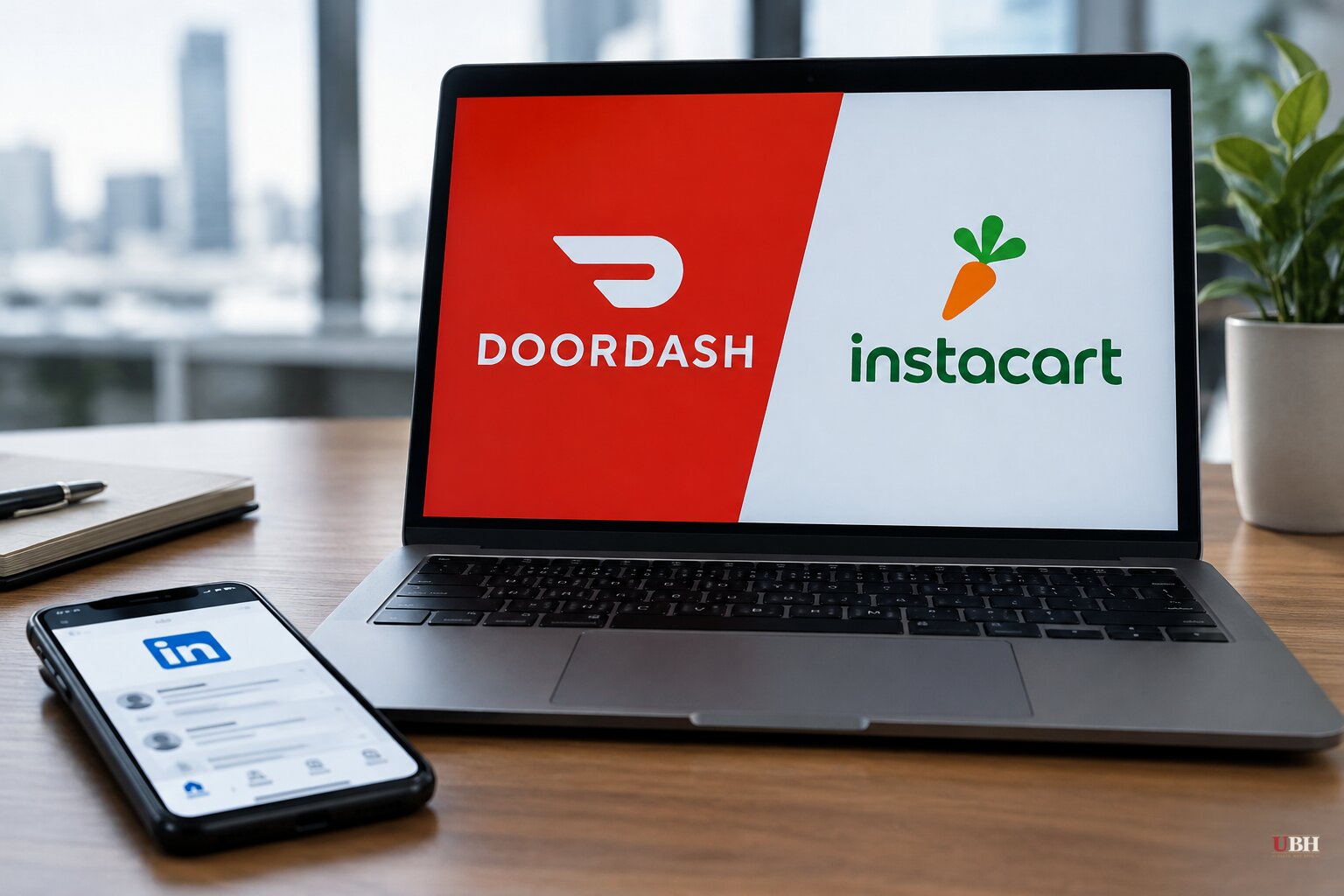
Since DoorDash announced on Oct. 29 that it would buy Instacart for $17 billion, one detail from its SEC filings has drawn attention: employees have been told not to connect with their future colleagues on LinkedIn.
The instruction sits in an internal question-and-answer document DoorDash filed with the Securities and Exchange Commission on the day of the announcement. The question: "Can I connect with Instacart employees on LinkedIn?" The answer: "Not at this time. Please do not request any new connections with any Instacart employees on LinkedIn, even if you have a prior relationship."
The ban runs both ways. Employees are also told not to accept new requests from Instacart workers. The document does not tell anyone to delete existing connections.
If an Instacart employee reaches out anyway, DoorDash has supplied a script: "Congrats! Looking forward to connecting after the deal closes." Anything further needs approval from DoorDash's legal team.
Why the freeze could last so long
DoorDash and Instacart expect the transaction to close at the end of 2027 or in the first half of 2028. Closing requires approval from Instacart shareholders and antitrust clearance in the U.S., Canada and Israel. If the later date holds, the LinkedIn restriction could run up to 20 months.
Until then, the two companies are direct competitors and must act like it. The Q&A repeats that point throughout. The Federal Trade Commission has warned merging companies to safeguard competitively sensitive information such as pricing, costs and business strategy until a deal closes. Acting as though the merger is already done is called "gun-jumping."
"You're supposed to continue to act like independent competitors until the deal closes," said David Gelfand, a Cleary Gottlieb antitrust lawyer and former deputy assistant attorney general in the Justice Department's antitrust division.
A LinkedIn connection is not itself an antitrust violation. The concern is what gets discussed or coordinated once the link exists.
An uncommon step
Several M&A experts told Business Insider they had never encountered a ban on social media connections during a pending deal. There is some precedent for limiting contact. In 2018, defense contractor SAIC told employees not to contact workers at Engility, which it was acquiring, without clearance through its integration team.
Chris Selland, a lecturer at Northeastern University's D'Amore-McKim School of Business, said the rule could also be meant to head off poaching. Staff who jump companies can take customer relationships with them. "That could blow up the whole agreement," he said.
Whether the restriction is sensible or too broad is "a great antitrust examination question," said William Kovacic, a former FTC chairman who now directs George Washington University's Competition Law Center. DoorDash declined to comment.
The deal itself
DoorDash is paying $65 per Instacart share, a 26% premium to the Oct. 22 close, the last trading day before media reports of a possible deal. At least 75% of the consideration will be cash. Instacart shareholders can elect cash, DoorDash stock or a mix, with DoorDash stock capped at 25% of the total. Instacart's board approved the agreement unanimously.
The price is more than a full year of DoorDash revenue, which was $13.7 billion last year. DoorDash reported third-quarter revenue of about $4.6 billion, up 34%. Instacart reported gross transaction value up 15% to $10.5 billion and advertising and other revenue of $331 million, roughly 30% of its total.
On announcement day, DoorDash shares rose about 3% to $177.62, a market value near $75 billion. Instacart shares slipped nearly 2% in midday trading to just above $57, below the $65 offer, with a market value around $13 billion.
DoorDash CEO Tony Xu said the combination would give "stores of every size more of those tools" to compete with larger players. Walmart holds 21% of U.S. grocery spending, according to Numerator, with Costco and Amazon at 8% each. The companies also plan to merge DashPass and Instacart+, which each cost $9.99 a month, into a single fee. They estimate that would save members around $100 million a year.
The competition question
Not everyone sees only upside. Randall Sargent, a grocery and retail partner at Oliver Wyman, said the two companies "were competing for a share of consumers' wallet." He added: "As a general economic principle, less competition and more consolidation tends to be worse for consumers." PBS also noted the tie-up could leave grocers with fewer delivery partners to negotiate with.
Financial advisor Scott Hanson of Allworth Financial said the deal "could create a little more monopolistic power," while allowing the pair to compete more directly with Amazon.
Regulators have shown they will block grocery deals. In 2024, a federal judge sided with the FTC against Kroger's $24.6 billion bid for Albertsons, and the companies abandoned it. The judge accepted the FTC's argument on competition for shoppers but rejected its argument about competition for workers.
DoorDash says Instacart will keep its brand and app. Instacart's roughly 600,000 shoppers, who are independent contractors, would keep fulfilling orders as before.
The next concrete steps are the Instacart shareholder vote and the antitrust reviews in the U.S., Canada and Israel. Until those finish, the LinkedIn freeze stays in place.
Sources used for this briefing
7 links from 7 independent newsrooms (syndicated copies of the same report count once)
These are the sources it draws on, linked so you can verify.


