
Unbiased headlines. Facts, not spin.
Unbiased Headlines is an independently owned news organization. We bring you the facts, not opinions, written fresh from 110+ named sources. Sources linked so you can verify it yourself.
 health
Major Story (7/10)
Medicare AI Prior Authorization Pilot Cut Targeted Services About 20% in Six States, JAMA Study Finds
Since January 1, patients in Arizona, New Jersey, Ohio, Oklahoma, Texas and Washington have needed advance approval from Medicare for more than a dozen outpatient procedures that previously required none. The program is the Wasteful and Inappropriate Service Reduction Model, or WISeR. It is a six-year pilot run by the Centers for Medicare & Medicaid Services.
The reviews are handled by six private technology companies. CMS invited them to use artificial intelligence and machine learning, according to the agency's request for applications. The Government Accountability Office found their pay is calculated from "requests that did not result in a paid claim."
What the data shows so far
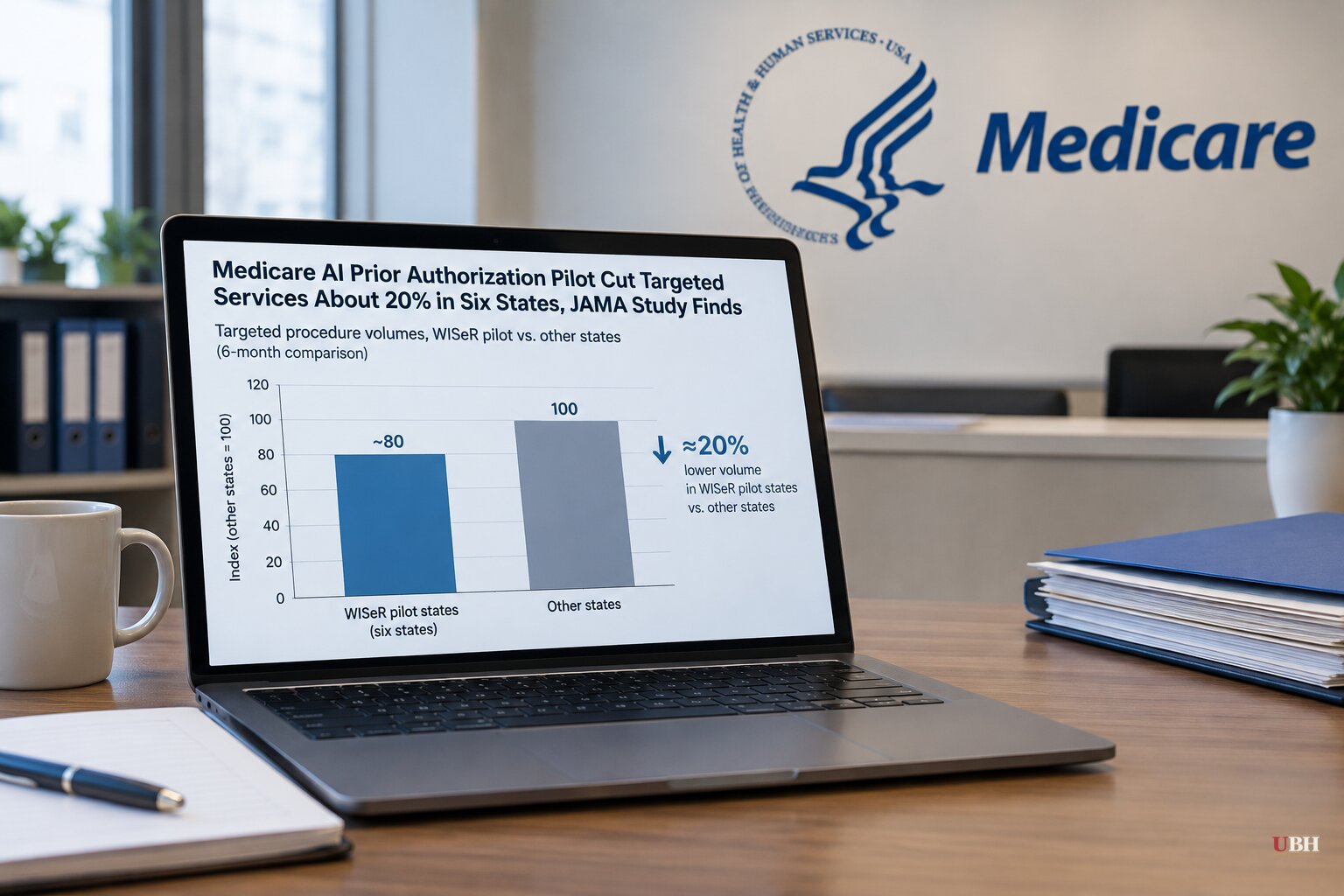
A JAMA research letter from the Schools of Public Health at the University of Minnesota and Brown University looked at 310 million patient records from all 50 states and the District of Columbia. Volumes of the targeted services dropped about 20% in the six WISeR states compared with other states after launch.
Epidural steroid injections, a high-volume procedure, fell about 15% from January to June. The researchers saw no significant change in services that do not yet require prior authorization. They said that points to prior authorization as the cause of the drop.
They also said they cannot tell whether the lost volume was wasteful or inappropriate care or legitimate medical care.
That is the central question, and nobody has answered it yet.
The government's case for the pilot
CMS says the target is low-value care that has cost Medicare billions with minimal or no clinical benefit. The targeted services are expensive, high-volume outpatient procedures such as epidural steroid injections, skin substitutes and nerve stimulation implants, which the agency considers at higher risk of fraud, waste and abuse.
The model also aims to replace the slow, retroactive billing audits Medicare has relied on. Taxpayers have a real interest in that. Paying for procedures that do nothing for patients is a waste of public money.
CMS built in safeguards. A human clinician must review every denial. A contractor loses its payment on any case a patient wins on appeal. CMS also audits decisions and turns the results into a quality score that adjusts pay.
Contractors drew warnings within weeks
Letters CMS sent between January and March became public on October 27 through a records lawsuit the Electronic Frontier Foundation filed in March. They show the agency pressing four of the six contractors.
On February 6, CMS told Genzeon, the New Jersey contractor, that "459 cases are awaiting a decision letter," some as old as 23 days. Its agreement called for an initial decision within three days.
On February 27, CMS wrote to Zyter, the Arizona contractor, after learning that "no prior authorization determination letters had been sent" to providers or patients. The agency said Zyter "may lack adequate processes" for handling provider complaints.
On March 17, CMS told Virtix Health, which covers Washington, that it had received multiple provider complaints. The letter cited blank or incomplete decision letters and "denial patterns that raise questions" about whether the company was following program guidance.
Innovaccer, the Ohio contractor, got the sharpest language. Its portal was due to open January 5. CMS extended the deadline to February 5, then sent a performance notice on February 20.
Critics say the safeguards are thin
Vishnu Malladi, writing on the Journal of Medical Ethics blog, argues the safeguards do little. He says a poor quality score cuts a company's payment by only 5 to 10%. He also notes that the reviewing clinician works for the company and sees the machine's recommendation before deciding.
Malladi cites records showing two companies denied 5,944 requests in the first three months, and one denied more than it approved. His central argument concerns appeals. Only 6.4% of refused requests in traditional Medicare were appealed in 2022, and 11.5% in Medicare Advantage in 2024. More than four in five of those Advantage appeals succeeded at least in part. If WISeR patients behave the same way, he writes, roughly nine in ten denials will never be tested.
Healthcare industry stakeholders have also criticized the vendors' proprietary tools as "black box" systems that keep providers from understanding how claims are judged. They argue that a licensed clinician making the final call does not cure automation bias, where reviewers defer to the software under heavy workloads. Those are the critics' arguments. CMS has not been shown to have conceded either point.
Sen. Kirsten Gillibrand (D-NY), ranking member of the Senate Aging Committee, put it more bluntly on October 30. "AI has no place making the final call on Americans' medical care," she said, calling the drop in services "dangerous and unacceptable." She introduced a resolution in May to end the pilot. Senate Republicans voted to block it in July.
The open question
The JAMA letter measures how much care stopped, not whether it should have. Separately, a Peterson Health Technology Institute report this year found AI-driven prior authorization has yet to cut costs across the healthcare system as a whole, even where individual organizations save money. The report pointed to structural changes in how payers design prior authorization as more effective.
The pilot is six months into a six-year run. Whether the roughly 20% drop represents waste removed or treatment withheld is a question the current data cannot settle.
Sources used for this briefing
7 links from 5 independent newsrooms (syndicated copies of the same report count once)
These are the sources it draws on, linked so you can verify.


