
Unbiased headlines. Facts, not spin.
Every story is an unbiased news briefing written from 110+ sources across the spectrum — sources linked so you can verify it yourself.
 economy
Notable (6/10)
August 10, 2026 at 06:32 PM
economy
Notable (6/10)
August 10, 2026 at 06:32 PM
Medicaid Income Caps Force Some Disabled Workers to Choose Between a Raise and Their Health Coverage
Erica Carter, 41, has been paralyzed from the chest down since a fall in her early 20s. She built an accounting career anyway, earned a master's degree in human resource management, and now works as a finance manager for the Omaha Nation public school district in Nebraska, chasing down grants for low-income students.
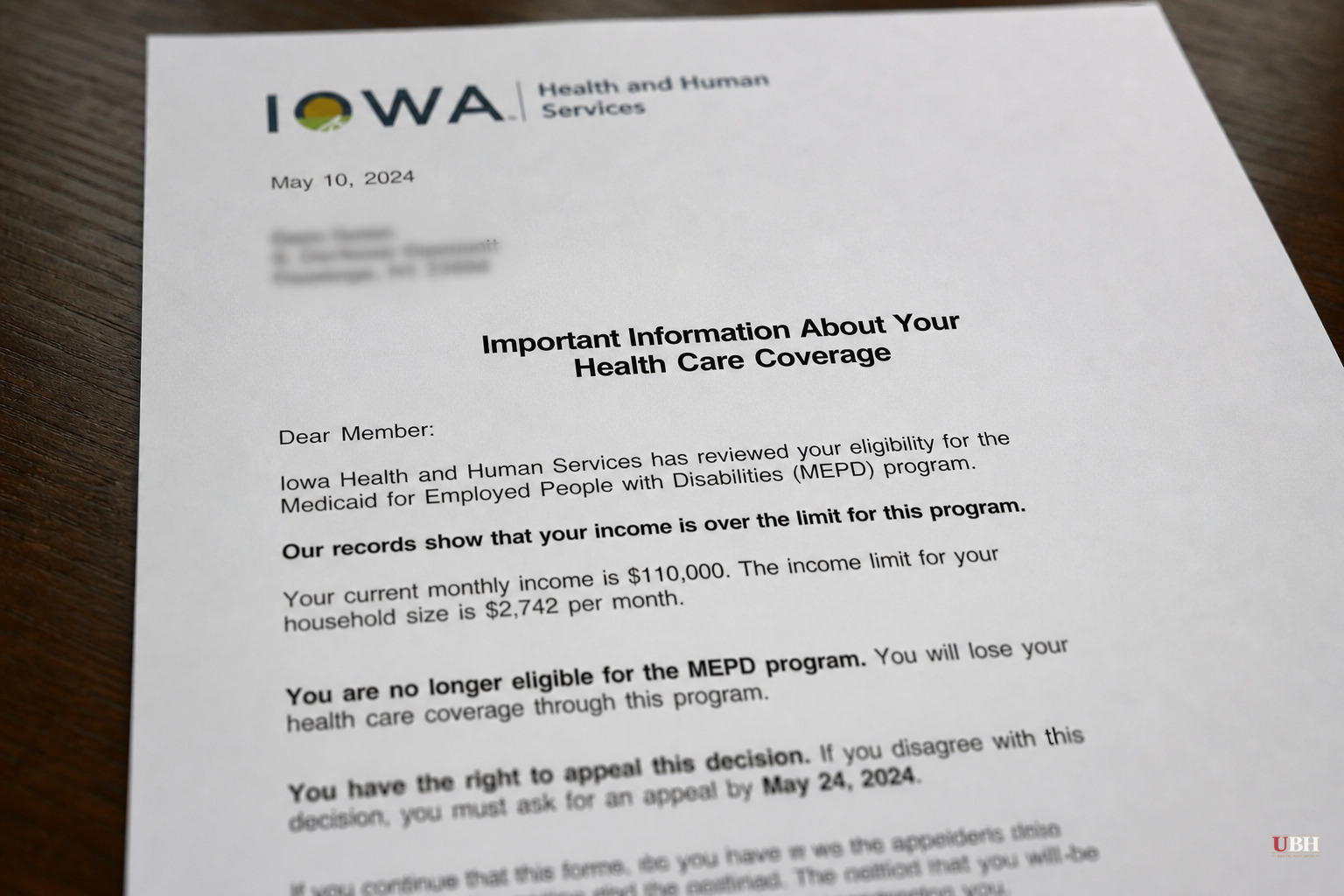
In November 2023, Iowa's Department of Health and Human Services sent her a letter. Her income, then $110,000 a year, put her over the state's limit for its Medicaid Buy-In for Employed People With Disabilities program, according to NPR. The letter gave her roughly two weeks to act before losing coverage.
Iowa's 2023 income cap for that program was $36,450 for a single-person household, according to NPR. Carter was making triple that. She had to decide whether to stay in a job she says she's passionate about or keep the Medicaid benefits she depends on for her disability-related care.
How buy-in programs work, and where they fall short
Medicaid buy-in programs let working people with disabilities pay part of their income to the state in exchange for keeping Medicaid coverage, which often pays for services and equipment that private insurance and Medicare don't fully cover, including personal care attendants and long-term supports. Forty-seven states run some version of this, according to NPR.
Most of those programs cap eligibility by income, assets, or both. Disability rights advocates have spent years lobbying state legislatures to lift those caps, arguing they trap disabled workers in place, unable to take a raise or a promotion without risking the medical coverage that lets them work at all.
Four states, Massachusetts, Minnesota, New Jersey, and Rhode Island, have eliminated income or asset limits on their buy-in programs over the past five years, according to NPR. Iowa has not.
The work requirement collision
The dispute lands at an odd moment. The federal government is preparing to roll out a new Medicaid requirement that many enrollees show they are working, volunteering, or studying at least 80 hours a month to keep their benefits, with states required to have verification systems in place by the end of 2026 and enforcement beginning in 2027. States, including Nebraska, are still building the systems needed to implement that requirement.
This creates a genuine tension. The policy argument behind work requirements is that Medicaid is meant to be a safety net, not a permanent subsidy, and that tying eligibility to work, school, or volunteering encourages self-sufficiency and protects the program's long-term finances for people who truly cannot work. That's a defensible position and it's the one driving the federal push.
But Carter's situation shows the flip side of that logic. She isn't gaming the system. She has a full-time job, a master's degree, and by all accounts is exactly the kind of Medicaid recipient work-requirement supporters say they want to reward. The problem isn't that she won't work. It's that the disability-specific Medicaid buy-in program she relies on punishes her for working too successfully, by cutting her off once her income crosses a threshold set years ago and, in many states, never adjusted since.
This is a structural contradiction, not a partisan talking point. A federal push toward work requirements is arriving alongside state-level income caps that can force higher-earning disabled workers off the very coverage that makes their jobs possible in the first place. Advocates in states like Iowa argue the caps haven't kept pace with wages or cost of living, while four states have already shown it's administratively possible to remove them entirely.
What's unresolved
NPR's reporting does not say what specific action Carter ultimately took after the November 2023 letter, whether she negotiated a pay adjustment, appealed the determination, found alternate coverage, or accepted a different arrangement with the school district. It's also unclear whether Iowa lawmakers have taken up proposals to raise or eliminate the buy-in program's income cap, as Massachusetts, Minnesota, New Jersey, and Rhode Island have done.
What is clear is that Iowa's $36,450 single-person income limit, if unchanged since 2023, remains far below what a finance professional with an advanced degree can expect to earn. Until states either raise those caps or redesign buy-in programs around something other than a hard income cliff, the choice Carter faced will keep landing on other disabled workers' desks too. The next test will be whether state legislatures move on buy-in reform at the same pace Washington is moving toward enforcing its new work-requirement rules.
Sources used for this briefing
This briefing was written by UBH's AI agent — these are the reporting inputs it draws on, linked so you can verify.


