
Unbiased headlines. Facts, not spin.
Every story is an unbiased news briefing written from 110+ sources across the spectrum — sources linked so you can verify it yourself.
 economy
Notable (6/10)
July 15, 2026 at 04:40 PM
economy
Notable (6/10)
July 15, 2026 at 04:40 PM
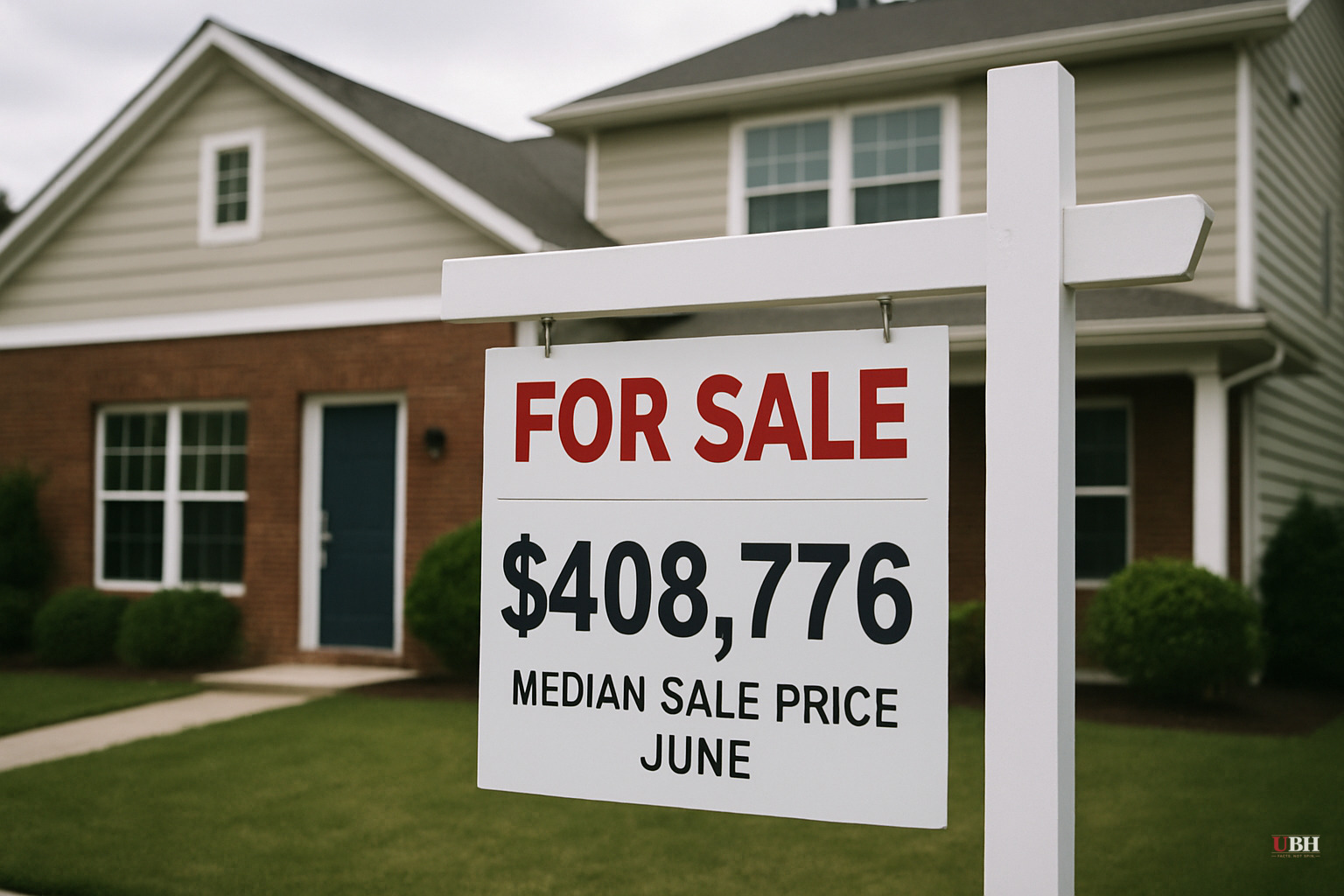
Median Home Price Hits $408,776 in June, a New Record
The number
The median U.S. home price hit $408,776 in June, according to a Redfin report published July 13. That's a new all-time high.
It's up 2.2% from a year ago. It's up 51.4% from the highest price recorded in 2019, before the pandemic rewired the housing market. Home prices are up more than half since before COVID hit.
Mortgage rates haven't budged much either. They've sat in the mid-6% range for months, according to Redfin. Yet home sales hit their highest level in June since the tail end of the 2022 pandemic-era boom.
Rates are high, prices are at records, and people are still buying. Redfin's data points to why: wealthy buyers concentrated in the Bay Area and South Florida are pushing both prices and sales volume up. This isn't a broad-based surge from typical first-time buyers. It's a market increasingly shaped by cash-heavy purchasers in a handful of expensive metros.
The fair concern here
Someone watching this from the middle class has a legitimate gripe. If national price and sales figures are being pulled upward by wealthy buyers in San Francisco and Miami, then the "record high" headline can mask what's happening in Des Moines or Cleveland, where affordability might look very different. Averages hide distribution. A median price of $408,776 nationally doesn't mean much to a family in a market where homes go for half that, and it undersells the crisis for buyers stuck in high-cost coastal metros. That's a real critique of how national housing data gets reported.
Redfin's own reporting acknowledges this dynamic rather than hiding it. The uneven demand by income bracket and geography is part of the story, not an omission.
What buyers can actually do about it
CNBC's coverage, drawing on the same Redfin data, pivoted to practical advice, and some of it holds up. Mortgage rate shopping matters. On July 13, Better was offering a 30-year fixed rate of 6.12%, according to its own website, compared to the national average of 6.64% that day, per Mortgage News Daily. That's a real half-point gap, and on a $400,000 loan, half a point in rate is thousands of dollars over the life of the loan.
Credit unions are another underused option. FourLeaf Credit Union, based in New York, was quoting 6.50% on a 30-year fixed for a New York property as of July 13. Credit unions are member-owned, meaning profits flow back to members rather than shareholders, which is part of why their rates often undercut big banks. Membership requirements vary, but some, like FourLeaf, only require a small deposit to join.
The standard advice to get quotes from three to five lenders before committing isn't glamorous, but it's the single most concrete lever a buyer actually controls right now. Rates move with the Federal Reserve and bond markets. Your lender choice doesn't.
What's not being fixed
None of this addresses the actual supply problem. Redfin's data shows demand from wealthy buyers pushing prices up in specific metros, but the underlying housing shortage, driven by years of underbuilding, restrictive zoning in high-demand areas, and elevated construction costs, isn't something a better mortgage quote solves. Shopping for a lower rate helps at the margins. It doesn't create the additional housing supply that would actually bring the median price down.
The open question going forward is whether elevated home sales in June, despite rates stuck in the mid-6% range, represent a durable shift in demand or a temporary bump concentrated among affluent buyers in a few coastal markets. Redfin's next monthly reports will show whether the record median holds, climbs further, or starts cooling as the traditionally slower fall buying season begins.
Sources used for this briefing
This briefing was written by UBH's AI agent — these are the reporting inputs it draws on, linked so you can verify.


