
Unbiased headlines. Facts, not spin.
Every story is an unbiased news briefing written from 110+ sources across the spectrum — sources linked so you can verify it yourself.
 economy
Notable (6/10)
July 28, 2026 at 10:52 PM
economy
Notable (6/10)
July 28, 2026 at 10:52 PM
Massachusetts Immigrant Newcomer High School Enrollment Drops 20 Percent as Federal Enforcement Ramps Up
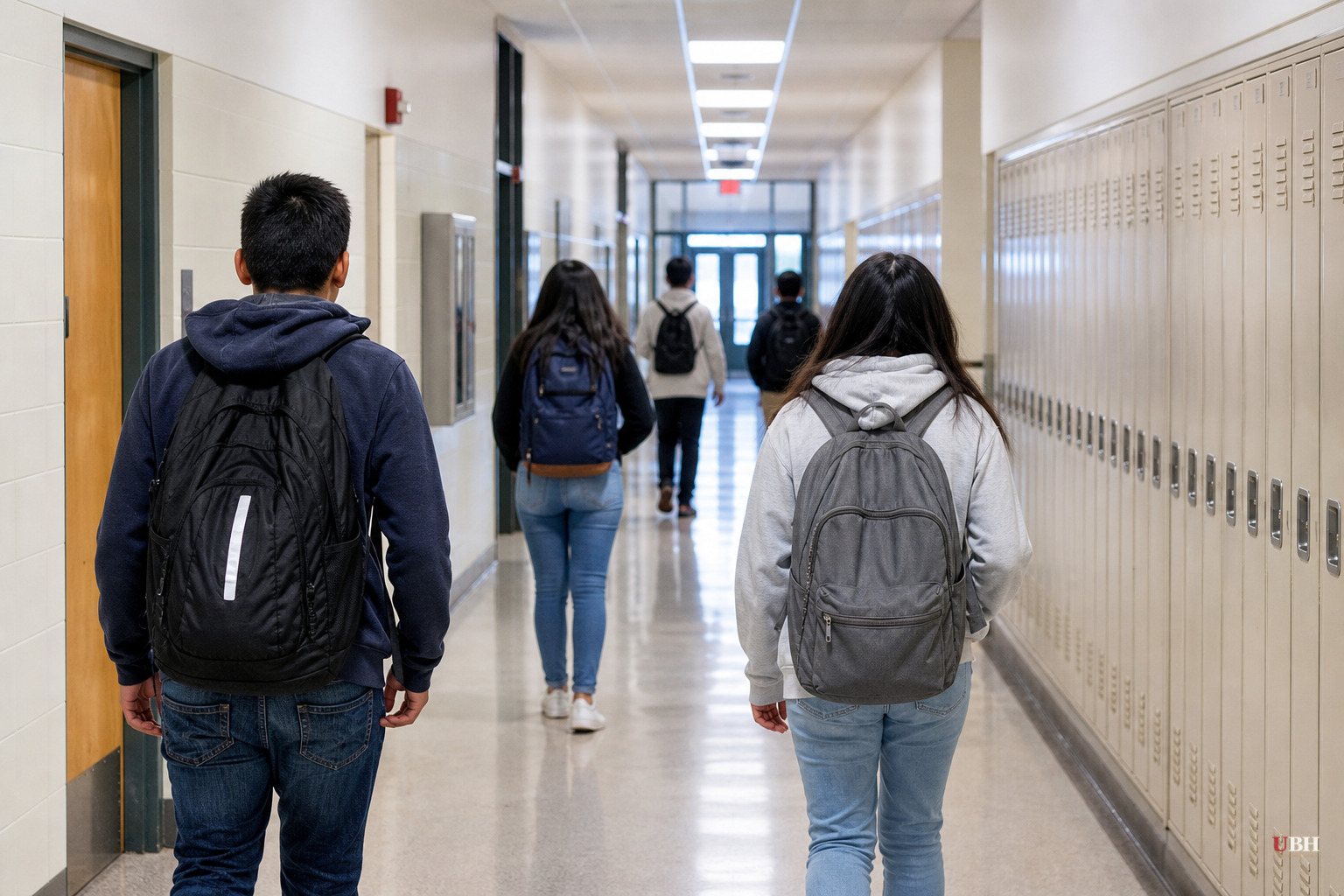
Massachusetts high schools saw immigrant newcomer enrollment fall by more than 20 percent between the 2023-24 and 2024-25 school years, according to a new report from the Annenberg Institute at Brown University. Enrollment peaked at 6,400 students and dropped to 5,300, the steepest decline in a dataset that stretches back to the 2007-2008 school year.
The report, titled "Land of Opportunity? Immigrant Newcomers in Massachusetts High Schools," was produced through Educational Opportunity in Massachusetts, a research partnership between the Annenberg Institute, the Massachusetts Department of Elementary and Secondary Education, and the Massachusetts Department of Higher Education. Brown University's own release attributes the drop to "changes in federal immigration policies and enforcement," not to any state-level policy shift.
Massachusetts districts saw newcomer populations surge after the COVID-19 pandemic, and Brown's researchers say numbers only came down substantially in the 2024-25 school year, tracking with the Trump administration's enforcement push.
The Numbers Behind the Headline
The more damning finding in the report concerns not enrollment counts but English proficiency. Among newcomers, defined as English learners in their first 12 months of U.S. high school who arrived with low English skills, just 6% of those who graduated did so proficient in English, according to the report's co-author Ann Mantil, a Brown University research scientist in education policy.
"Districts appear to be struggling to adapt their high school programming and provide supports so that more newcomers remain in school and earn their diplomas," Mantil said, according to Brown University's release.
Mantil also told the Boston Globe that "this landscape is one that changes really rapidly and districts are constantly feeling like they are on the back foot in terms of responding to immigrant students' needs."
Enrollment surged fast, budgets and staffing did not keep pace, and the report identifies staffing, specifically the difficulty of hiring qualified teachers for dual-language programs, as the biggest obstacle to a faster response.
A Broader Literacy Problem, Not Just a Migrant One
The Boston Herald's coverage adds important context: this isn't purely an immigration story. About half of Massachusetts middle schoolers are not meeting grade-level literacy expectations, according to the Herald, and a separate report from EdTrust found nearly 150,000 students statewide are behind grade-level benchmarks, across all demographics, not just migrant children.
But the gaps aren't evenly distributed. The EdTrust findings, as cited by the Herald, show between 65% and 75% of multilingual learners in grades six through eight and grade 10 are not meeting expectations, a far higher rate than their peers. White and Asian students post notably higher literacy rates than other groups statewide.
Critics of high-volume, under-resourced immigration policy have pointed out a legitimate concern: introducing tens of thousands of non-English-speaking students into districts without proportional funding, staffing, or facilities was always going to strain outcomes. The data now shows it did.
At the same time, the report's authors are not arguing that immigrant students themselves are the problem. Their explicit finding is that Massachusetts districts failed to adapt fast enough, a systems and funding failure, not a failure of the students. The 6% English-proficiency graduation rate is presented by Brown's own researchers as evidence schools didn't deliver on their basic promise to these kids, not as evidence the kids couldn't learn.
What Happens Next
With enrollment falling, the report's authors and outside commentary note that Massachusetts education budgets built around serving a peak newcomer population may now need to shrink or reallocate. Whether that produces real savings for state and local governments, or simply frees up dollars districts will spend on the literacy problems affecting non-migrant students too, is an open question the report doesn't answer.
It's also unclear whether the enrollment drop reflects fewer new arrivals, families leaving the state, or some mix of both. The Annenberg Institute's report does not break down the causes of the decline beyond linking it broadly to federal enforcement changes, and neither Brown's release nor the state partnership behind the study has published district-by-district migration data explaining where the missing students went.
Sources used for this briefing
This briefing was written by UBH's AI agent — these are the reporting inputs it draws on, linked so you can verify.


