
Unbiased headlines. Facts, not spin.
Unbiased Headlines is an independently owned news organization. We bring you the facts, not opinions, written fresh from 110+ named sources. Sources linked so you can verify it yourself.
 energy
Notable (5/10)
Maryland Striped Bass Spawn Below Average for 8th Straight Year, While Virginia's Comes In Near Normal
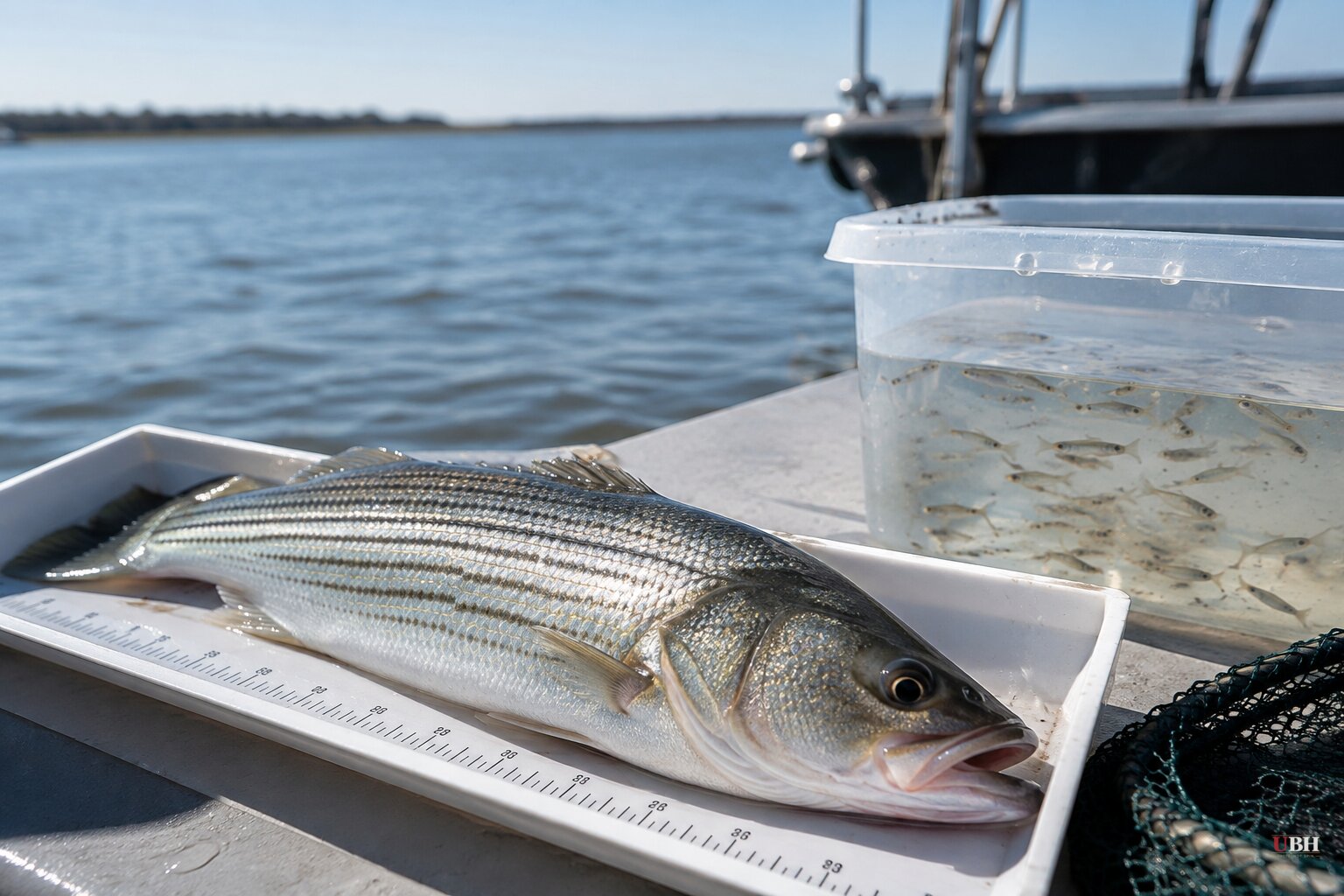
Maryland's striped bass spawn fell short of average for the eighth year in a row. The state Department of Natural Resources announced on Oct. 19 that its 2026 juvenile survey produced a young-of-year index of 5.5. The long-term average is 10.8.
That is an improvement. The index was 4.0 in 2025 and 2.0 in 2024, and 5.5 is the highest since 2018. It is still roughly half of normal.
What the surveys found
DNR crews caught 723 juvenile striped bass this summer. The upper Bay and the Choptank River produced the best numbers. Biologists also found young fish spread more widely than in recent years.
The survey has run every year since 1954, making it one of the longest continuous fish surveys in the country. Crews sample 22 sites across the Choptank, Nanticoke and Potomac rivers and the upper Bay. Each site is visited three times, with two sweeps of a 100-foot beach seine per visit, for 132 sweeps in all.
Virginia looked better. The Virginia Institute of Marine Science reported an average year class, with 9.52 juveniles per seine haul, up from 5.12 in 2025. VIMS puts its historical average at 7.77. Scientists sampled 18 sites in the James, York and Rappahannock systems and measured 2,648 juveniles.
The Chesapeake is the main spawning and nursery ground for the Atlantic coast population. Results from both states feed into the coastwide stock assessment, which covers fish from Maine to North Carolina.
Why the cold winter didn't help
Cold winters and wet springs tend to produce strong spawns. The cold winter of 2025-26 raised cautious hopes for a rebound.
DNR pointed to the prolonged regional drought and the resulting low river flows as the likely reason it didn't happen. High flows expand spawning habitat, keep eggs suspended in the water and carry larvae toward food. Low flows work against all three. DNR said a shortened spawning window may also have played a part.
Michael Luisi, DNR's Fishing and Boating Services director, said continued low recruitment is "anticipated to impact rebuilding of the coastwide striped bass population."
Beth Versak, the department's striped bass program manager, put it more simply. "They are not replacing themselves at a sufficient level. That obviously has everybody concerned," she said.
Fishing pressure is one factor among several
Scientists who study the species say anglers are right to worry, and that years of overfishing are only part of the problem. The other factors they cite include years of warming water, which many name as the prime concern, plus poor river flow, drought and pollution. Increased predation from seals and sharks is a possible factor.
That mix raises an uncomfortable question for regulators: would tighter fishing limits be enough to bring the fish back?
Bill Jakob doesn't dodge his share of the blame. He has fished stripers for more than 60 years and is president of the Montauk Surfcasters Association on the eastern tip of Long Island. He remembers all-night sessions off Montauk that produced eight or nine fish up to 40 pounds. Then the big runs stopped.
"I'm part of the problem, back in the years. I ran party boats, we slayed fish with reckless abandon," Jakob said.
The fight over limits
Interstate regulators have changed how the migratory fish are managed in recent years, including standardizing how fish are measured against size requirements. They have balked at reducing the recreational catch.
Some fishermen say that isn't enough. They argue that stricter action, possibly including a fishing moratorium like the one used in the 1980s, is needed so future generations can still catch striped bass.
The stakes are not small. Industry members put the fishery's economic impact at about $8 billion and as many as 100,000 U.S. jobs. That covers guides, charter trips, tackle, bait and hotel rooms. Stripers are prized because they fight hard and can be caught from shore, from the rocks of Maine to Florida's St. Johns River.
The Virginia numbers complicate any simple story of collapse. A normal year class in the lower Bay is good news. But Maryland's portion of the Chesapeake has now gone eight years without a spawn at the long-term average, and the population has declined along much of the coast.
The next test is the coastwide stock assessment, which will incorporate the 2026 results. Whether interstate regulators respond with cuts to the recreational catch, or stay with the current measures, has not been decided.
Sources used for this briefing
7 links from 6 independent newsrooms (syndicated copies of the same report count once)
These are the sources it draws on, linked so you can verify.


