
Unbiased headlines. Facts, not spin.
Unbiased Headlines is an independently owned news organization. We bring you the facts, not opinions, written fresh from 110+ named sources. Sources linked so you can verify it yourself.
 energy
Major Story (7/10)
Event date: October 26, 2026 ·
Data Center Fights Reach the Ballot Box in 40-Plus Towns as Power Line and Water Disputes Spread
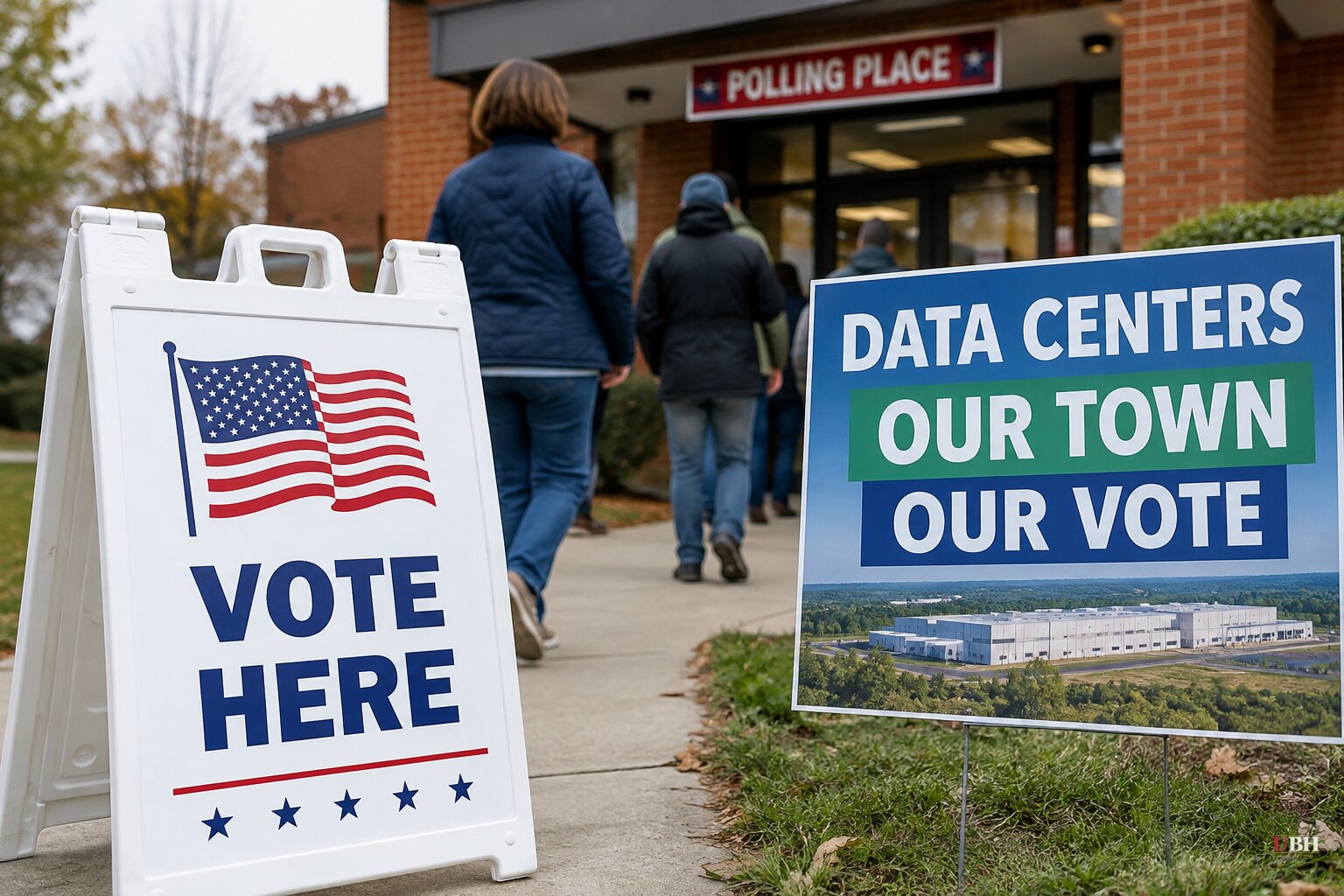
The data center boom is no longer just a zoning-board argument. It is on the ballot.
Brookings Institution senior fellow Darrell West said on NPR's Fresh Air that voters in more than 40 cities and towns across eight states will decide measures on data center bans, moratoriums, and requirements that residents get a vote before one is built. West said the backlash cuts across party lines.
The campaign ads show it. Democrat Sherrod Brown is running against Republican Sen. Jon Husted in Ohio with a spot calling Husted "the face of data centers" and accusing him of "sweetheart tax deals" while electricity bills climb. In Wisconsin, Republican Tom Tiffany is attacking Democrat David Crowley on the same issue in the governor's race. What used to be a bragging right, landing billions in investment, has become a liability in some places.
CNN polling shows more than 8 in 10 Americans are far more concerned than excited about the rapid development of artificial intelligence. That poll covers AI broadly, not data centers specifically.
The power lines are the next fight
The buildings are only half the footprint. Loudoun County, Virginia, has about 230 data centers covering more than 56 million square feet. The grid serving them is short on power.
The response is Valley Link, a proposed 765-kilovolt transmission project. One segment would run 260 miles of 160-foot towers across West Virginia, Virginia and Maryland. A second would cover 116 miles from rural central Virginia into Northern Virginia. The right-of-way is as wide as a sixteen-lane highway.
Cat Kemmerling, an Army engineer who lives with PTSD, got a mailed flyer this summer showing the line crossing the 70-acre West Virginia farm she and her husband Rob bought in 2018. "Overnight, my property has become worthless," she said. "We are becoming the extension cord for Loudoun County. We do not benefit at all from this."
Advocates, legal experts and local government representatives told CNN that residents are virtually powerless to stop projects like this. That is a claim about the legal process, and it is one the affected landowners are now testing.
Newport Township: a test case
The argument is playing out in concrete terms in Newport Township, Pennsylvania. Fit Energy announced a data center campus there on Oct. 6 for former mining and quarry land. The township approved zoning for data center and power uses in August, about two months before the public announcement.
Residents say they learned the details after the fact. On Oct. 28, hundreds turned out at Greater Nanticoke Area High School for an open house. Resident Karen Samuels said she wanted answers from a person, not a form. "I don't want a comment form. I want a person. I'm here tonight, and there is no person here to talk to," she said. She said she asked for a guarantee that the project would not affect well water and was told one could not be given.
Fit Energy CEO Joel Leonoff said the company is "a partner here" and wants "to be communicative." Engineering, remaining permits and a community benefits agreement with the township were still in progress as of the Oct. 6 announcement. The company's plans include on-site fuel cells alongside utility-grid power, and final equipment and utility arrangements remain under study.
What the fuel cell deal does and does not say
FuelCell Energy is the equipment supplier, not the developer. Its agreement with Fit Energy covers up to 380 megawatts of molten carbonate fuel cells in four phases for Fit Energy's potential data center projects. Only the first 30 megawatts is committed. Fit Energy can elect the remaining 350 megawatts in phases of 100, 125 and 125, with no payment owed until it does.
The agreement does not say how much of that capacity, if any, would go to Newport Township. FuelCell expected delivery of the first phase to begin in the fourth quarter of fiscal 2026.
FuelCell CEO Jason Few said in a Bloomberg interview that communities deserve a voice and that projects should be judged on what they do, not rejected on sight. He did not call the concerns about utility bills, water and fossil-fuel reliance wrong. His argument is that a project that strains the grid differs from one that generates its own power on site. The Fuel Cell and Hydrogen Energy Association, an industry group, makes a similar case. It says fuel cells use much less water than conventional generation and can reuse their own byproduct heat and water for cooling. Those are industry claims. They are not commitments from Fit Energy about Newport.
Washington's positions
President Trump has taken the other side of the local fights. "The only reason that communities throughout the U.S.A. should not want Data Centers is if they want to end up being backwards and poor," he wrote on Truth Social on Aug. 31. He has also said he wants to use federal public lands for data centers, and has called on developers to pay communities a dividend.
Two former advisers, Democrat Robert Wolf (Obama) and Republican Stephen Moore (Trump), released a "bipartisan framework" through Moore's group Unleash Prosperity Now. They say "America should neither surrender data center development to a regulatory free-for-all nor freeze it through blanket moratoriums." Their federal guidelines cover ratepayer protection, energy security, environmental stewardship, transparency and community engagement, and local authority over land use.
In Memphis, the city council rejected an 18-month pause on new data center development amid resident concerns.
What comes next
The ballot measures will give the first broad count of how voters weigh the investment and tax base against bills, water and land. In Newport Township, the community benefits agreement and the final utility and equipment arrangements are still unsettled. Residents there are asking for a binding answer on well water. So far, Fit Energy has not given one.
Sources used for this briefing
7 links from 7 independent newsrooms (syndicated copies of the same report count once)
These are the sources it draws on, linked so you can verify.


