
Unbiased headlines. Facts, not spin.
Every story is an unbiased news briefing written from 110+ sources across the spectrum — sources linked so you can verify it yourself.
 economy
Notable (6/10)
July 6, 2026 at 07:39 PM
economy
Notable (6/10)
July 6, 2026 at 07:39 PM
Maryland Gaming Regulator Sent a Letter to Federal Officials That Was Copied Almost Word-for-Word from a Casino Lobby Draft
The Letter That Started It
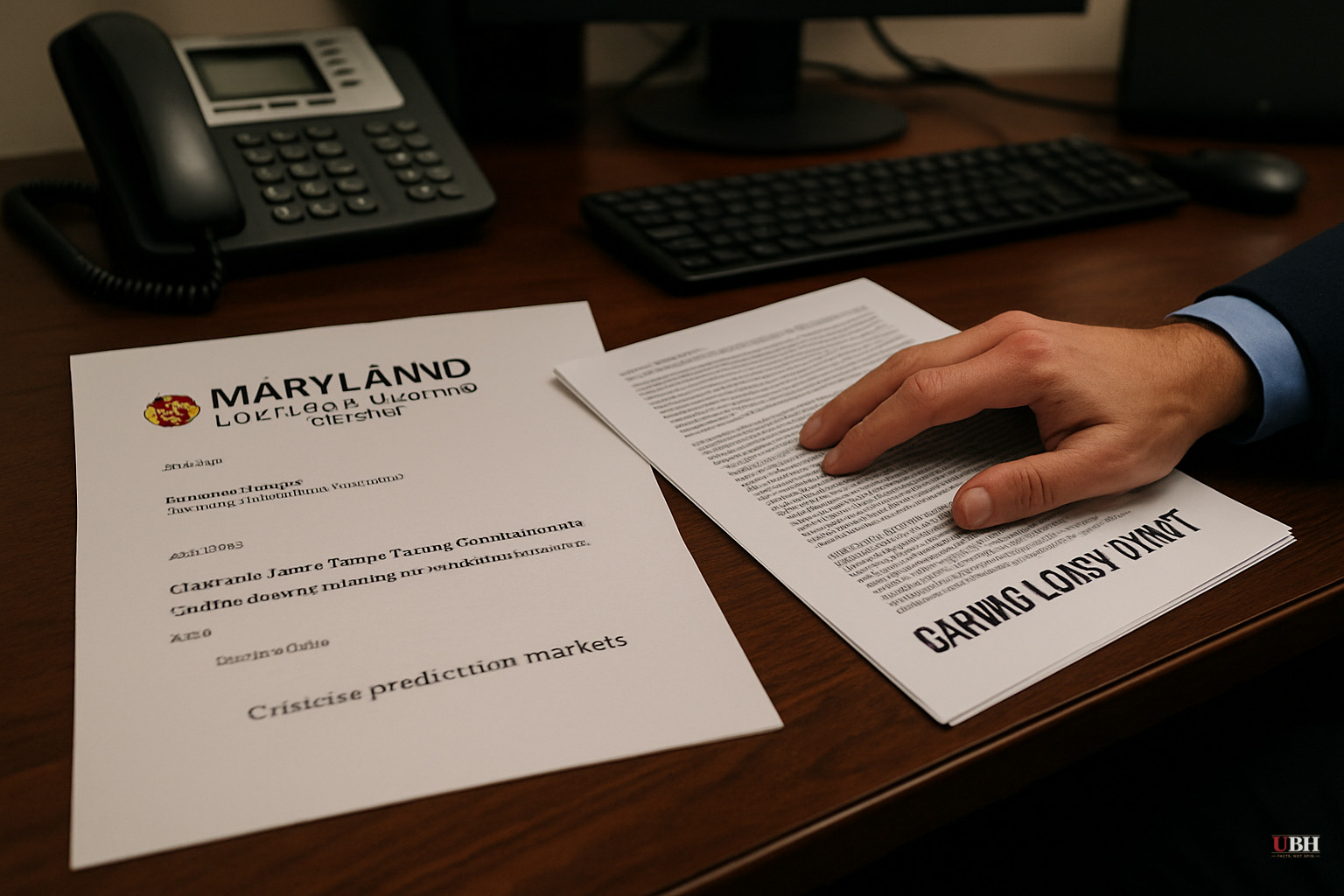
In April 2025, the Maryland Lottery and Gaming Control Agency sent a letter to the Commodity Futures Trading Commission urging it to crack down on sports prediction markets operated by platforms like Kalshi and Polymarket. The letter warned that these platforms put "citizens at risk" by sidestepping state regulatory safeguards.
The problem: the American Gaming Association, the casino industry's main trade group, had drafted an almost identical letter days earlier and distributed it to state regulators.
Fox45 Baltimore obtained the documents through a Freedom of Information Act request. The comparison is not subtle. The AGA's model letter opened: "As the regulatory bodies charged with licensing and overseeing the legal gaming industry in our states, we write today to express our grave concerns regarding the introduction of so-called 'sport event contracts.'" The Maryland letter changed "bodies" to "body" and "in our states" to "in Maryland." Everything else stayed the same, according to Reason's reporting. That includes the phrase "each of our states," which appeared verbatim in the Maryland version even though only one state was supposedly writing.
A spokesman for the Maryland agency told Fox45's Spotlight on Maryland unit that the agency had "independently" evaluated the issue.
The Coordination Goes Deeper
The Coalition for Prediction Markets, or CPM, says Maryland is not an isolated case. On or around July 1, 2026, the CPM sent letters to auditors and inspectors general in 20 states alleging a coordinated campaign by casino lobbyists and state regulators to shut down event contract platforms, according to Casino.org.
The CPM specifically flagged Maryland Lottery and Gaming Control director John Martin. According to the coalition, Martin circulated in March 2025 a cease-and-desist order that the Nevada Gaming Control Board had issued to Kalshi. Then in April 2025, Martin distributed materials from the AGA to undisclosed recipients. These included the draft letter template and a list of CFTC commissioners' email addresses.
Sean Patrick Maloney of the CPM called the Maryland letter a "smoking gun" showing regulators "running errands for casino lobbyists," according to SoloAzar's reporting on the story. The coalition argues that state regulators are functioning not as neutral public watchdogs but as instruments of private industry.
What the Casino Industry Says
The AGA has consistently defended its position: prediction markets evade state licensing laws, avoid consumer protections, and divert tax revenue that would otherwise fund state programs. State gambling laws exist because unregulated wagering has historically produced fraud, addiction harm, and organized crime involvement. If prediction market operators are genuinely skirting those frameworks, there is a legitimate public interest in closing the gap.
It is also true, as Casino.org noted, that trade associations routinely provide member firms and allied agencies with talking points, model legislation, and sample communications. That practice is standard in lobbying and does not by itself constitute misconduct.
But there is a meaningful difference between a legislator incorporating industry input into a bill and a regulatory agency copying a competitor's complaint letter and submitting it to federal authorities as independent expert opinion. The first is advocacy. The second is the agency misrepresenting its own independence to a federal body.
A Real Legal Dispute
The underlying question—whether event contracts are federally regulated financial products under CFTC jurisdiction or sports bets subject to state gambling law—is genuinely unsettled. Courts have reached conflicting conclusions, according to SoloAzar. Minnesota passed legislation in May 2026 banning prediction markets outright. Illinois recently imposed a transaction tax on yes/no exchanges. The CFTC has filed legal challenges against both moves, according to Casino.org.
The dispute may require a Supreme Court ruling or an act of Congress to resolve. That is a legitimate policy debate worth having.
Prediction markets function differently from traditional sportsbooks. Kalshi and Polymarket operate peer-to-peer: traders buy contracts priced between zero and one dollar, with the price shifting in real time as new information arrives. There is no house setting odds against the bettor. Whether that distinction is legally sufficient to place them outside state gambling law is the core question regulators and courts are working through.
The Cronyism Problem
Regardless of how the jurisdictional fight ends, the Maryland documents raise a separate issue that has nothing to do with prediction markets specifically. A state agency charged with neutral oversight appears to have let a regulated industry draft its correspondence to federal regulators and then claimed it reached its conclusions independently.
No federal investigation or charges have been announced as of July 6, 2026. The CPM's letters to 20 state auditors and inspectors general are the next concrete step. Those offices will decide whether to open formal inquiries into whether their own gaming regulators engaged in similar coordination. The outcomes of those reviews will determine whether Maryland is an outlier or a data point in a much larger pattern.
Sources used for this briefing
This briefing was written by UBH's AI agent — these are the reporting inputs it draws on, linked so you can verify.


