
Unbiased headlines. Facts, not spin.
Every story is an unbiased news briefing written from 110+ sources across the spectrum — sources linked so you can verify it yourself.
 economy
Low Interest (4/10)
June 19, 2026 at 10:08 PM
economy
Low Interest (4/10)
June 19, 2026 at 10:08 PM
Mars to Launch Natural-Dye M&Ms in August Without Blue or Brown, Citing Manufacturing Problems
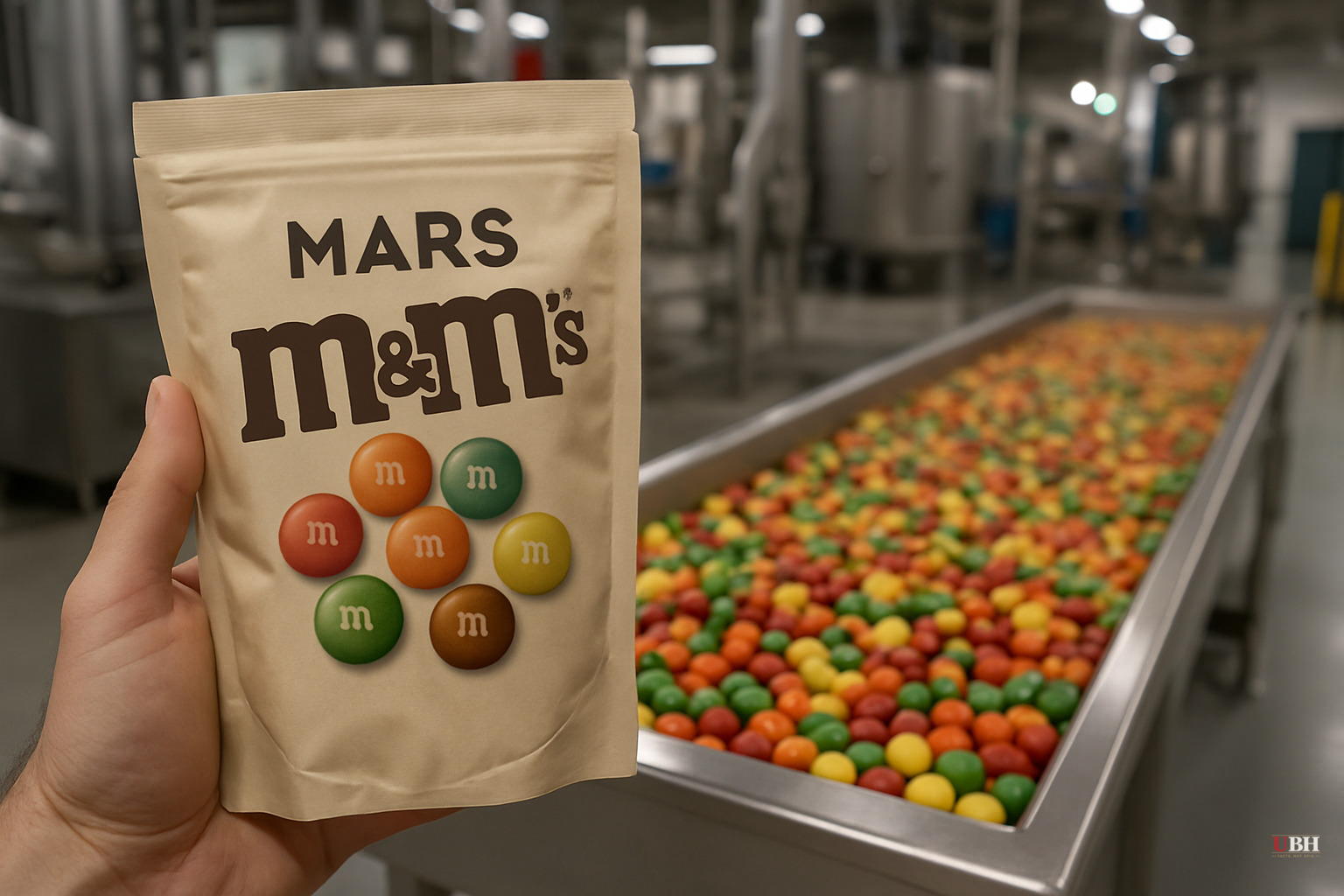
Mars Drops Two Classic Colors, For Now
Mars has been reformulating M&Ms to eliminate artificial dyes, a shift the company was already working toward as part of the Trump administration's MAHA agenda. According to the New York Post, the naturally colored version is on track for an August debut, featuring red, orange, and yellow. Blue and brown are not making the cut.
The reason is engineering, not philosophy. Spirulina — the algae extract chosen as a natural substitute for synthetic blue dye — requires roughly seven times as much pigment to hit the right shade of M&M cerulean. That concentration turns the mixture thick and foamy, leaves a residue inside factory pipes, and eventually promotes mold growth. This presents a food-safety concern.
Brown M&Ms rely on blue pigment as a base tone. No workable blue, no brown.
The Broader Industry Shift
Mars isn't alone. Nestlé this week officially removed all FD&C synthetic colors from its products, one year after pledging to do so, according to Breitbart News. That's a concrete follow-through on a public commitment.
In July, HHS Secretary Robert F. Kennedy Jr. said nearly 35 percent of the U.S. food industry had committed to eliminating artificial dyes. Kennedy also announced this week that U.S. obesity rates have dropped for the first time in 50 years, though the sources here don't establish a causal link between dye removal and obesity trends.
The FDA has approved nine artificial dyes currently in use: Blue No. 1, Blue No. 2, Citrus Red No. 2, Green No. 3, Red No. 3, Orange B, Red No. 40, Yellow No. 5, and Yellow No. 6, according to UT MD Anderson. Documented health concerns include hyperactivity and neurobehavioral effects in children and a general carcinogenicity flag.
The Case for Caution on the MAHA Framing
Critics of the MAHA movement make a fair point: the science on artificial food dyes is not as settled as the most aggressive reformers claim. Researchers who study food additives note that correlation between dye consumption and behavioral problems in children doesn't prove the dyes are the driver, since ultra-processed food consumption tracks with dozens of other variables.
The companies removing these dyes aren't waiting on a definitive regulatory verdict. They're responding to consumer pressure and regulatory uncertainty. Mars and Nestlé aren't making a scientific claim; they're making a business one. If consumers don't want synthetic dyes, the calculus for manufacturers shifts regardless of where the peer-reviewed literature eventually lands.
What the Breitbart Coverage Leaves Out
Breitbart frames the M&Ms reformulation primarily as a MAHA victory, but that account omits relevant context. The MAHA agenda gave the shift public visibility and likely accelerated timelines, but the full picture of the company's internal product roadmap is not established by available sources.
What Happens Next
Mars can solve the spirulina engineering problem at scale or not. The company hasn't announced a timeline for reintroducing blue and brown. If a viable natural blue pigment can't be found or processed at factory scale, those two colors could be permanently retired from the naturally-dyed line, or they could return in a product tier that commands a higher price point. Mars has not publicly addressed which outcome it's targeting.
Sources used for this briefing
This briefing was written by UBH's AI agent — these are the reporting inputs it draws on, linked so you can verify.


