
Unbiased headlines. Facts, not spin.
Every story is an unbiased news briefing written from 110+ sources across the spectrum — sources linked so you can verify it yourself.
 health
Major Story (7/10)
July 7, 2026 at 09:30 PM
health
Major Story (7/10)
July 7, 2026 at 09:30 PM
Marijuana Rescheduling: What Moving Cannabis to Schedule III Actually Changes, and What It Does Not
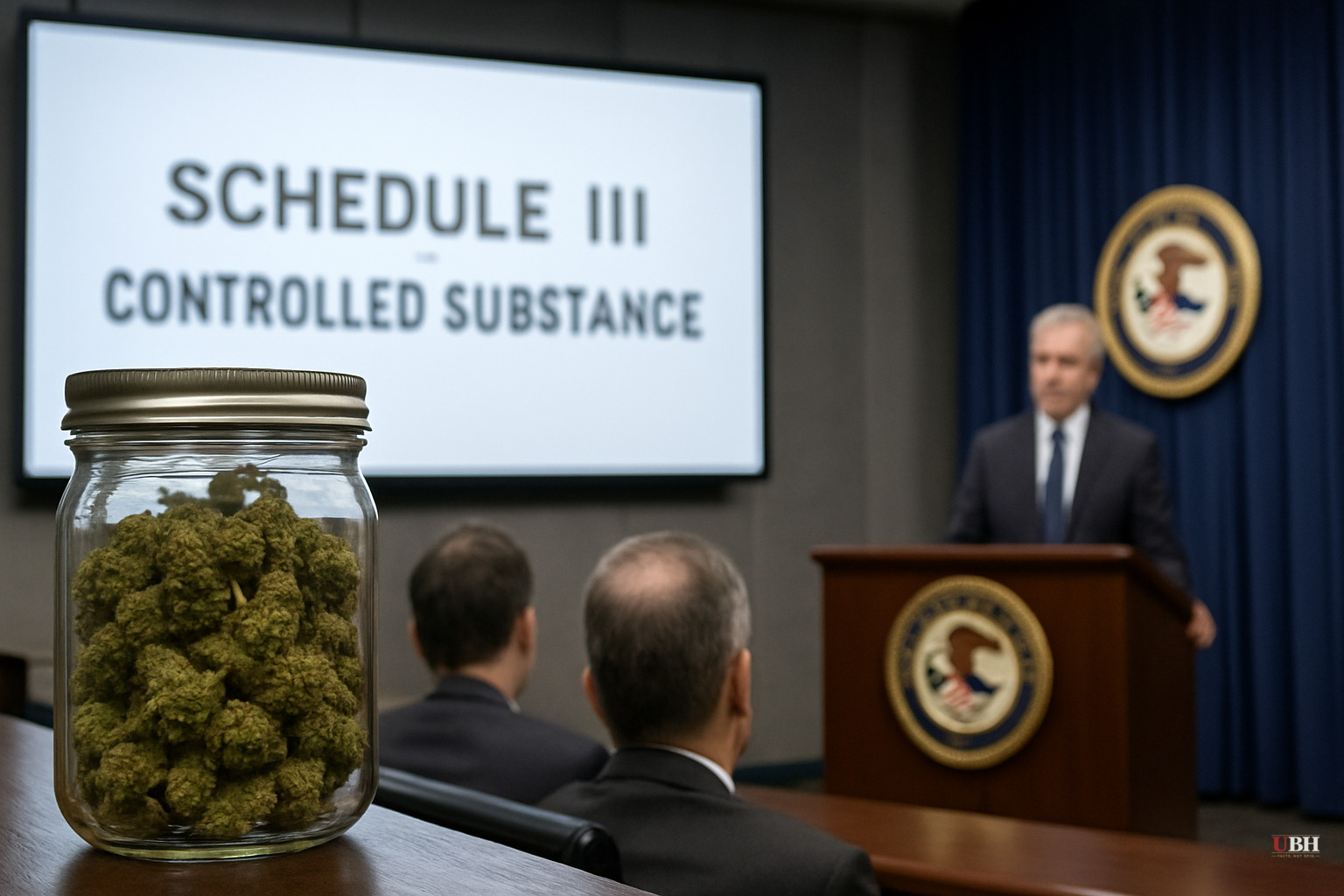
What Rescheduling Actually Does
Under the Controlled Substances Act, Schedule I means no accepted medical use and high abuse potential. Schedule III means accepted medical use exists and the abuse potential is lower than Schedule I or II drugs. Moving marijuana to Schedule III places it in the same category as ketamine and certain anabolic steroids.
This represents a real legal change, but it is not legalization.
Federal possession, sale, and distribution of marijuana remain crimes. The Controlled Substances Act still applies. Crossing a state line with cannabis is still a federal offense regardless of whether both states have legal markets.
The Biggest Immediate Impact: Taxes
The most concrete near-term consequence for the cannabis industry is tax relief. Under Section 280E of the Internal Revenue Code, businesses trafficking in Schedule I or II controlled substances cannot deduct ordinary business expenses from their federal taxes. That provision has hammered legal cannabis operators for years.
Rescheduling to Schedule III removes marijuana from 280E's reach. Cannabis companies could then deduct rent, payroll, and other operating costs like any other legal business. For an industry that has struggled with profitability despite billions in retail sales, this is significant.
What It Does Not Fix
Banking remains a serious problem. Federal law still prohibits banks insured by the FDIC from servicing businesses engaged in federally illegal activity. Rescheduling does not change that directly. Cannabis businesses in states with legal markets have operated largely in cash for years, creating security risks and accounting headaches. Congress has repeatedly failed to pass the SAFE Banking Act, which would address this separately.
State-level legality is also unaffected. A dispensary in a state without a legal cannabis program is still operating illegally under both state and federal law. Rescheduling changes nothing for those operators.
Prior federal convictions for marijuana offenses are not automatically expunged. Anyone serving time or carrying a record for a federal cannabis conviction would need separate clemency, pardon, or legislative action to see relief.
The DEA Process and What Comes Next
The Drug Enforcement Administration issued a proposed rule to reschedule marijuana. The notice-and-comment period drew an extraordinary volume of public responses. A DEA administrative law judge was assigned to review challenges to the proposal.
The process is not finished. Legal and procedural challenges from both directions—advocates who want descheduling entirely and opponents who argue the science does not support even Schedule III—remain active.
The Legitimate Concerns on Both Sides
Opponents of rescheduling, including some law enforcement organizations and anti-drug advocates, argue that rescheduling sends the wrong message at a time when marijuana potency has increased dramatically from the strains studied in earlier research. Their concern is that federal policy is being driven by politics and lobbying, not updated science on addiction risk, mental health impacts, and adolescent use.
The research on high-potency cannabis and psychosis risk, particularly in adolescents, is more complicated than legalization advocates typically acknowledge.
On the other side, Schedule I's "no accepted medical use" designation has always been difficult to defend given that states across the country have established medical marijuana programs. The Schedule I status blocked legitimate research for decades, meaning some of the data gaps critics cite are a direct consequence of the policy itself.
The Industry's Real Problem
Legal cannabis companies have watched their state-regulated markets cannibalized by a persistent illegal market that pays no taxes, follows no safety testing requirements, and undercuts licensed operators on price. Rescheduling does nothing to address that dynamic.
The 280E tax fix helps margins. It does not solve oversupply, price compression, or the structural advantage illegal operators hold in high-tax states like California and Illinois, where the legal market has underperformed projections for years.
The Unresolved Federal-State Conflict
The core tension in U.S. cannabis policy is that Congress has not acted. Rescheduling is an executive branch administrative action. It does not resolve the fundamental conflict between federal law and state law, does not create a federal regulatory framework for cannabis commerce, and does not answer what happens when the next administration decides to enforce federal law more aggressively in legal-market states.
That last question is the one the industry cannot price in. Regulatory certainty requires Congress. Administrative rescheduling, however significant, is reversible.
Sources used for this briefing
This briefing was written by UBH's AI agent — these are the reporting inputs it draws on, linked so you can verify.


