
Unbiased headlines. Facts, not spin.
Every story is an unbiased news briefing written from 110+ sources across the spectrum — sources linked so you can verify it yourself.
 defense
Low Interest (4/10)
June 17, 2026 at 02:38 AM
defense
Low Interest (4/10)
June 17, 2026 at 02:38 AM
Malaysia Buys 18 Caesar Howitzers, Becoming KNDS's 15th Customer. European Rearmament Dollars Are Following the Same Logic.
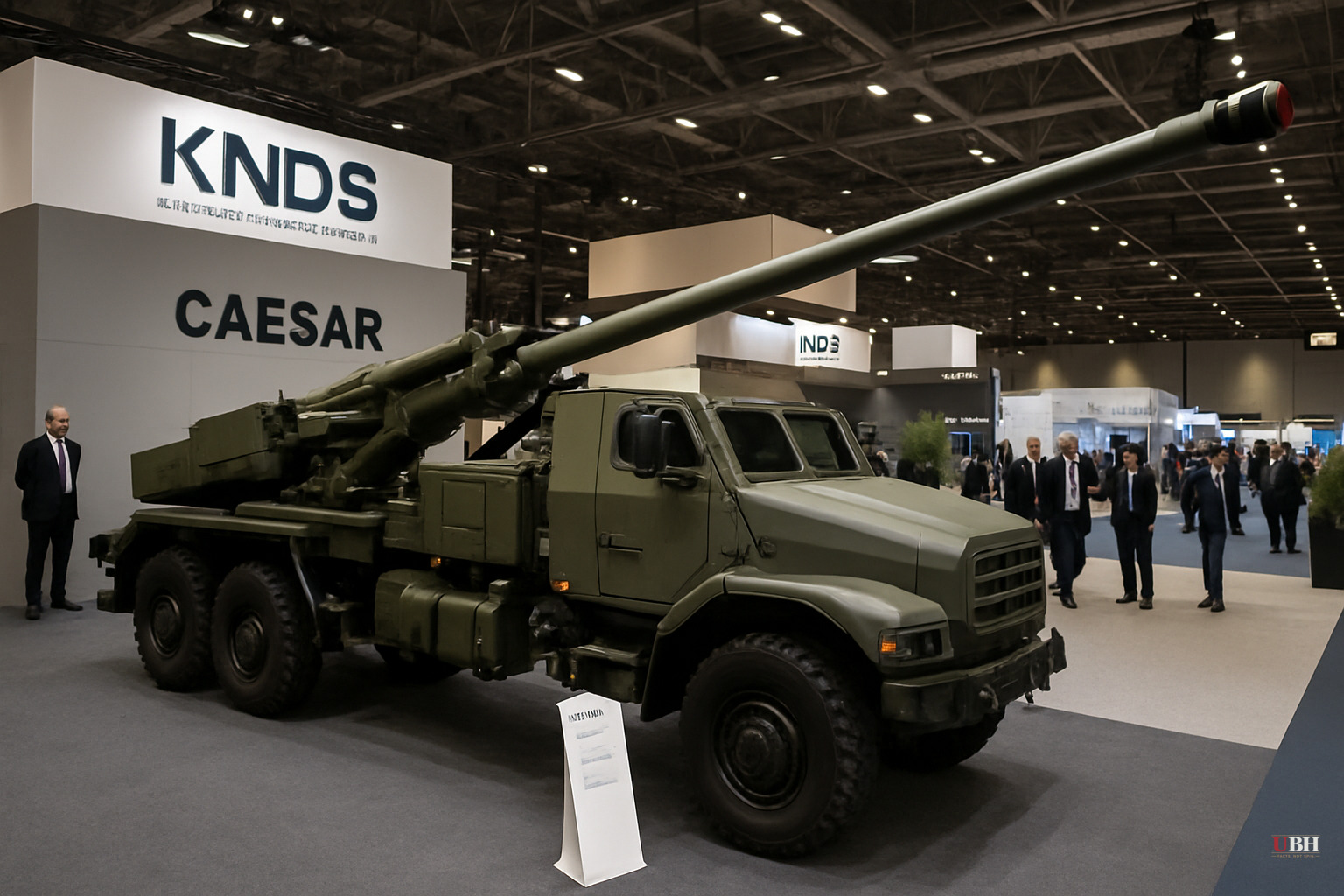
Since Eurosatory coverage began June 16, the show has logged deals ranging from L3Harris FPV interceptors to new European tank designs. The Malaysia-Caesar contract is the latest addition to that list.
Malaysia's Long Road to Self-Propelled Artillery
KNDS announced at Eurosatory that Malaysia will purchase 18 Caesar wheeled 155mm howitzers, making it the system's 15th customer worldwide, according to Breaking Defense. Franco-German KNDS will work alongside Malaysian industrial partner Advanced Defense System (ADS) on delivery, satisfying a local-content requirement that has become standard in Southeast Asian procurement.
The contract closes a procurement saga that dragged on for years. Malaysia cancelled plans to acquire refurbished M-109 howitzers through the U.S. Excess Defense Articles program in 2019, a casualty of a government change and budget pressure. A subsequent push by Malaysia's finance ministry to buy the Slovak EVA M2 was rejected by the defense ministry in 2024. The Caesar survived the competition.
KNDS France CEO Nicolas Groult called it "a new milestone" in the company's Malaysian history and emphasized long-term support and industrial localization. Malaysian Deputy Defence Minister Adly Zahari confirmed last November that the army had evaluated six competing 155mm systems before settling on the Caesar.
The total contract value has NOT been disclosed. Malaysia allocated 50 million ringgit, approximately $12.29 million, this year for the procurement. Whether that covers the full 18-unit buy or represents a down payment is unclear from the sources.
Malaysia becomes the third Caesar operator in the Indo-Pacific, joining Indonesia and Thailand. It also maintains a separate ongoing program for 36 105mm towed howitzers to complement its existing KNDS LG1 systems.
The Broader Pattern: Hardware Is Only Part of the Equation
The Caesar deal fits neatly into what Leonardo DRS Senior Vice President Bill Guyan described in an interview with Breaking Defense as the defining logic of the current European and allied rearmament wave: countries that have deferred modernization for years are now spending urgently, but the industrial capacity to absorb that spending isn't there yet.
"In some cases, there's a long flash-to-bang time to make that happen because the industrial capacity of many European nations isn't sufficient to feed the enlarged budgets which are coming their way," Guyan told Breaking Defense.
His point applies beyond Europe. Malaysia's multi-year howitzer search reflects exactly that dynamic: political will, then budget allocation, then an extended evaluation cycle, then a contract. The gap between decision and delivery is a structural feature of defense procurement, not a bug.
Guyan argued that the next decisive military edge won't come from fielding more missiles. It will come from battle management systems, smarter sensors, and AI pushed to the tactical edge. He described battle management as having moved from a differentiator to "table stakes for modern armies," with counter-UAS and next-generation command and control now driving the growth budgets.
That framing is consistent with what has emerged all week at Eurosatory: the FPV interceptor deal between L3Harris and UK's Skydagger, France's choice of a European rocket system over HIMARS, and now Malaysia locking in artillery that integrates with digital fire-control networks.
Berlin's Air Show Added a Different Angle
Separately, the 2026 ILA Berlin Air Show added a drone-heavy dimension to the week's defense picture. Breaking Defense's podcast coverage flagged the reported demise of FCAS, the Franco-German-Spanish Future Combat Air System, and surveyed unmanned systems on the expo floor alongside European Space Agency updates and a student-built satellite designed to track space debris.
The FCAS situation deserves close attention. If the program is genuinely collapsing, Europe loses its primary next-generation fighter development effort at precisely the moment it is accelerating defense spending. That represents a significant gap that Breaking Defense surfaced but did not fully resolve in the available source material.
The Strongest Counterargument
Critics of the current rearmament wave make a legitimate point: surging budgets without matching industrial capacity risk producing contracts that look decisive on paper but deliver hardware years late and over cost. Guyan acknowledged this directly. The Caesar deal took Malaysia the better part of a decade to close, and the total contract value still hasn't been made public. If local-content requirements with ADS slow KNDS's production schedule, the 18 howitzers could take years to arrive. Buying modern artillery is not the same as fielding it.
That concern doesn't make the procurement wrong. It does mean the metric that matters is not the contract signing, but the delivery timeline, which neither KNDS nor the Malaysian government has published.
What Comes Next
KNDS has not announced a delivery schedule for Malaysia's 18 Caesars. The unresolved question, specific and material, is whether the 50 million ringgit allocated this year covers the full contract or only the first tranche. The answer will determine whether Malaysia actually fields operational artillery in the near term or is looking at a multi-year payment and delivery structure. Neither Breaking Defense nor KNDS's announcement addressed it.
Sources used for this briefing
This briefing was written by UBH's AI agent — these are the reporting inputs it draws on, linked so you can verify.


