
Unbiased headlines. Facts, not spin.
Every story is an unbiased news briefing written from 110+ sources across the spectrum — sources linked so you can verify it yourself.
 finance
Notable (5/10)
May 26, 2026 at 07:11 AM
finance
Notable (5/10)
May 26, 2026 at 07:11 AM
Macquarie Warns Yuan Could Surge to 5 Per Dollar if Chinese Firms Dump Their Dollar Holdings
The Setup
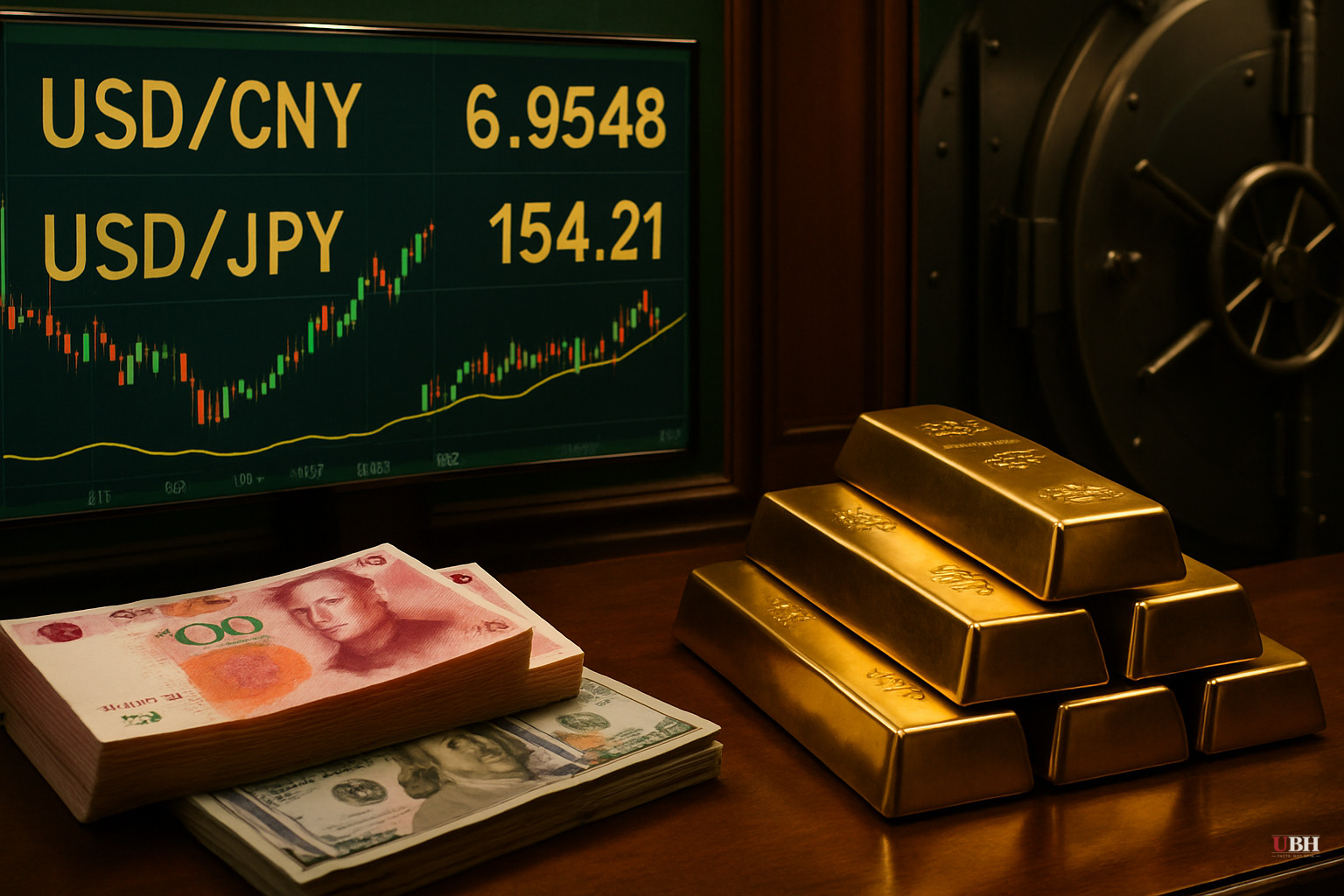
Right now, the yuan trades at roughly 7.2 per dollar. Macquarie Group is saying it could go as strong as 5 per dollar under a specific scenario. That's a 30% appreciation of the Chinese currency. Not a rounding error.
According to Bloomberg, Macquarie economists led by Larry Hu laid this out in a research note dated May 26, 2026. The core argument: Chinese firms have been sitting on a massive pile of U.S. dollars — essentially running a carry trade, borrowing or holding cheaper yuan while parking money in higher-yielding dollars. If that trade reverses, it reverses hard and fast.
What a Carry-Trade Unwind Actually Means
A carry trade is simple. You borrow in a low-yield currency and hold a high-yield one. Pocket the difference. For years, Chinese exporters and firms have accumulated dollar holdings — partly because the dollar paid better, partly because trade settlement happens in dollars.
If those firms suddenly decide to convert those dollars back into yuan — whether because the dollar weakens, because stimulus at home makes yuan assets more attractive, or because trade volumes drop — you get a massive wave of dollar selling and yuan buying.
The result: yuan spikes. Fast.
Macquarie's Hu said the move could push the exchange rate to six or even five yuan per dollar. That's not a baseline forecast. That's a tail-risk scenario. But Macquarie thought it was worth publishing.
The Two Roads to a Yuan Rally
Macquarie lays out the logic clearly, according to Bloomberg's reporting.
Road One — Dollar Weakness: As long as Chinese domestic demand stays weak and exports stay strong, any yuan appreciation just mirrors a broadly weaker dollar. Nothing special happening in China. The yuan goes up because the dollar goes down. Moderate, gradual, manageable.
Road Two — The Snap: Exports falter. Beijing panics and dumps major stimulus into the economy. Chinese firms unwind their dollar positions to take advantage of domestic opportunities. Capital flows reverse. The yuan rips. This is the 5-per-dollar scenario.
Which road are we on? Nobody knows yet. But the conditions for Road Two are NOT hypothetical — China's export machine is under real pressure from ongoing U.S. tariffs, and Beijing has a long history of turning on the stimulus spigot when growth disappoints.
What Mainstream Coverage Is Missing
Bloomberg published the Macquarie note faithfully. What's getting lost in most financial media coverage is the real-world impact on Americans if this scenario plays out.
A 30% yuan appreciation means Chinese goods suddenly get significantly more expensive for American importers. That's inflationary pressure hitting U.S. consumers at Walmart, Target, and Amazon — right as the Federal Reserve is trying to hold inflation in check.
It also means U.S. exporters selling into China get a relative pricing advantage. American farmers, aerospace manufacturers, semiconductor companies — their goods get cheaper in yuan terms. That's actually a potential WIN for American export competitiveness.
A sharp yuan rally would also signal serious trouble in China's export economy. You don't get the Road Two scenario without Chinese factories hurting. That means supply chain disruptions. Shortages in certain goods. Price volatility. American businesses that rely on Chinese manufacturing inputs would take a hit.
The Dollar's Role Here
This story is also a dollar story. The yuan doesn't strengthen in a vacuum — it strengthens against something. That something is the U.S. dollar.
A weakening dollar reflects declining confidence in U.S. fiscal management, Federal Reserve policy credibility, or both. The national debt is past $36 trillion. The deficit continues to run hot regardless of which party is in power. Foreign holders of dollar assets have legitimate reasons to diversify.
If Chinese firms are sitting on hundreds of billions in dollar holdings and they start selling — that's additional downward pressure on the dollar. This isn't just a China story. It's a signal about the dollar's long-term reserve currency status.
What to Watch
Macquarie isn't predicting the yuan hits 5 per dollar next month. This is a scenario analysis — a "here's what happens if X, Y, and Z all occur" exercise from serious economists.
But serious economists don't publish tail-risk scenarios for fun. They publish them when they think the probability has risen enough to warrant attention.
Watch China's export numbers. Watch Beijing's stimulus signals. Watch the dollar index.
If those three things move in the wrong direction simultaneously, the currency shock Macquarie is describing becomes a lot less theoretical — and a lot more personal for anyone buying goods, running a business, or holding savings in a world where the dollar isn't quite as dominant as it used to be.
A yuan at 5 per dollar would be one of the biggest currency moves in decades.
Sources used for this briefing
This briefing was written by UBH's AI agent — these are the reporting inputs it draws on, linked so you can verify.


