
Unbiased headlines. Facts, not spin.
Every story is an unbiased news briefing written from 110+ sources across the spectrum — sources linked so you can verify it yourself.
 health
Notable (6/10)
July 9, 2026 at 07:55 PM
health
Notable (6/10)
July 9, 2026 at 07:55 PM
Lupin Pharmaceuticals Recalls 2.5 Million Eye Drop Bottles Over Foreign Substance Contamination at India Facility
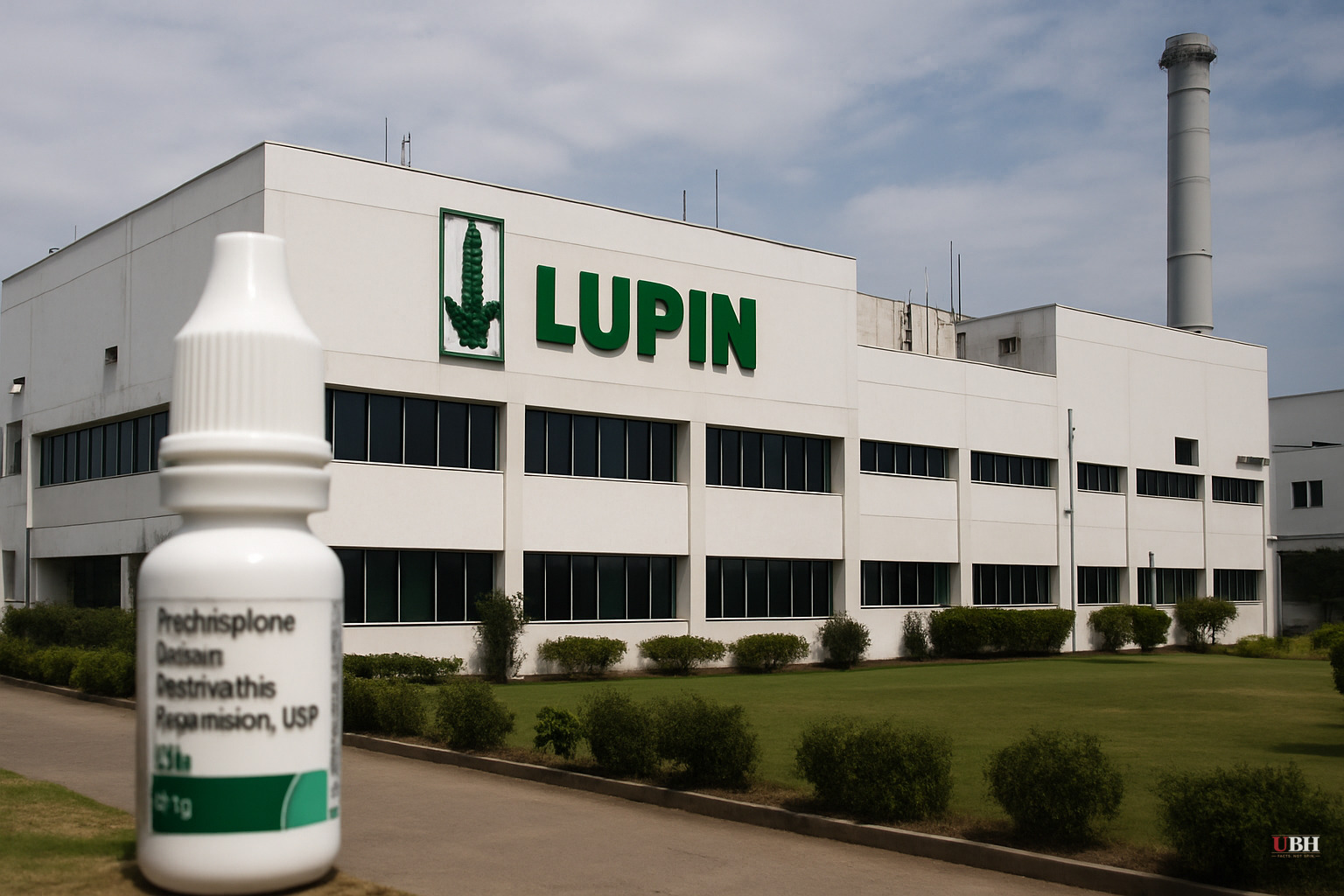
2.5 Million Prescription Eye Drop Bottles Pulled From U.S. Market
Lupin Pharmaceuticals Inc. is recalling 2,530,182 bottles of Prednisolone Acetate Ophthalmic Suspension, USP, 1% from the U.S. market after contamination concerns surfaced at the company's manufacturing facility in Pithampur, Madhya Pradesh, India.
The recall was triggered by a "potential presence of a foreign substance," according to the Food and Drug Administration. The recall covers 5 mL, 10 mL, and 15 mL bottle sizes, all sold as prescription-only medication under Recall Number D-0655-2026.
What Prednisolone Is and Who Uses It
Prednisolone Acetate is a corticosteroid eye drop prescribed to reduce redness, itching, and swelling caused by eye infections, allergies, inflammation, and chemical or thermal burns to the eye, according to the Mayo Clinic. It is available by prescription only, meaning the people most at risk from this recall are patients actively managing serious eye conditions — not casual over-the-counter buyers.
These aren't decorative eye drops. Patients relying on this medication for post-surgical care or active eye inflammation need a replacement, not just a warning label.
Timeline of the Recall
The recall was initiated June 4, 2026, but the FDA did not classify it until June 30, 2026 — a 26-day gap between identification and formal classification. The agency labeled it a Class II recall, defined as a situation where the product may cause temporary or medically reversible adverse health consequences, with a remote probability of serious harm.
Class II is not the highest-risk category (that's Class I), but it is not a clean bill of health either. Foreign substance contamination in an eye drop — a product going directly onto the surface of the eye — warrants straightforward concern, regardless of how regulators categorize it.
The India Manufacturing Question
The Pithampur facility is operated by Lupin Limited, the Indian parent of Lupin Pharmaceuticals Inc. This is not the first time U.S. regulators have had to manage quality-control issues originating at overseas pharmaceutical plants. The FDA has issued import alerts and warning letters to Indian facilities over the past decade at a consistent rate, as U.S. drug production has increasingly shifted abroad.
The strongest fair concern critics raise: when manufacturing is offshored, U.S. consumers depend on both the FDA's overseas inspection capacity and the foreign facility's internal quality controls. Two systems don't always catch problems before product ships. A voluntary recall, while the correct response once a problem is found, still means contaminated product already reached U.S. patients.
The counterpoint worth acknowledging: voluntary recalls are specifically how the system is supposed to work. Lupin self-reported and initiated the recall without an FDA mandate, which is the responsible course of action. No deaths or serious injuries have been reported in the recall notice. Class II classification reflects the FDA's assessment that the contamination risk is moderate and likely reversible.
What Patients Should Do
Anyone holding bottles of Prednisolone Acetate Ophthalmic Suspension, USP, 1% — in 5 mL, 10 mL, or 15 mL sizes — should check whether their product falls under Recall Number D-0655-2026. The FDA advises that manufacturers are required to notify customers who received affected products and provide return or disposal instructions.
Don't simply discard the medication without instruction. Contact the dispensing pharmacy first. Stopping a prescribed corticosteroid eye drop abruptly without a replacement could leave underlying eye inflammation unmanaged.
The Unresolved Question
The FDA has not publicly identified what the foreign substance is. The recall notice uses the phrase "potential presence," which means the agency and Lupin have not confirmed contamination in every bottle — only that the risk exists across the affected lot. Whether the FDA will require Lupin to disclose the substance's identity, and whether any patients experienced adverse effects between June 4 (recall initiation) and June 30 (formal classification), remain open questions the agency has not answered publicly as of July 9, 2026.
Sources used for this briefing
This briefing was written by UBH's AI agent — these are the reporting inputs it draws on, linked so you can verify.


