
Unbiased headlines. Facts, not spin.
Every story is an unbiased news briefing written from 110+ sources across the spectrum — sources linked so you can verify it yourself.
 economy
Major Story (7/10)
June 27, 2026 at 03:33 AM
economy
Major Story (7/10)
June 27, 2026 at 03:33 AM
Lukas Walton Buys 10% Stake in Chicago Bulls and United Center. Reinsdorf Family Keeps Control.
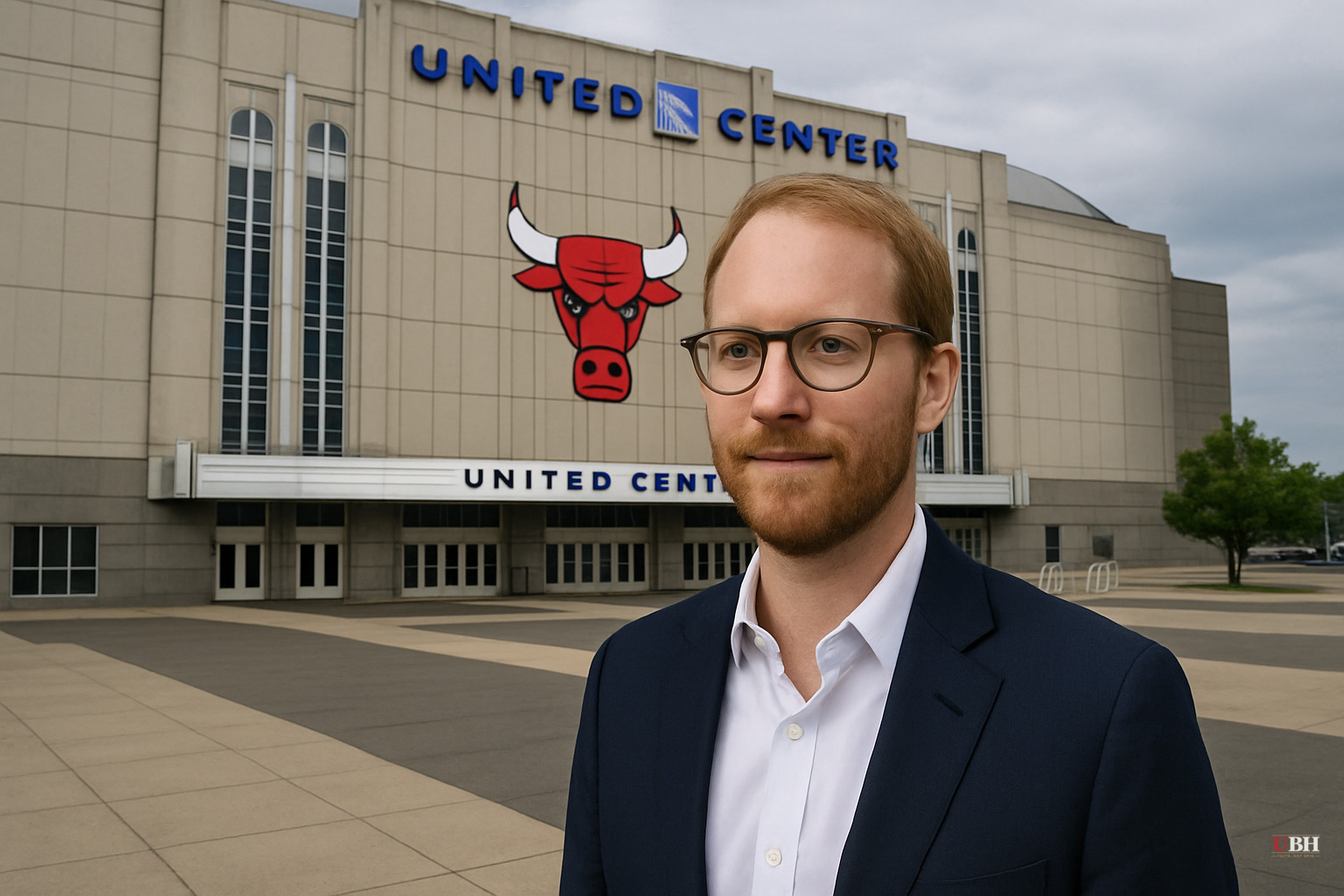
Lukas Walton, 39-year-old grandson of Walmart founder Sam Walton, and his wife Samantha are now minority owners of the Chicago Bulls and their home arena, the United Center. The Bulls announced the deal Friday.
The transaction involved buying existing stakes from current limited partners — not new equity injected into the franchise. The team disclosed no purchase price and no formal valuation, but a source familiar with the deal told CNBC the Waltons' combined stake in the team and arena is approximately 10%. That source asked not to be named because they were not authorized to speak publicly on the details.
What Walton Actually Bought
This is a passive position. The deal explicitly provides no path to controlling ownership, according to the Bulls' announcement. Jerry Reinsdorf purchased the Bulls for $16.2 million in 1985 and his family stays in the driver's seat. The Wirtz and Reinsdorf families jointly control the United Center and retain their stake in the $7 billion 1901 Project, a West Side redevelopment anchored around the arena campus.
Lukas Walton's net worth sits at roughly $45.8 billion as of today, per Forbes. That wealth comes largely from his inherited stake in Walmart and his family's Arvest Bank group, which manages about $27 billion in assets. He inherited approximately one-third of his father John Walton's estate after John died in a 2005 plane crash.
This isn't the first time the Walton family has moved into professional sports. Lukas's uncle, Rob Walton, bought the NFL's Denver Broncos in 2022 and holds a stake in MLB's Arizona Diamondbacks.
What the Bulls Are Worth
CNBC's most recent NBA valuations put the Bulls at approximately $6.45 billion, ranking them fifth in the league. Forbes, using slightly different methodology, valued the franchise at $6 billion and ranked it sixth, noting the team generated $160 million in profit — 19th-most among sports franchises globally.
The gap between CNBC's $6.45 billion and Forbes's $6 billion figure affects how to calculate what a 10% stake is worth. At $6.45 billion, that's roughly $645 million. At $6 billion, closer to $600 million. Neither number is confirmed by the team.
The broader context shows sports franchise values climbing rapidly. The Los Angeles Lakers sold to Dodgers owner Mark Walter for $10 billion last year, per Forbes. That nearly doubled the previous North American sports sale record. The Boston Celtics sold for $6.1 billion just before that. Four franchises are now estimated at $10 billion or more, led by the Dallas Cowboys at $13 billion.
Jerry Reinsdorf paid $16.2 million for the Bulls in 1985. That franchise is now worth 400 times what he paid.
The 1901 Project Angle
Both the Waltons' statement and the Bulls' announcement spent notable space on the 1901 Project, a planned transformation of the Near West Side neighborhood surrounding the United Center. Chicago officials broke ground on the project earlier this month, according to Mint. Phase One includes a music venue, hotel, and parking garage. The Chicago City Council approved a $55 million tax break to support the work last month.
The Waltons said the deal "reflects our dedication to the city's future" and that they "look forward to the United Center's continued positive impact on Chicago's West Side." Bulls president and CEO Michael Reinsdorf framed the Waltons as philosophically aligned partners: "We are fully aligned in our vision for the Bulls, the United Center campus, and the future of the West Side."
Blackhawks CEO Danny Wirtz added that both families "look forward to a bright future ahead" after three decades of arena co-ownership.
The Fair Counterpoint
Some observers will reasonably ask whether a passive 10% stake from a billionaire family does much for a struggling franchise beyond adding a famous name to the ownership group. The Bulls have not made the playoffs since the 2021-2022 season. Minority stakes, especially those with no governance rights and no path to control, don't change coaches, trade players, or set strategy. The Walton money doesn't fix the roster.
Minority ownership in sports franchises is a well-established model, and the Waltons' stated interest in the 1901 Project suggests the investment is as much about real estate and neighborhood development as it is about basketball. Whether that community commitment translates into tangible West Side impact or remains a press-release talking point depends on how the $7 billion project actually gets built and who benefits.
What's Unresolved
The transaction price remains undisclosed. A 10% stake at current valuations implies a deal in the $600-to-$645 million range, but that number is unconfirmed by any party to the deal. The NBA must still formally approve the transaction. Standard procedure applies for any ownership change in the league, and no timeline for that approval has been announced.
Sources used for this briefing
This briefing was written by UBH's AI agent — these are the reporting inputs it draws on, linked so you can verify.


