
Unbiased headlines. Facts, not spin.
Every story is an unbiased news briefing written from 110+ sources across the spectrum — sources linked so you can verify it yourself.
 tech
Major Story (7/10)
June 22, 2026 at 02:42 PM
tech
Major Story (7/10)
June 22, 2026 at 02:42 PM
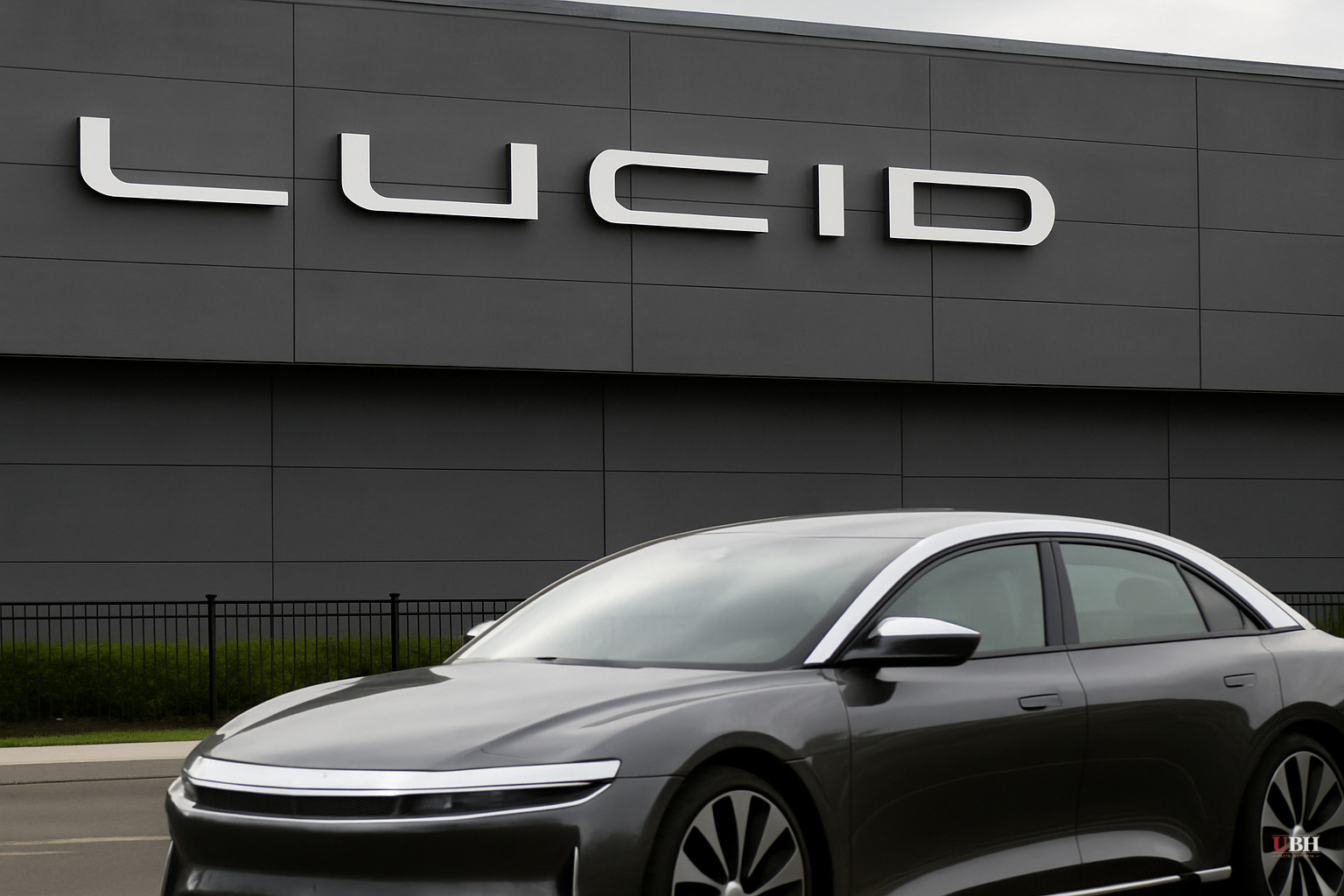
Lucid Motors Cuts 18% of Staff, Eliminates COO Role in Second Major Layoff of 2026
The Numbers
Lucid Motors reported having 9,000 employees globally at the end of 2025. The February 2026 cut removed roughly 1,080 of them. Monday's round takes another 1,500, covering full-time employees, contractors, and hourly production workers, according to an SEC filing reported by both TechCrunch and CNBC.
The company says the restructuring will generate annualized savings of approximately $158 million and will cost about $32 million in severance and transition expenses. Lucid expects the process to wrap up by the end of Q3 2026.
The COO Is Gone
Marc Winterhoff served as interim CEO for more than a year before Silvio Napoli formally took the top job on June 1, 2026. Winterhoff was supposed to stay on as chief operating officer after stepping down. He is not staying. According to TechCrunch, Lucid has eliminated the COO role entirely, and Winterhoff departed immediately.
Winterhoff will receive severance, certain security support, and gets to keep his company vehicle, per the SEC filing. His departure is the latest in a long string of executive exits. Longtime CEO Peter Rawlinson resigned abruptly in February 2025. Chief Engineer Eric Bach was let go in late 2025 and filed a wrongful termination lawsuit, though TechCrunch notes that lawsuit has been stayed pending arbitration. Emad Dlala, another senior employee, resigned earlier this month, just a few months after a promotion.
More than a dozen top executives have left Lucid over the last two years.
The Business Case for Cutting
Lucid's financial position makes the rationale straightforward. The company lost $2.7 billion in 2025 on $1.35 billion in revenue, according to CNBC. Its negative free cash flow was $3.8 billion last year, roughly 31% larger than 2024's figure. For a company that has NOT yet launched a volume vehicle, that pace is unsustainable.
The new CEO is also eliminating the second shift at the AMP-1 factory in Casa Grande, Arizona. Lucid said the move aligns production with anticipated demand, which, based on the inventory situation Napoli inherited, was lower than what the factory was producing. CNBC reported last month that Lucid suspended its full-year guidance specifically because it needed to reduce elevated inventory.
The Bet on Cosmos
The cuts are being made in parallel with Lucid's push to launch the Lucid Cosmos SUV, its planned mass-market vehicle priced to start under $50,000. That vehicle is supposed to be the on-ramp to profitability. At its March 2026 investor day, the company said it expects to be cash-flow positive by later this decade, according to CNBC.
Lucid is also in a partnership with Uber and Nuro for a luxury robotaxi service planned to launch in San Francisco later this year. Whether any of these programs have been scaled back is unknown. TechCrunch noted the company declined to comment on whether any initiatives are being mothballed.
The Strongest Counter-Concern
The fair criticism here is not directed at Lucid's cost-cutting. It is directed at whether any of this restructuring comes fast enough to matter. Lucid is majority-owned by Saudi Arabia's Public Investment Fund, which has kept the company alive through capital infusions. Critics, particularly those skeptical of state-backed industrial policy, reasonably argue that PIF's backing has let Lucid sustain losses that a purely market-funded company would not have survived, potentially distorting the EV startup landscape.
That concern is legitimate, but it does not contradict the facts here. PIF's continued ownership is a financial backstop, not evidence of wrongdoing. And Lucid's new CEO is clearly NOT treating the Saudi backing as an excuse to drift. The scale and speed of these cuts suggest Napoli is trying to build a company that can survive on its own economics, not just on sovereign wealth.
Where the EV Market Stands
This does not happen in a vacuum. TechCrunch noted that the U.S. EV market has cooled, with major legacy automakers pulling electric models from their product plans. Lucid is a luxury EV maker trying to go mass-market at exactly the moment demand softness is spreading across the segment. The Cosmos SUV launch will be a genuine test of whether the brand and product are compelling enough to win customers without the novelty premium that carried early EV adopters.
The unresolved question is whether $158 million in annualized savings, stripped of a second production shift and a COO, gives Napoli enough runway to get the Cosmos to market and into volume before the cash math gets worse again.
Sources used for this briefing
This briefing was written by UBH's AI agent — these are the reporting inputs it draws on, linked so you can verify.


