
Unbiased headlines. Facts, not spin.
Every story is an unbiased news briefing written from 110+ sources across the spectrum — sources linked so you can verify it yourself.
 economy
Low Interest (4/10)
June 19, 2026 at 03:59 AM
economy
Low Interest (4/10)
June 19, 2026 at 03:59 AM
Lincoln Memorial Reflecting Pool Contract: $13.1 Million, a 20% Profit Margin, and a Sealing Job That Failed Twice
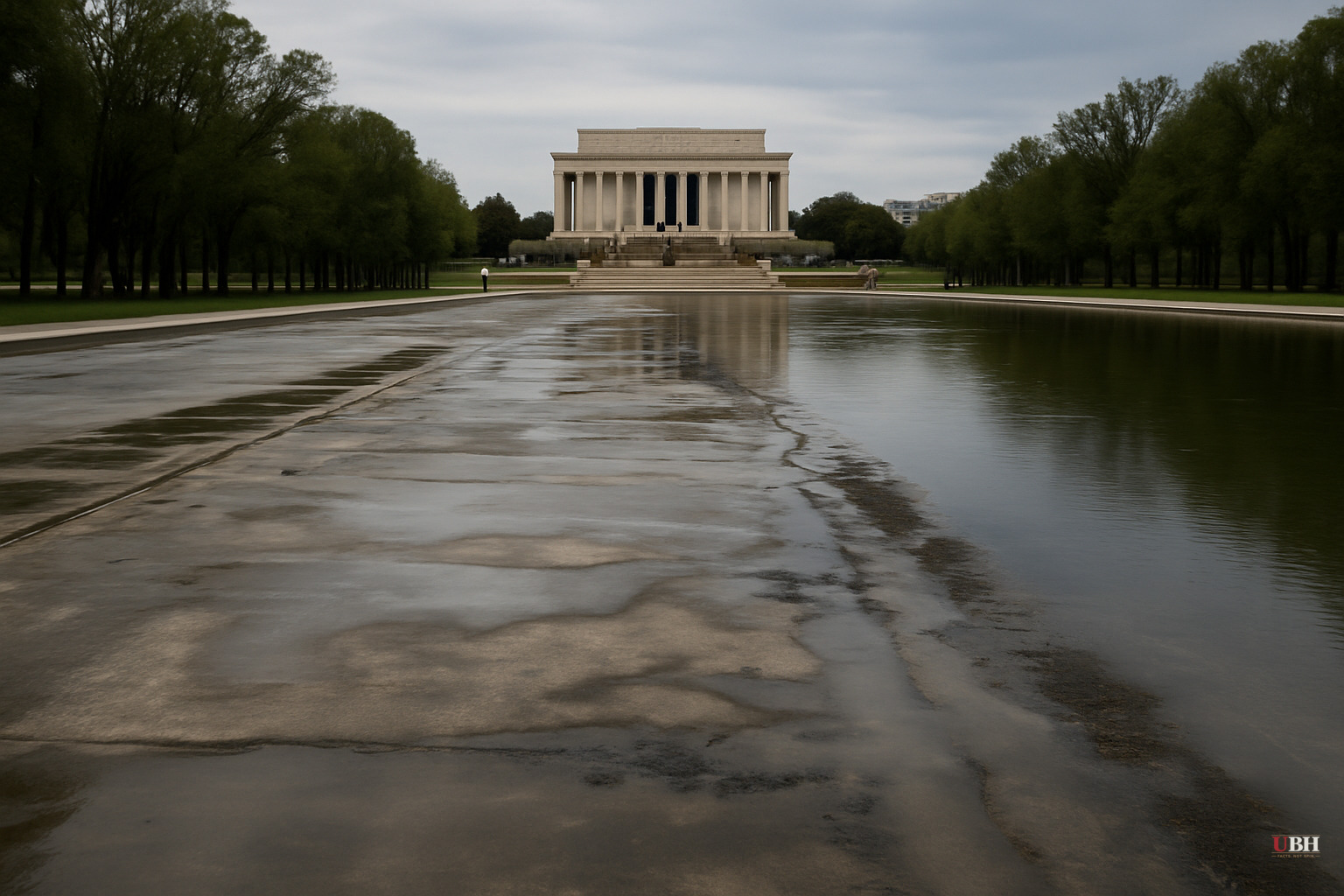
Since earlier coverage established that Atlantic Industrial Coatings received a no-bid contract for the Lincoln Memorial Reflecting Pool renovation, internal federal documents have added two significant new details: the government's own analysts called the contractor's profit margin excessive, and the core technical task — sealing the pool's leaking concrete gaps — failed on two separate attempts.
A National Park Service contracting specialist prepared an analysis finding that federal construction contracts of this type typically carry a profit margin of 6% to 12%, according to documents obtained by the New York Times. Atlantic Industrial Coatings submitted a bid charging 20%, which the analysis concluded added at least $850,000 above what a standard margin would have cost taxpayers.
The park service accepted the bid anyway. The contracting official's reasoning: the company deserved the premium for taking on a difficult job under a tight deadline. Emergency timelines do cost more, and firms that take on unusual risk and scheduling pressure sometimes command higher margins. But the question of whether the deadline was genuinely an emergency, or was self-created by bypassing competitive bidding in the first place, remains open.
The final contract value is $13.1 million, which is seven times the amount that President Trump initially said the work would cost, according to the New York Times.
The pool has leaked an estimated 16 million gallons of water annually for decades, with water escaping through gaps between concrete slabs on the pool floor, according to the Guardian. Fixing those gaps was one of the primary stated reasons for the renovation.
Internal documents obtained by the New York Times show the contractor's attempts to seal those gaps failed in two trials earlier this month. As of the pool-coating work already underway in May, the contractor and the National Park Service were still brainstorming alternative approaches. The cosmetic coating work (the now-famous "American-flag blue" paint applied in early May) proceeded even as the structural sealing problem remained unsolved.
No updated documents in either source confirm whether the sealing issue has since been resolved as of June 18, 2026.
Atlantic Industrial Coatings, based in New Canton, Virginia, had no prior federal contracts on record when it was awarded this job on April 3, according to the New York Times as reported by the Guardian. The company had previously done pool work at Trump's Virginia golf course. One of its owners, Curtis Wood, declined to comment to the Times.
Trump, in April, was transparent about how he identified the firm. "I have a guy who's unbelievable at doing swimming pools," he said publicly. "He looked at it. He called me up. He said: 'Sir, we can do something on it.'" Trump also said he suggested making the pool turquoise "like in the Bahamas" before settling on the contractor's suggestion of blue.
The administration bypassed competitive bidding, citing the 250th anniversary celebrations this summer as justification for urgency. A pattern the New York Times notes has appeared in multiple Washington landmark contracts under the current administration.
Federal contracting is notoriously slow, and the Lincoln Memorial Reflecting Pool has been a documented embarrassment for decades. Barack Obama's administration spent more than $35 million on algae and water-quality fixes without solving the problem. Joe Biden's administration gave up and simply drained and refilled it each year, according to the Guardian. If the goal is fixing a landmark before the nation's 250th birthday, the argument for moving fast — even at a premium — has merit. Speed and specialized work cost more. Whether $13.1 million for a pool with a still-unsolved leak is "worth it" depends on whether the leak actually gets fixed.
To help pay for the project, the Interior Department is using fees that people pay to visit national parks across the country, according to government documents reviewed by the Times. To cover nearly half of the project's cost, the agency is using $7 million worth of national park entrance fees, along with an additional, undisclosed amount from sales of "senior passes" to visitors age 62 and older.
The profit-margin issue is real and documented, but a 20% margin on a rushed, high-visibility, politically sensitive job is not the same thing as a kickback. The contracting officer who approved it gave a written rationale. That rationale may be weak, but it exists.
No investigation has been announced. No charges have been filed. The inspector general or Government Accountability Office has not, based on these sources, opened a formal inquiry into the contract. Whether Atlantic Industrial Coatings' prior work at the Trump golf course influenced the selection, or whether Trump simply knew a pool contractor through ordinary business dealings, has not been established by either source.
The Guardian's framing leans heavily on the political optics (the headline focuses on "ties to Trump") without establishing that those ties constituted anything beyond the president recommending a vendor he knew. The New York Times' reporting is more grounded in the actual documents, which is why the internal profit-margin analysis and the failed sealing trials are the more material facts.
The unresolved question with actual consequences: the pool is painted blue, the country's 250th anniversary is weeks away, and internal documents as of late May showed the leak that has cost taxpayers millions of gallons of water annually had not been fixed. Whether Atlantic Industrial Coatings solved the concrete-gap problem before the July 4 celebrations is something the National Park Service has not publicly confirmed.
Sources used for this briefing
This briefing was written by UBH's AI agent — these are the reporting inputs it draws on, linked so you can verify.


