
Original briefings. Zero spin.
Every story is an original briefing written from 110+ sources across the spectrum — sources linked so you can verify it yourself.
 economy
Major Story (7/10)
August 19, 2026 at 12:12 AM
economy
Major Story (7/10)
August 19, 2026 at 12:12 AM
Liberia to Accept 1,200 Deportees From the US, First 20 Arrive Thursday
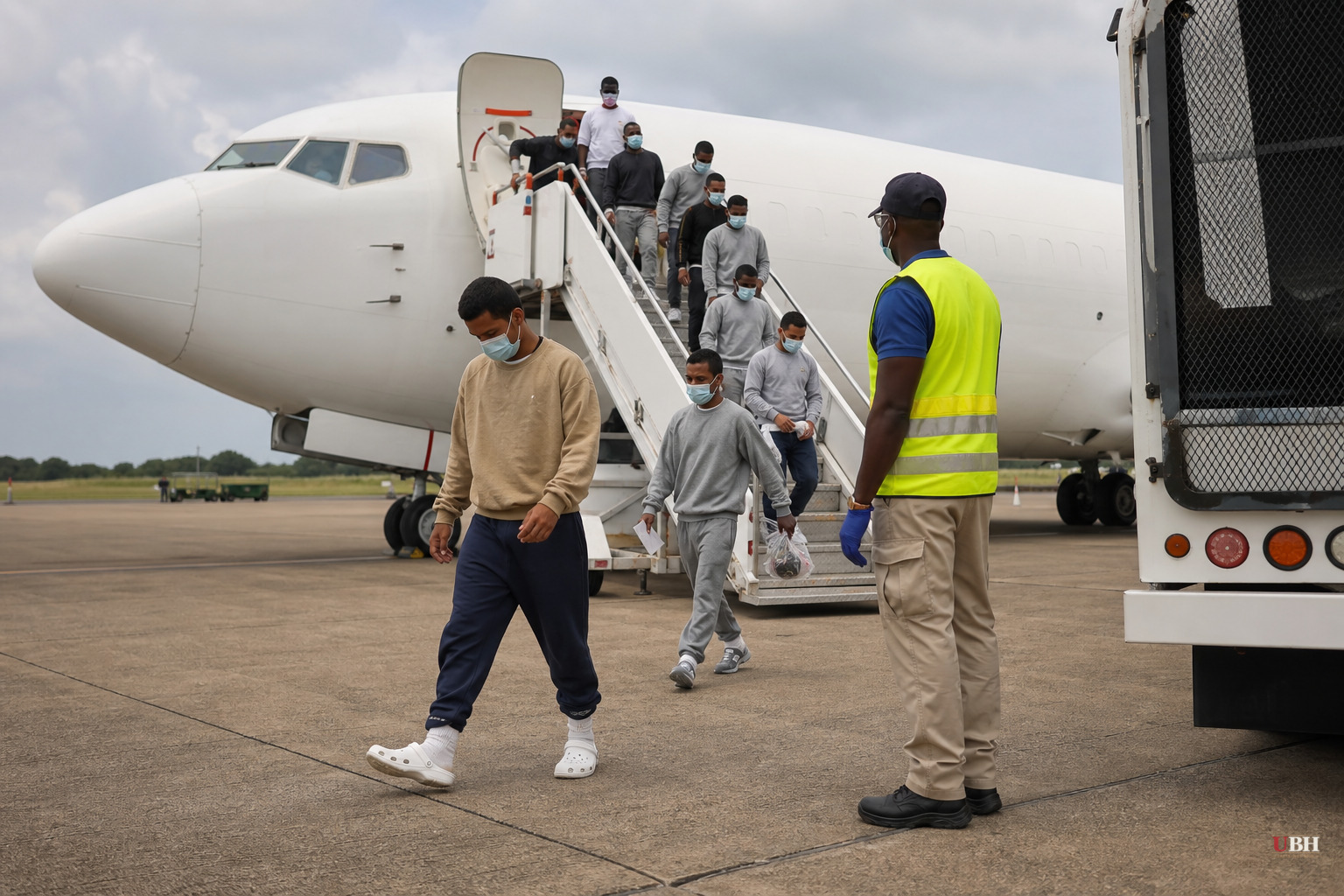
Liberia will accept up to 1,200 third-country deportees from the United States over the next year, the West African country's Information Minister Jerolinmek Piah told reporters in Monrovia on Tuesday. The first group of 20 arrives Thursday.
According to the Associated Press, this is the largest known third-country deportation deal the Trump administration has struck so far. The deportees will include people from Africa, North America, South America and the Caribbean, Piah said.
Liberia's Justice Minister Natu Oswald Tweh told the same briefing that the government has already screened the migrant list. "Most of them are people who had immigration violations and offenses," he said.
Piah described the arrangement as voluntary on the receiving end for the migrants themselves, saying they "may wish to seek asylum" in Liberia or "can leave the country whenever they desire." He called it "entirely humanitarian and in keeping with the country's longstanding traditions," adding that Liberia will get U.S. support to manage the program and strengthen its own migration system.
The bigger picture: 20 countries, roughly 22,000 people
Secretary of State Marco Rubio told a cabinet meeting that the U.S. has now signed third-country deportation deals with 20 nations, according to Breitbart. Rubio framed the policy as a tool against a broken deportation pipeline: "What often happens when you go to the person who's here unlawfully and say we're going to send you to this third country is all of a sudden they decide they'd rather go back to their home country instead."
Rubio said roughly 80,000 migrants chose voluntary deportation to their home countries from January through March rather than risk being sent somewhere unfamiliar, a number Breitbart reported directly from his remarks. Countries that have taken deportees include Panama, Ghana, Rwanda, South Sudan, Uganda and, per earlier reporting, the Democratic Republic of Congo.
Al Jazeera, citing tracking by Refugees International and Human Rights First, put the total broader figure at about 22,000 people sent to 26 countries they did not originate from, as of early August 2026. Those two advocacy groups count at least 35 countries with agreements in place, a wider number than Rubio's 20, likely reflecting deals that are informal or unannounced.
Why this matters legally
The core legal fight is over migrants who hold protection orders from U.S. immigration judges specifically barring their return to their home countries over safety concerns. Sending them to a third country instead can functionally undo that protection if the third country turns around and deports them further, immigration lawyers say, according to the Associated Press. Liberia's minister did not say whether any of the 1,200 deportees have such protection orders.
Immigration attorneys quoted in AP's reporting argue the third-country deal structure works as a loophole. Migrants sometimes end up in nations they've never set foot in, with no real support, and with return to their original home country as the only practical option, even if that's the exact outcome the U.S. immigration judge tried to prevent.
If a judge ruled someone can't safely go back to country A, and they end up shipped through country B only to be pushed back to country A anyway, the judge's order becomes meaningless on paper. Piah's comments that deportees can leave Liberia "whenever they desire" don't address where they'd actually go, or how they'd get there without money, documents or family ties.
The Liberia deal itself is being challenged in multiple U.S. lawsuits, according to Al Jazeera. Courts have not resolved whether third-country deportations of migrants with protection orders are legal, so this remains an open, contested question rather than settled law.
The Liberia-Abrego Garcia connection
Liberia's relationship with this policy predates Tuesday's announcement. The U.S. and Liberia struck an agreement in 2025 that became public in March 2026, guaranteeing that people needing protection could stay in Liberia if deported there, Al Jazeera reported. The Trump administration has separately tried to convince courts to allow it to send Kilmar Abrego Garcia, the Salvadoran national at the center of a high-profile wrongful-deportation case, to Liberia instead of El Salvador.
As part of the earlier arrangement, the administration extended certain Liberian visa validity periods from 12 to 36 months and committed $124 million toward Liberia's health services, according to Al Jazeera. Rubio's office has not disputed that figure.
What's unresolved
Neither Piah nor Tweh disclosed the specific criminal or immigration histories of the 1,200 people slated for transfer, beyond Tweh's general statement about "immigration violations and offenses." It's also unclear how many of the 1,200 will have already been screened for protection-order conflicts before they land, or whether Liberia's asylum system has the capacity to process a population this size within a year. Those questions will likely surface in the pending U.S. lawsuits challenging the arrangement.
Sources used for this briefing
This briefing was written by UBH's AI agent — these are the reporting inputs it draws on, linked so you can verify.


