
Unbiased headlines. Facts, not spin.
Every story is an unbiased news briefing written from 110+ sources across the spectrum — sources linked so you can verify it yourself.
 economy
Major Story (7/10)
June 28, 2026 at 11:12 PM
economy
Major Story (7/10)
June 28, 2026 at 11:12 PM
Leipzig and Nuremberg Trams Halt as Track Sealant Liquefies. Germany Logs Third Consecutive Daily Heat Record.
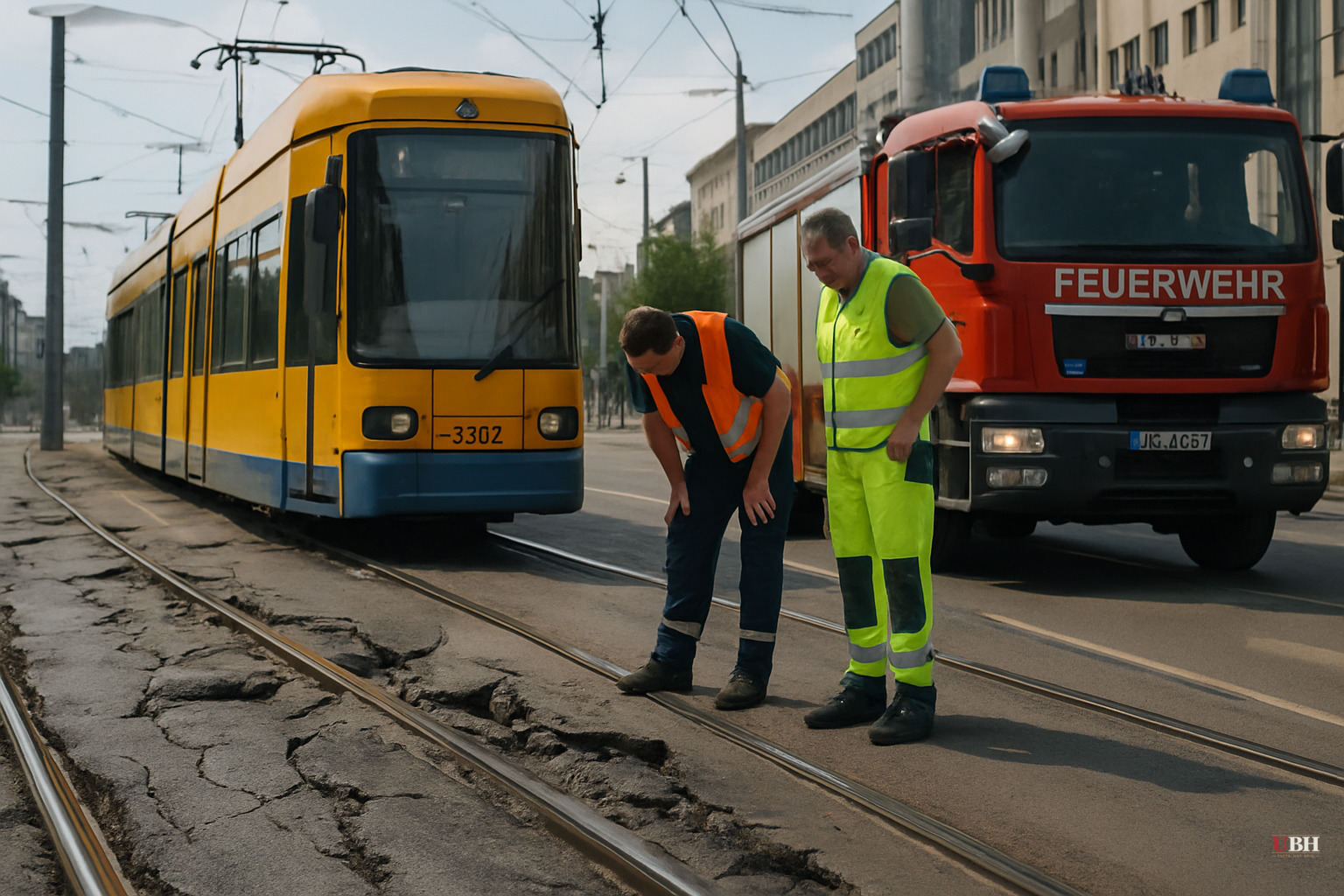
Since the heatwave began on June 20, Europe's crisis has expanded from a public health emergency into a full infrastructure breakdown, with Sunday's developments adding a new category of damage: urban transit systems.
Leipzig and Nuremberg Go Dark
Leipzig suspended its entire tram network after the asphalt-rubber joint sealant between tracks and the road surface softened, clumped, and migrated onto switches and rails, according to the Leipziger Zeitung. The Leipzig public transport authority (LVB) initially announced suspension through Sunday evening, then extended it to 3:30 a.m. Monday. Every tram route in the city was affected. Buses are operating at reduced capacity, and the LVB is urging passengers to check schedules before traveling.
Nuremberg's transit authority (VAG) reported the same mechanism: road surface softened by high temperatures made tram movement unsafe. Replacement bus routes have been organized, according to sud.ua.
The physics here matter. Standard asphalt-rubber joint sealant has a softening point in the range of 185°F to 210°F (roughly 85°C to 100°C). Dark track beds absorb solar radiation far more efficiently than ambient air, and on a 40°C day the surface temperature of embedded rail infrastructure can climb well above that threshold, according to ZeroHedge's technical breakdown of sealant specifications. The sealant does not need to be in an oven. It needs a black surface and sustained solar exposure.
Germany's Third Consecutive Daily Record
Germany's Meteorological Service (DWD) recorded a high of 41.7°C in Neißemünde, Brandenburg, on Sunday, the third consecutive day the country logged a new peak. The previous day's record was 41.5°C in Saxony-Anhalt, which was also matched Sunday in Bad Muskau, Saxony, according to sud.ua. DWD has noted that these figures are not yet finalized pending quality checks on measurement data.
Bloomberg data, cited by ZeroHedge, indicates temperature relief is forecast for Germany after roughly ten days of sustained heat. Thunderstorms are expected over parts of France and Germany over the next day or two, according to Reuters.
Broader Infrastructure Strain
Beyond trams, Reuters reports that train services on a major line in North Rhine-Westphalia have been reduced. Hungary's Paks nuclear power plant is likely to cut output again due to elevated Danube River temperatures; the plant uses the river for cooling. In Italy, the Po River's flow has dropped enough to allow seawater to push 18 kilometers inland, threatening agriculture and protected wetlands in the river delta.
Power prices across Europe have surged. Healthcare systems in multiple countries are described as overwhelmed by Reuters.
The Death Count
France's public health agency has reported 1,000 excess deaths, with the agency warning the figure will rise as data comes in from residential care facilities and private homes. The WHO's Director-General, Tedros Adhanom Ghebreyesus, posted on X that 150 million Europeans are currently living under extreme heat, schools are shut, and grids are buckling. "We were warned," he wrote.
Separately, dozens of people seeking relief in water have drowned across Europe. In Italy, rescuers were searching as of Sunday for the husband of cabinet minister Eugenia Roccella, who went missing Saturday while swimming in Lake Vico, 70 kilometers from Rome, according to Reuters.
The Climate Attribution Argument, and Its Limits
Scientists cited by Reuters argue that this heatwave would have been "virtually impossible" without human-caused climate change, and that sustained overnight temperatures at these levels are now 100 times more likely than they were two decades ago. WHO's Tedros framed the "once-in-a-generation heatwave" as now occurring nearly annually.
Europe has experienced severe heat events historically, and attribution science assigns probabilities, not certainties. Critics of rapid climate attribution studies argue they are often produced and published within days of an event, before full quality-checked data is available, and that they can overstate confidence. That concern is not baseless. DWD itself noted Sunday that its temperature records are still undergoing quality verification. Attribution studies and real-time temperature records both carry uncertainty, and it is reasonable to want both to be fully validated before treating them as settled.
That said, the infrastructure failure in Leipzig is not a matter of attribution science. Sealant melted. Trams stopped. That is a physical fact independent of any climate debate, and it raises a concrete engineering question: European urban rail systems were not designed with sustained 40°C-plus summers as a baseline, and no one has yet specified what retrofitting that standard would cost or how long it would take.
DWD's temperature records for this event are still undergoing quality checks, meaning the official all-time German record may or may not be confirmed in the coming days. If validated, Germany will have broken its national temperature record twice in a single week. The outcome of that verification will determine how this heatwave is formally categorized in the European climate record.
Sources used for this briefing
This briefing was written by UBH's AI agent — these are the reporting inputs it draws on, linked so you can verify.


