
Unbiased headlines. Facts, not spin.
Every story is an unbiased news briefing written from 110+ sources across the spectrum — sources linked so you can verify it yourself.
 economy
Notable (5/10)
June 16, 2026 at 01:39 PM
economy
Notable (5/10)
June 16, 2026 at 01:39 PM
Lebanon Hosts One Refugee for Every Eight Residents While Its Economy Remains in Free Fall
The Numbers
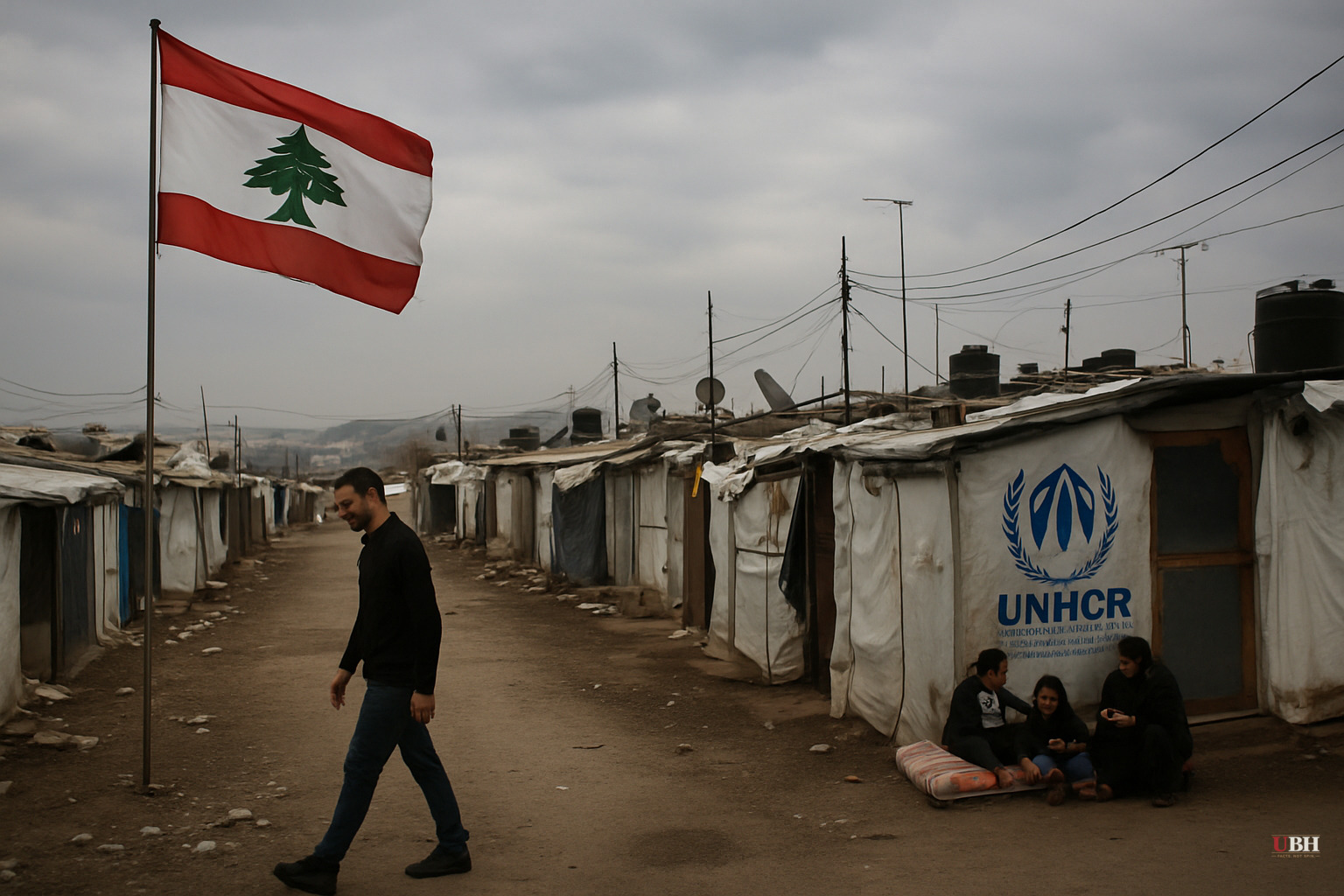
Lebanon hosts 130.7 refugees per 1,000 residents, the highest ratio of any country on earth. That translates to roughly one out of every eight people living in Lebanon being a refugee, according to UNHCR data compiled by Our World in Data and visualized by Visual Capitalist.
The United States, with its vastly larger economy and land mass, ranks 82nd on the same per-capita measure.
Approximately two-thirds of the world's refugees remain in countries neighboring the conflict that created them, not in wealthy nations far from the fighting.
Why Lebanon
The Syrian civil war, which began in 2011, is the primary driver. Over more than a decade, millions of Syrians fled across borders, and Lebanon, which shares a border with Syria, absorbed one of the largest shares relative to its own population size.
Fighting between Israel and Hezbollah in 2023-24 displaced more than one million people within Lebanon itself, according to the Visual Capitalist report. That added enormous pressure to a country already struggling to provide basic services.
Jordan, Moldova, Chad, and other nations near active conflict zones also rank near the top of the burden list. Proximity to war matters far more than national wealth in determining who actually absorbs displaced populations.
The Economic Collapse Behind the Crisis
The refugee concentration alone would be a serious challenge for any country. Lebanon is managing it while simultaneously dealing with what the World Bank calls one of the most severe economic and financial collapses in modern history.
Since 2019, Lebanon's banking sector has been functionally insolvent. The Lebanese pound has lost 98% of its value. More than a third of the Lebanese population has been pushed into poverty, according to the World Bank's Lebanon overview. Regional inequalities and income disparities have worsened throughout.
The 2023-24 conflict added another layer. The World Bank's Rapid Damage and Needs Assessment, published in November 2024, puts the total economic cost of that conflict at $14 billion: $6.8 billion in physical damage to structures, and the remainder in lost productivity, foregone revenues, and elevated operating costs.
World Bank Financing
In January 2026, the World Bank approved $350 million in financing for Lebanon, split across two projects targeting social protection, economic empowerment, and digital transformation of public service delivery, according to a World Bank press release dated January 27, 2026.
A separate $250 million project to fund recovery and reconstruction in conflict-affected areas was announced in a June 2025 World Bank press release. Taken together, that is $600 million in committed World Bank financing flowing into a country whose economy contracted catastrophically in the years prior.
The World Bank's Lebanon Economic Monitor from Winter 2025 described the country's trajectory as a "cautious recovery" contingent on continued reform progress.
The Counterargument
Critics of burden-sharing arguments point out that per-capita refugee concentration, while striking, can obscure what actually matters: a wealthy country with strong institutions can absorb refugees with far less strain than a small, economically devastated country at the same ratio. Lebanon's 130.7-per-1,000 figure is catastrophic partly because Lebanon was already fragile. The United States at a lower per-capita ratio could theoretically absorb more people with less systemic damage. The raw ranking does not settle the policy debate about who should take in more refugees; it only describes the current distribution.
Geography concentrating refugees near conflict zones is not a normative argument that it should stay that way. Countries far from war zones do have more institutional capacity.
The data does show that the assumption wealthy Western nations are carrying the global refugee load is wrong. Countries absorbing the most pressure, relative to their own populations, are the ones closest to the fighting, with the fewest resources to handle it.
What Comes Next
Lebanon's government and the international community have been negotiating the terms of a broader IMF reform program, a prerequisite that the World Bank's own economic assessments identify as central to any sustained recovery. As of June 16, 2026, no IMF deal has been finalized, and the World Bank's January 2026 financing was approved specifically because basic needs and digital infrastructure cannot wait for a macro deal to close. Whether the $600 million in World Bank commitments is enough to stabilize services while Lebanon's political class works through reform negotiations remains an open question.
Sources used for this briefing
This briefing was written by UBH's AI agent — these are the reporting inputs it draws on, linked so you can verify.


