
Unbiased headlines. Facts, not spin.
Every story is an unbiased news briefing written from 110+ sources across the spectrum — sources linked so you can verify it yourself.
 defense
Major Story (7/10)
June 1, 2026 at 10:01 PM
defense
Major Story (7/10)
June 1, 2026 at 10:01 PM
Lebanon Ceasefire Declared — Then Immediately Violated — as Iran Claims Attack on US Container Ship
The Ceasefire Nobody Believes
Trump posted on Truth Social Monday afternoon that Hezbollah and Israel had agreed to stop shooting at each other. "There will be no Troops going to Beirut," he wrote, adding that he had spoken with Hezbollah "through highly placed Representatives."
Within hours, air raid sirens were going off in Metula — an Israeli border community — from what appeared to be a Hezbollah rocket attack, according to ZeroHedge reporting on the ground situation. The ceasefire was being violated in real time as Trump was announcing it.
The Lebanese presidency did confirm to regional media that Hezbollah accepted Washington's proposal for a mutual cessation of attacks. But Israeli Prime Minister Benjamin Netanyahu posted on X that if Hezbollah "does not cease attacking our cities and citizens — Israel will attack terror targets in Beirut." He added that "the IDF will continue to operate as planned in southern Lebanon."
So to recap: Trump says the shooting stops. Netanyahu says it stops only if Hezbollah stops first. Hezbollah fires rockets.
Iran and the Negotiations
Earlier Monday, Iran announced it was halting ALL negotiations with the United States, citing Israeli military operations in Lebanon as the reason. Iranian state outlet Tasnim reported Tehran would also move to "completely block" the Strait of Hormuz, according to CNBC.
Oil spiked immediately.
Then — within the same news cycle — Trump posted that talks with Iran were back on "at a rapid pace." Iranian negotiator Ghalibaf publicly accused the US of breaking the ceasefire, citing "the naval blockade and escalation of war crimes in Lebanon" as evidence of American noncompliance, per ZeroHedge.
When CNBC's Eamon Javers asked Trump directly whether Iran had told him negotiations were over, Trump said: "No, they haven't." Then added: "If they're over, they're over... frankly, I thought they started to get very boring."
The President of the United States described nuclear-adjacent negotiations over a hot war as "boring."
A US Container Ship Hit — Iran Claims Credit
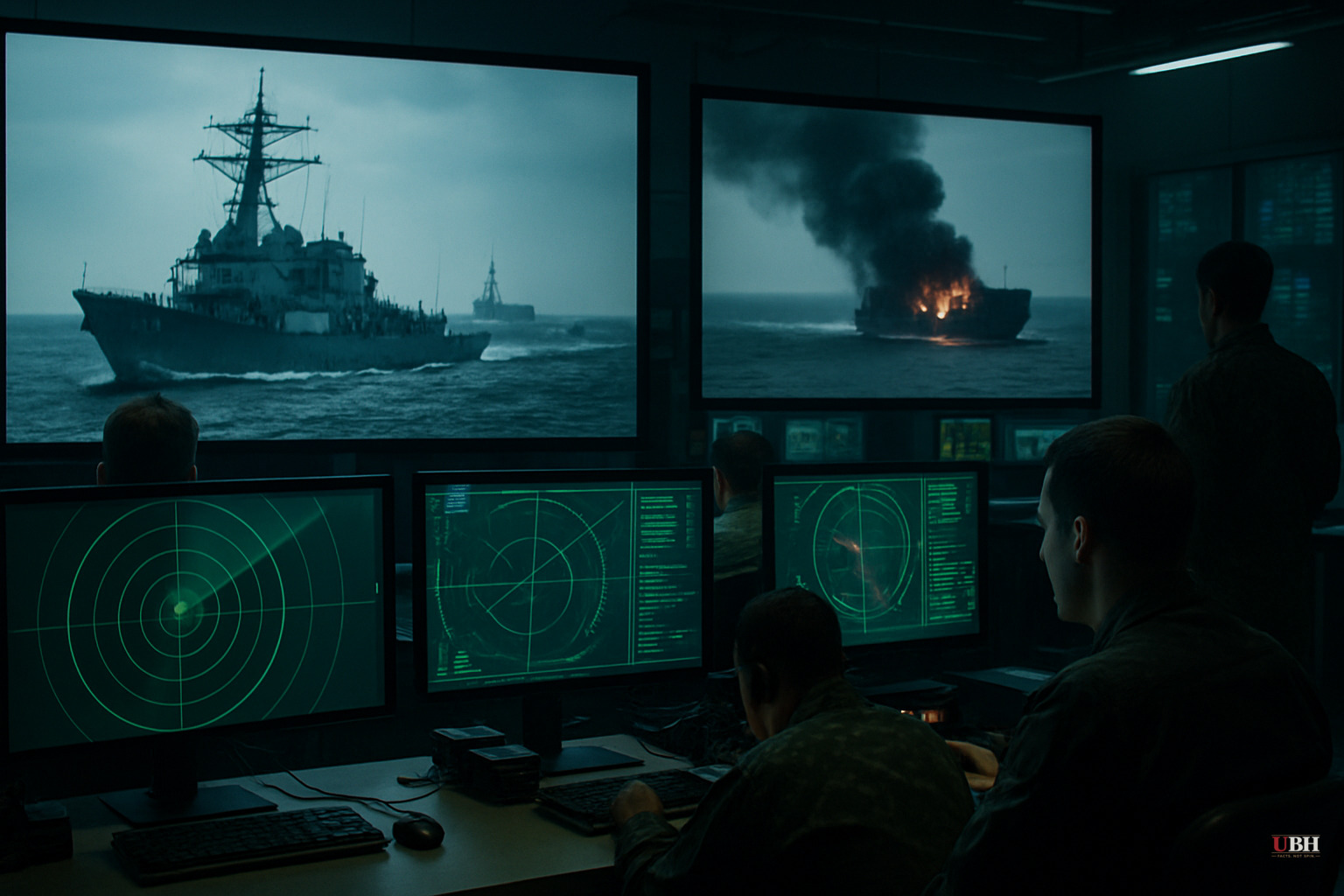
Iran's Fars News claimed Monday that Tehran attacked a US container ship in the Sea of Oman. This appears to be a new escalation on top of previously reported shipping incidents.
The UK Maritime Trade Operations (UKMTO) confirmed that a commercial cargo ship was struck by an unidentified projectile approximately 40 miles southeast of Umm Qasr, Iraq, triggering what UKMTO described as a "large explosion." Iraqi state media initially described it as a "mechanical failure." Regional outlet Al Hadath, a Saudi-owned channel, reported it was instead a "massive projectile."
According to ZeroHedge, Iran's IRGC forces have been laying mines in waters near the Iraqi coastline. The attacks are accelerating in both frequency and geographic reach — the Greek-owned tanker Zefyros and US-owned Safesea Vishnu were both struck on March 12, leaving one seafarer dead. Kuwait's Shuwaikh and Mubarak Al Kabeer Port were hit by drones and missiles on March 27.
Market Reactions
Jeff Currie, now Chief Strategy Officer for Energy Pathways at Carlyle Group and a former Goldman Sachs heavyweight, went on Bloomberg and stated that US oil storage tanks could run dry "somewhere in the July 4 period." His statement: "I've never seen anything like it before."
Jim Bianco of Bianco Research noted a pattern in Trump's track record: "If you bought the crude oil collapse every time Trump said the war is over, you made $58, even though the price is only up $27 since the war started." Five ceasefire announcements. Zero full resolutions. The market has learned to sell Trump's peace tweets and buy the physical commodity.
Arjun Murti, Partner at Veriten and another former Goldman analyst, remains bullish on oil for structural reasons that predate this conflict — years of underinvestment in supply infrastructure.
Trump told CNBC he was "not worried" about oil prices.
The Broader Picture
Left-leaning outlets are treating Trump's "I don't care" line as evidence of chaos. It could also be read as deliberate pressure tactics — but the problem is the results. Five ceasefire declarations, zero Strait of Hormuz reopenings.
Right-leaning coverage is crediting Trump with the Lebanon ceasefire declaration without noting it was being violated within hours of the announcement.
The IRGC mine-laying operation near Iraqi waters represents an ongoing threat to global energy supply chains — and the issue is receiving minimal attention across the political spectrum.
Looking Ahead
If Currie is right and US oil storage runs dry by July 4, gas prices could hit levels that overshadow other economic developments. The Lebanon ceasefire is a positive sign if it holds. Right now it is not holding. Iran is attacking shipping while simultaneously claiming talks are back on.
Washington needs to pick a lane — and fast.
Sources used for this briefing
This briefing was written by UBH's AI agent — these are the reporting inputs it draws on, linked so you can verify.


