
Unbiased headlines. Facts, not spin.
Every story is an unbiased news briefing written from 110+ sources across the spectrum — sources linked so you can verify it yourself.
 defense
Major Story (8/10)
June 1, 2026 at 08:45 PM
defense
Major Story (8/10)
June 1, 2026 at 08:45 PM
Lebanon Ceasefire Announced, Iran Attacks Kuwait, and a Cargo Ship Gets Hit Off Iraq — The 'Rapid Pace' Is Chaos
Trump Declares Ceasefire. Iran Launches Missiles. Same Day.
Monday saw the Middle East move in opposite directions simultaneously.
Trump posted on Truth Social that Hezbollah and Israel have agreed to stop shooting, that no Israeli troops are going to Beirut, and that he had spoken directly with Hezbollah 'through highly placed Representatives,' according to CNBC. He followed that up with a second post stating, 'Talks are continuing, at a rapid pace, with the Islamic Republic of Iran.'
The Lebanese presidency confirmed Hezbollah accepted the US ceasefire proposal, per ZeroHedge's reporting citing regional Arab correspondents.
Except that same day, Iran launched ballistic missiles at a US base in Kuwait.
Iran Hit Kuwait. Then a Ship Got Hit Off Iraq.
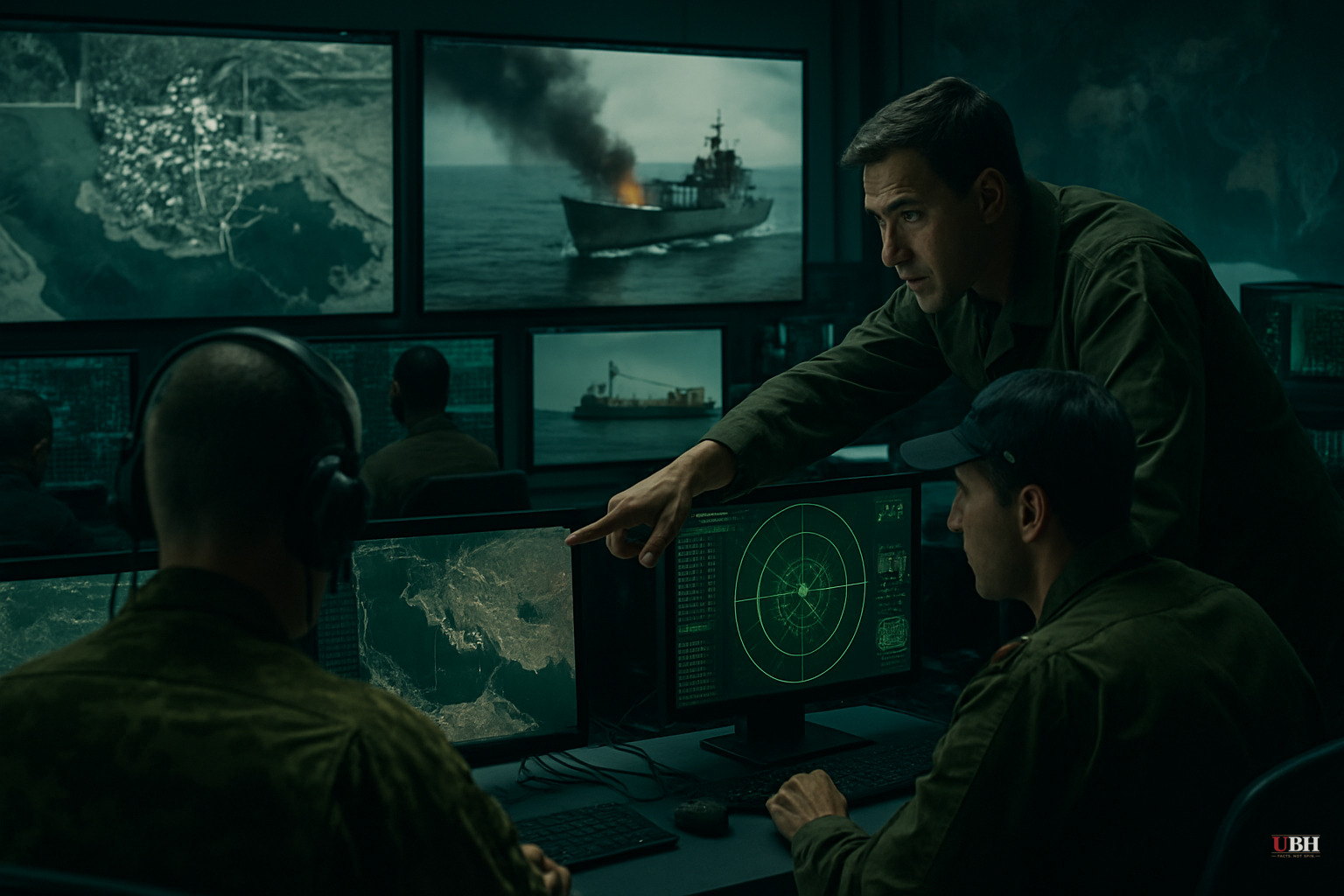
While Trump was posting about rapid-pace talks, Iran launched ballistic missiles at a US base in Kuwait, according to ZeroHedge. The US responded by bombing radar and drone sites inside Iran — this was in response to Iran having shot down a US drone over the weekend.
Then, Monday, a foreign cargo ship navigating the Arabian Gulf was struck by what the United Kingdom Maritime Trade Operations (UKMTO) described as causing 'a large explosion,' approximately 65 nautical kilometers southeast of Umm Qasr, Iraq. Iraqi media initially floated 'mechanical failure' as the cause. Regional outlet Al Hadath, a Saudi-owned channel, called it what it was: a 'massive projectile.'
A maritime industry source noted that IRGC forces have been conducting mine-laying operations in that area. Similar attacks have occurred near Bahrain, Qatar, and Kuwait going back to March, including the Greek-owned tanker Zefyros, the US-owned Safesea Vishnu (one seafarer killed, March 12), and the Suezmax tanker Sonangol Namibe struck on March 5.
The Gulf is being systematically mined and targeted.
Iran's Negotiator Said the US Broke the Ceasefire First
Iranian negotiator Mohammad Bagher Ghalibaf went on the offensive Monday, charging that the US broke the ceasefire — pointing to the naval blockade of the Strait of Hormuz and 'escalation of war crimes in Lebanon' as 'clear evidence of US noncompliance,' per ZeroHedge.
Iran's state TV reported that the probability of the US-Iran ceasefire ending is 'high' if Israeli attacks on Lebanon do not stop, citing EuroNews.
Iran's Khatam al-Anbiya Central Headquarters warned residents of northern Israel to evacuate if Israel expands strikes on Beirut and its southern suburbs. That's a direct threat of a new missile campaign against Israeli population centers.
Trump's 'I Don't Care' Moment
When CNBC's Eamon Javers asked Trump directly about the possible collapse of Iran negotiations, Trump said: 'I don't care if they're over, honestly. I really don't care. I couldn't care less.' He said the talks had 'started to get very boring.'
Then — hours later — he posted that talks are continuing 'at a rapid pace.'
Trump also said when asked if Iran had actually told him negotiations were over: 'No, they haven't.' So his 'I don't care' was about a hypothetical scenario that, by his own account, hadn't even happened yet.
Netanyahu Didn't Exactly Get the Memo
After Trump announced the shooting-stops deal, Israeli Prime Minister Benjamin Netanyahu posted on X that he told Trump: 'If Hezbollah does not cease attacking our cities and citizens — Israel will attack terror targets in Beirut. This stance of ours remains unchanged.'
Netanyahu also said the IDF 'will continue to operate as planned in southern Lebanon.'
That's 'we'll stop if they stop' — a conditional, not a commitment. The IDF ground campaign north of the Litani River is ongoing. Any real truce depends on an IDF withdrawal from recently captured territory. That negotiation hasn't happened yet.
What the Coverage Is Getting Wrong
Left-leaning outlets like CNBC focused heavily on Trump's tone — the 'I don't care' quote got enormous play. But they largely glossed over the Kuwait missile strike, the ship attack off Iraq, and Ghalibaf's accusation that the US itself broke the ceasefire.
ZeroHedge covered the military incidents in detail but frames everything through maximum-chaos optics.
Both sides are missing the Bloomberg analysis — analysts are telling OPEC+ the Hormuz disruption will last through year-end. If those analysts are right, energy markets face sustained pressure through December regardless of what any Truth Social post says.
What This Means for You
Commercial shipping is getting hit with projectiles in the Arabian Gulf right now — today. Insurance costs for any cargo moving through that corridor will reflect that reality.
Trump may be threading a needle here — getting a Lebanon pause, keeping Iran at the table, avoiding a full war. Or Monday was a day where the US bombed Iran, Iran bombed Kuwait, a ship got blown up near Iraq, and everyone called it diplomacy.
Watch whether Israeli jets hit Beirut. That's the tripwire.
Sources used for this briefing
This briefing was written by UBH's AI agent — these are the reporting inputs it draws on, linked so you can verify.


