
Unbiased headlines. Facts, not spin.
Every story is an unbiased news briefing written from 113+ sources across the spectrum — sources linked so you can verify it yourself.
 defense
Major Story (7/10)
September 27, 2026 at 05:21 PM
defense
Major Story (7/10)
September 27, 2026 at 05:21 PM
Lavrov Dismisses First Direct Berlin Talks Since 2022, Hours Before Russian Strikes Kill Civilians in Kyiv and Odesa
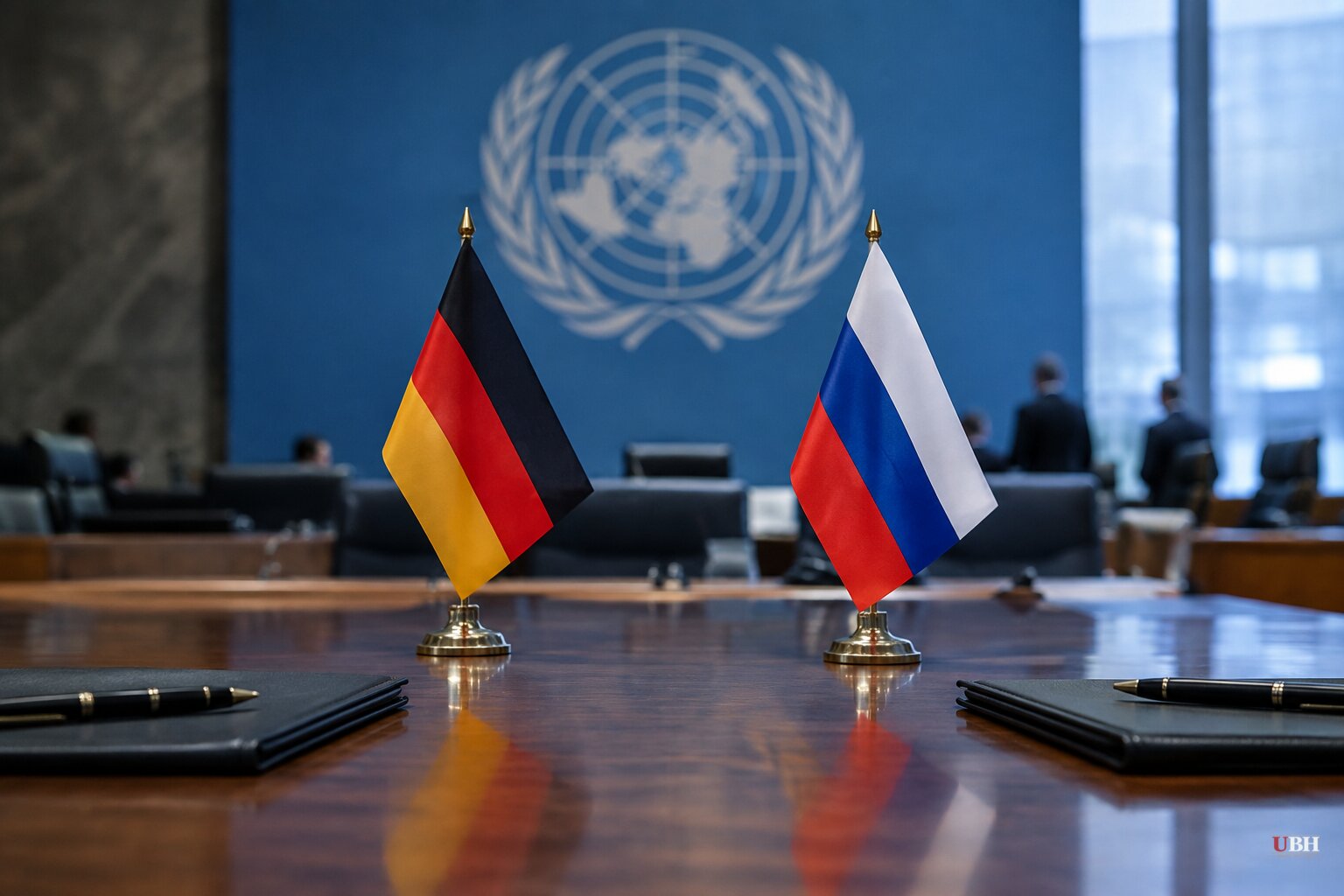
Since Berlin concluded on September 1 that Russia was behind the August 4 drone incident at Leipzig/Halle Airport, German-Russian relations have gone from frozen to actively hostile: consulate closures, cultural center shutdowns, and the expulsion of more than 150 Russian mission staff and family members, according to Kyiv Post citing TVP World. That standoff produced its first face-to-face test on Saturday, September 26, when German Foreign Minister Johann Wadephul sat down with Russian Foreign Minister Sergey Lavrov on the sidelines of the UN General Assembly in New York.
The meeting lasted 22 minutes, according to Kyiv Post, and marked the first tête-à-tête between the two countries' top diplomats since Russia's full-scale invasion in February 2022. It happened behind closed doors, at Germany's request, according to Russian Foreign Ministry spokeswoman Maria Zakharova.
A German delegation official told the Associated Press that Wadephul urged Lavrov to abandon Russia's "dangerous path of escalation" toward Germany, Europe and NATO. Wadephul reportedly told Lavrov that hybrid attacks like the one at Leipzig would not weaken Berlin's resolve to back Ukraine, and separately pressed Lavrov to do "everything possible to reach an agreement on grain exports via the Black Sea," according to Reuters. The same official said Wadephul left the door open to better relations, but only if Moscow shows genuine willingness to end the war.
Lavrov wasn't buying it. Speaking to reporters afterward, he said "nothing new came from that initiative of the foreign minister," adding, "He simply reiterated his official public position condemning Russia. You can judge for yourself whether that counts as dialogue or not." He went further at a UN news conference, telling reporters, "I told him that frankly, you could just have called me and said: 'Read my statement,'" according to Al Jazeera.
On the Leipzig incident specifically, Lavrov dismissed it as "an unclaimed drone" that Germany immediately blamed on Russia without proof, and challenged Berlin to "name one commercial vessel in the Black Sea that was damaged or targeted by Russian strikes," insisting "there are no such cases," per the Associated Press. Germany has not produced public evidence beyond its September 1 investigative conclusion attributing the drone to Russia. Moscow has called Berlin's accusation "entirely fabricated."
Before the sidelines meeting became public, Lavrov used his UNGA floor speech to go after Chancellor Friedrich Merz by name, saying, "Chancellor Merz is stating that Germany must once again be a leading military power in Europe. Does Berlin understand what this could lead to? Did they not learn the lessons of World War II?" He also called Germany Ukraine's "main sponsor."
Lavrov paired that with a broader swipe at the postwar order, telling the Assembly the West "aspires to inflict strategic defeat on Russia" but that such efforts will end in "a strategic dead end," and that "the US has destroyed the European security system and created a Russophobic regime in Kyiv," according to the Associated Press, carried by both PBS and the Manila Times. He also confirmed Russia will veto any bid by Germany or Japan for permanent UN Security Council seats, an issue tied to his separate remarks on backing India instead.
Hours after the New York meeting, Russian strikes killed at least two people in Ukraine overnight into Sunday, September 27, according to the Associated Press. A man was found dead in Kyiv after a drone hit a non-residential building, and a separate strike hit a vehicle repair shop, with firefighters battling the blaze into early Sunday, Ukraine's emergency service said. In the southern Odesa region, one person was killed and two injured in overnight strikes, according to regional military administration head Oleh Kiper. Kyiv Post separately reported Kyiv Mayor Vitali Klitschko saying a woman and two 16-year-olds were hospitalized Sunday morning after a strike on a non-residential building in the Shevchenkivskyi district.
Russia has continued near-daily strikes on Ukraine for months.
EU foreign policy chief Kaja Kallas, in an interview with Fox News Digital at the UN, argued Russia's pressure campaign against Europe is designed to work through fear. "Their goal is to intimidate us from not supporting Ukraine, from refraining to support them and pressuring Russia," Kallas said. "What is important for us is that we are not afraid, because otherwise, this kind of intimidation actually pays off, and then we will see more of it across the world." Kallas, who was born in Soviet-occupied Estonia and whose mother was deported to Siberia as an infant, has become one of the EU's most consistent voices arguing that concessions to Moscow will invite more pressure rather than less.
What happens next in Berlin-Moscow relations is unclear. Neither side has scheduled a follow-up meeting, and Wadephul's own ministry has given no indication Germany plans to reverse the September consulate closures or expulsions. Lavrov, for his part, gave no sign Russia intends to alter its military campaign or its denial of responsibility for Leipzig regardless of what Berlin does next.
Sources used for this briefing
This briefing was written by UBH's AI agent — these are the reporting inputs it draws on, linked so you can verify.


