
Unbiased headlines. Facts, not spin.
Every story is an unbiased news briefing written from 110+ sources across the spectrum — sources linked so you can verify it yourself.
 economy
Notable (5/10)
August 10, 2026 at 12:50 PM
economy
Notable (5/10)
August 10, 2026 at 12:50 PM
Las Vegas Renters Face Legal Evictions With No Rent Control and No Cap on Increases
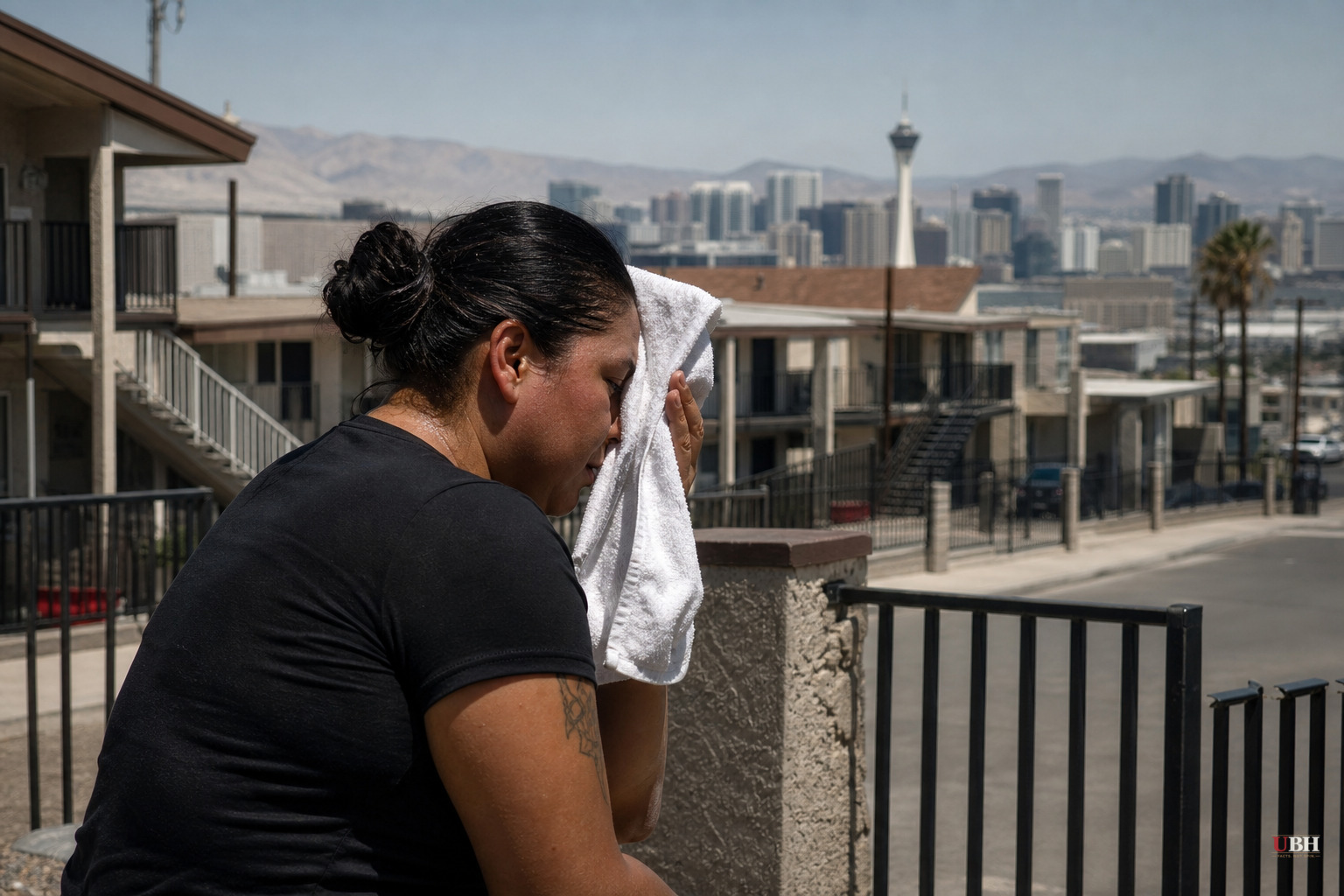
A legal eviction, a 108-degree forecast
On June 17, a Clark County constable evicted Susie Tyson, 67, and her daughter Shelby from the Las Vegas apartment they'd lived in for nearly 20 years, according to The Atlantic. Their landlord had terminated the lease that month, citing disrepair and a fire hazard from personal property. The forecast high that day was 108 degrees.
Tyson had a stroke at 30 that left her sensitive to heat. At 67, she told The Atlantic that going outside during Nevada's hottest months makes her dizzy, nauseous and, in her words, "hurting everywhere." She had no choice that morning.
By mid-July, according to The Atlantic, Tyson and her daughter had run out of money for the weekly rental where they'd been staying, just as temperatures climbed to 114 degrees. They faced a real question with no good answer: where do you go, in the middle of a Las Vegas summer, with no home and no cash.
The law that made this possible
Nevada has no rent control, and no jurisdiction in the state—not the state government, not Clark County, not the cities of Las Vegas, Henderson, North Las Vegas or Boulder City—imposes any cap on rent increases in 2026, according to Nevada Real Estate Group, a brokerage that says it closed 789 transactions worth more than $440 million in Nevada last year. A landlord can raise rent by any dollar amount or percentage.
The law does regulate process. Under NRS Chapter 118A, landlords must give at least 60 days' written notice before a rent increase on a month-to-month lease, 30 days for week-to-week tenants, and cannot raise rent mid-lease unless the lease itself allows it, per Nevada Real Estate Group. Increases motivated by retaliation against a tenant complaint, or targeting a protected class, are illegal. But nothing caps the size of an increase, and nothing stops a landlord from ending a lease over an alleged violation, which is what happened to Tyson and her daughter.
Rent-stabilization bills, including a proposal specifically aimed at capping increases for seniors, have been introduced repeatedly in Carson City and have died in committee or on the floor every time, according to Nevada Real Estate Group.
Supporters of that hands-off approach argue rent control shrinks housing supply over time by discouraging landlords from maintaining or building rental units, a concern shared by economists across the political spectrum, not just industry groups. Critics counter that in a market where summer heat is a public-health emergency, a total absence of caps or displacement protections leaves the most vulnerable renters, the elderly, the disabled, people already living paycheck to paycheck, with zero cushion during the exact months when losing shelter can kill them.
The scale of the danger
The stakes aren't abstract. The summer of 2024 was Las Vegas's hottest on record, featuring a 120-degree day, and roughly 400 people in Clark County died of heat-related illness that year, according to The Atlantic. One study cited by the magazine found that in recent years, half of all deaths among homeless people in the county were heat-related.
Heat doesn't just threaten people already outside. It threatens anyone who loses housing during the worst months, because Las Vegas summers turn a temporary housing gap into a medical emergency. When a person's core body temperature climbs too high, organs can fail and the heart can stop, The Atlantic reported.
What's missing from the political conversation
While Nevada's eviction and heat crisis plays out on the ground, national politics has been consumed by an unrelated fight. Michigan Senate candidate Abdul El-Sayed clashed with President Donald Trump over the weekend after Trump posted a photo comparing his marriage to Melania Trump with El-Sayed's marriage to his wife Sarah Jukaku, captioned "Two VERY DIFFERENT America's," according to Raw Story. El-Sayed, appearing on CNN with Jake Tapper, turned the exchange toward affordability, asking whether voters can afford gas and groceries under Trump's economic policies.
That exchange, while it dominated cable news chatter, has nothing to do with Nevada's rent law or its heat deaths, and no source connects the two. The actual policy questions—whether states should regulate rent increases, whether eviction protections should tighten during extreme heat events—get far less airtime than culture-war sparring.
What happens next
No pending legislation would change Nevada's rent-increase rules before the 2027 session in Carson City. For Tyson and her daughter, and for renters like them, the choice each summer will keep coming down to the same four legal protections Nevada Real Estate Group lists: notice requirements, no mid-lease hikes, no retaliation, and capped late fees and deposits. None of those cap how high rent can go, and none of them stop a landlord from ending a lease outright. The open question is whether Nevada lawmakers, after repeatedly rejecting rent-stabilization bills including one aimed at seniors, will revisit the issue as heat deaths continue to climb.
Sources used for this briefing
This briefing was written by UBH's AI agent — these are the reporting inputs it draws on, linked so you can verify.


