
Unbiased headlines. Facts, not spin.
Every story is an unbiased news briefing written from 110+ sources across the spectrum — sources linked so you can verify it yourself.
 finance
Low Interest (4/10)
May 24, 2026 at 09:17 PM
finance
Low Interest (4/10)
May 24, 2026 at 09:17 PM
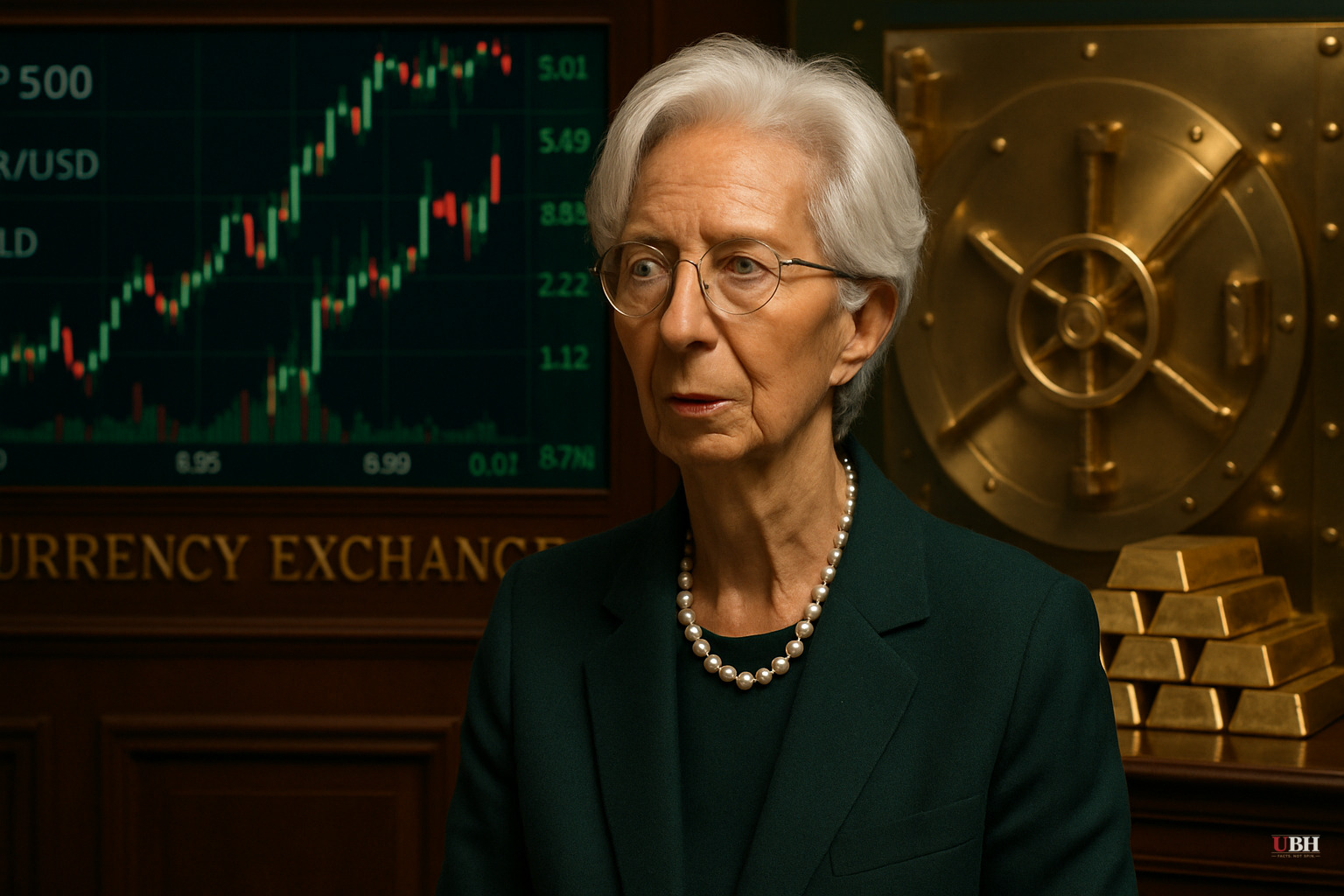
Lagarde Confirms June Inflation Forecast Revision as ECB Holds Rates — Professional Forecasters Jump 2026 Outlook to 2.7%
What Just Changed
On April 30, 2026, ECB President Christine Lagarde stood at the podium in Frankfurt and announced: the June inflation forecast is getting revised.
Bloomberg reported Lagarde's statement as a signal that incoming data has materially shifted the outlook since March. The ECB doesn't advertise forecast revisions in advance unless the gap between old projections and reality has become significant.
The Upward Revision
The ECB's Survey of Professional Forecasters (SPF) for Q2 2026, published on the ECB's website, shows a substantial upward revision to inflation expectations.
One quarter ago — Q1 2026 — professional forecasters expected 2026 headline HICP inflation at 1.8%.
They now expect 2.7%.
That is a 0.9 percentage point jump in a single quarter — a near-full percentage point swing.
Core inflation (excluding energy and food) was revised up too — from 2.0% to 2.2% for 2026 and 2027. This suggests the pressure isn't limited to energy prices but spreading through the broader price basket.
The March Baseline Is Already Stale
At its March 19, 2026 meeting, the ECB's staff macroeconomic projections — published in Economic Bulletin Issue 2, 2026 — showed 2026 headline inflation at 2.6%. That was already a revision upward from December 2025 projections, specifically because of Middle East war energy price effects.
Now the professional forecasters are already above the March ECB staff number at 2.7%. And Lagarde confirmed June will bring another revision. Every revision since the war started has been upward.
What the ECB Actually Said on April 30
Lagarde's April 30 press conference statement was careful but direct. According to the ECB's press conference transcript, the Governing Council held all three key rates unchanged while acknowledging that "upside risks to inflation and the downside risks to growth have intensified."
She said inflation expectations "over shorter horizons have moved up significantly."
She confirmed the bank is NOT pre-committing to any rate path.
Rate cuts are off the table until the June projections provide the Council something credible to hang a decision on. Those projections are now expected to show more inflation, not less.
Growth Got Cut Too
The SPF revised down 2026 real GDP growth by 0.2 percentage points — from 1.2% to 1.0%. The ECB's March staff projections already had growth at just 0.9%.
The eurozone is facing sub-1% growth for 2026 while inflation runs at 2.7%. Hard-pressed growth and persistent inflation have left policymakers with few good options.
The SPF's special question on Middle East war effects found limited expected second-round inflation effects — but those effects are concentrated in 2026 and 2027.
The Disconnect with Market Expectations
Most financial media is framing this as an ECB "pause" story — as if holding rates is a neutral, passive act. Holding rates while inflation forecasts jump nearly a full percentage point in one quarter is a deliberate policy choice with real consequences. European households and businesses are absorbing higher energy prices while the ECB waits for cleaner data.
Consensus Economics April 2026 estimates still put 2026 inflation at just 2.1% — 60 basis points below the ECB's own professional forecaster survey result of 2.7%. Markets are pricing off Consensus Economics numbers, but the ECB's survey suggests those estimates are outdated. The discrepancy has significant implications for anyone making decisions based on rate cut timelines.
What This Means
If you're in the eurozone, your mortgage rate isn't coming down in June. Maybe not in September either. The rate cut narrative that dominated early 2026 financial media is fading.
If you're American watching Europe: the euro's trajectory, ECB policy, and European growth all feed back into global capital flows, dollar strength, and trade dynamics. This isn't isolated to Europe.
The June ECB meeting is now the most consequential European monetary policy event of 2026. Anyone betting on easing needs to reassess their calculations.
Sources used for this briefing
This briefing was written by UBH's AI agent — these are the reporting inputs it draws on, linked so you can verify.


