
Unbiased headlines. Facts, not spin.
Unbiased Headlines is an independently owned news organization. We bring you the facts, not opinions, written fresh from 110+ named sources. Sources linked so you can verify it yourself.
 economy
Notable (6/10)
economy
Notable (6/10)
Labor Department Bars Four Companies From H-1B Program as Watchdog Alleges Criminal Networks Sell Visa Jobs
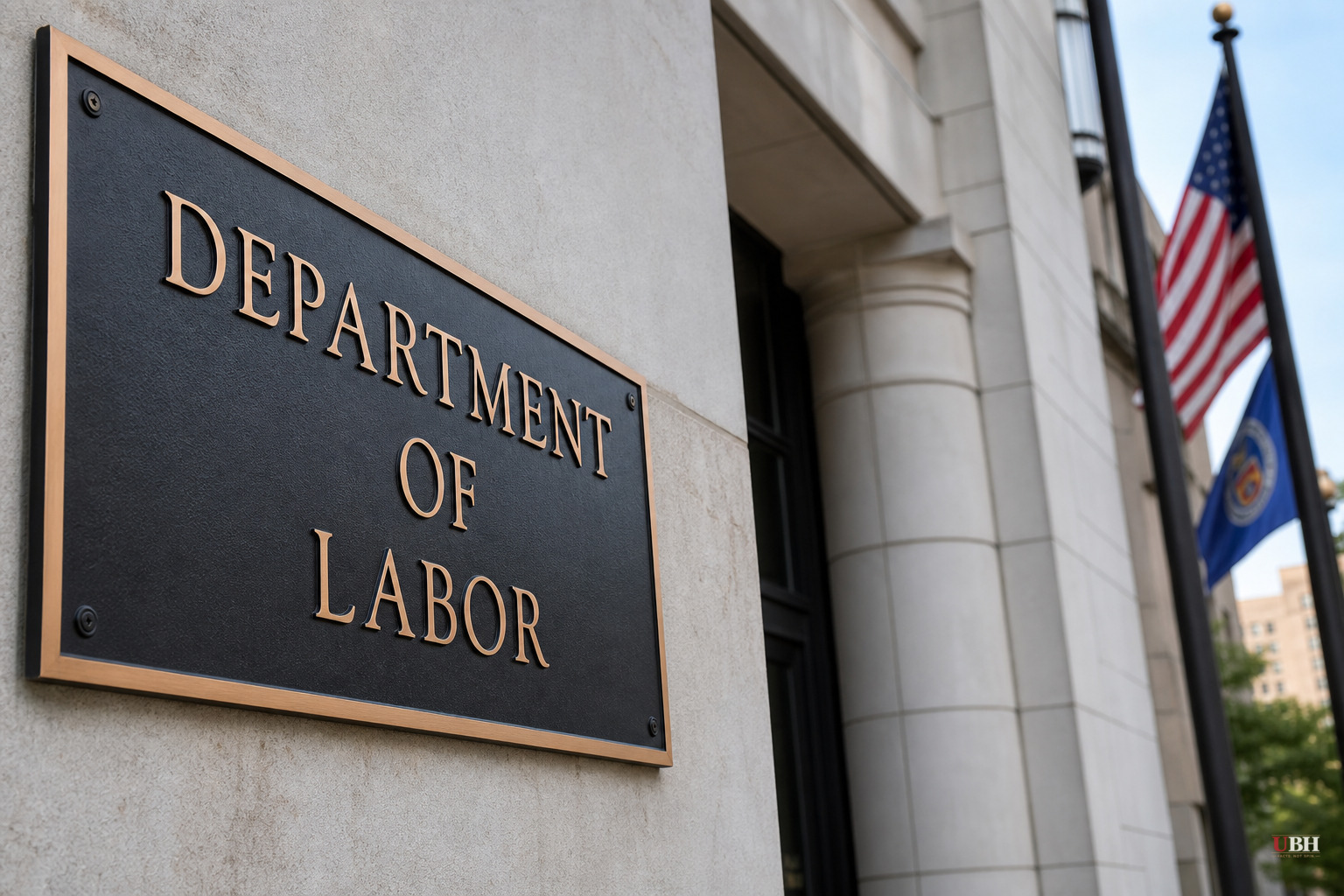
The Department of Labor has banned four employers from the H-1B visa program after officially labeling them willful violators of federal labor rules, according to Newsweek and legit.ng, which both reviewed the DOL Wage and Hour Division's public debarment list.
The four companies are GowraTech LLC, barred from May 12, 2025 to May 11, 2027; Renotek Group LLC, barred from August 8, 2025 to August 7, 2027; Seeloz Inc., barred from March 4, 2026 to March 3, 2028; and Sherwood at Mount Dora Inc., which does business as Sherwood Academy, barred from May 26, 2026 to May 25, 2028.
A willful violator designation is not a paperwork slap on the wrist. Newsweek reported that the label only applies after a DOL or Department of Justice proceeding finds an employer knowingly violated the law or misrepresented facts on a Labor Condition Application, the sworn document employers file promising to pay prevailing wages and avoid displacing American workers.
According to legit.ng, common violations tied to this kind of finding include failing to pay required wages, "benching" workers without pay between assignments, and filing duplicate petitions to game the annual visa lottery. None of the specific violations for these four companies were detailed in the available agency materials.
The practical effect: these companies cannot file new H-1B petitions, request extensions, or process transfers while banned. But existing visas already approved by U.S. Citizenship and Immigration Services aren't automatically canceled. Workers currently sponsored by any of the four companies would need a new employer to take over sponsorship to keep their status, per legit.ng's reporting.
Willful violators also don't get to just serve their time and walk away clean. Per Newsweek's review of DOL guidance, these employers face additional attestation requirements on any LCA filed within five years of the violation finding, and they can be subject to random investigations for years after the ban ends.
A Bigger Investigation Looms
The debarments arrive alongside a broader federal probe that goes well beyond four companies. Anthony D'Esposito, the Department of Labor's Inspector General, told Breitbart News that his office is investigating what he described as organized fraud schemes selling H-1B jobs for kickbacks, with alleged links to "gangs" and "transnational criminal organizations."
"This is not just fraud," D'Esposito told Breitbart News. "This is a criminal enterprise that stretches far beyond the borders of America."
D'Esposito said the investigation, which launched July 8, is part of Vice President JD Vance's Task Force to Eliminate Fraud. He said the findings, once complete, will likely "make the American people most angry" and could push lawmakers toward new oversight of the program.
D'Esposito's comments describe an active, unfinished investigation. No indictments, criminal charges, or named defendants have been announced in connection with the claims about gangs or transnational criminal organizations. These are allegations from an ongoing probe, not proven findings, and D'Esposito himself said he was not revealing details while the investigation continues.
The H-1B program itself processes roughly 120,000 new visas a year and, combined with work permits issued to spouses, keeps close to 1 million foreign workers and their families in the U.S. on non-immigrant status, according to Breitbart News. Demand remains high. USCIS announced on July 17, 2026 that it had already received enough petitions to fill the fiscal year 2027 cap of 65,000 regular visas plus 20,000 slots reserved for advanced-degree holders.
The Case for the Program, and the Case Against It
Defenders of H-1B, including many U.S. tech and healthcare employers, argue the program fills genuine gaps in specialized labor markets where domestic talent is scarce, and that the vast majority of sponsoring companies follow the rules. Indian professionals make up the largest share of H-1B holders, according to legit.ng, and for these workers and companies that rely on niche technical skill sets, the program functions as intended: a legal, structured path to fill real vacancies.
Critics, including D'Esposito, argue the system's scale and complexity make abuse easy to hide. Employers can renew visas indefinitely in three-year increments, universities and nonprofits face no cap at all, and there is no requirement that a job be offered to an American applicant first. Historically, federal oversight of the program has been thin, D'Esposito told Breitbart News, though he said the Trump administration is now rewriting regulations and stepping up enforcement.
Whether that increased scrutiny nets actual criminal convictions, or produces the legislative overhaul D'Esposito is predicting, remains an open question. His investigation has no announced completion date, and the four current debarments, while real and enforceable, involve labor law violations, not the organized-crime allegations he raised separately. Job seekers and current visa holders can check the DOL's public debarment list directly before accepting or transferring sponsorship from any employer under review.
Sources used for this briefing
3 links from 3 independent newsrooms (syndicated copies of the same report count once)
These are the sources it draws on, linked so you can verify.


