
Unbiased headlines. Facts, not spin.
Every story is an unbiased news briefing written from 110+ sources across the spectrum — sources linked so you can verify it yourself.
 economy
Notable (6/10)
July 29, 2026 at 02:17 AM
economy
Notable (6/10)
July 29, 2026 at 02:17 AM
L.A. Homelessness Rises Again After Two Years of Declines, County Data Shows
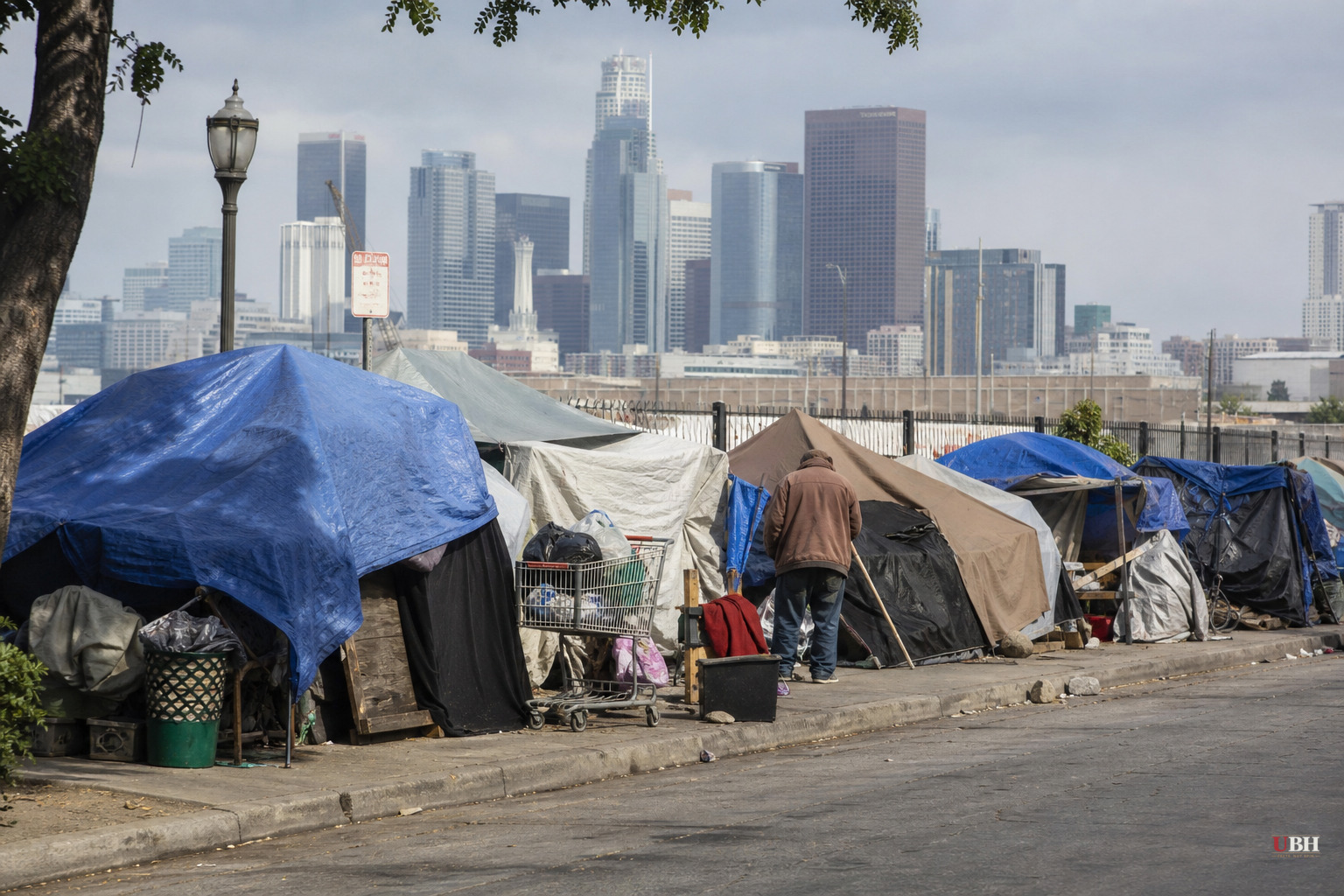
L.A. just broke a two-year streak. After back-to-back annual declines in its homeless population, the city is once again reporting more people sleeping on the street.
The Los Angeles Homeless Services Authority, known as LAHSA, released its latest point-in-time count showing the city of Los Angeles posted a 3.4 percent annual increase in homelessness. The count shows 45,194 people living on the streets or in shelters within city limits. Countywide, the increase was smaller, 1.2 percent, for a total of 73,040 people.
The point-in-time count works exactly like it sounds. Volunteers fan out on a single night in January and physically count everyone sleeping outside, in vehicles, or in shelters. It's not a perfect method, undercounts are a known limitation, but it's the standard measure cities and the federal government use to track trends year over year.
Two Years of Declines, Then a Reversal
Mayor Karen Bass had spent the past two years pointing to falling homelessness numbers as proof her administration's approach was working. Her office touted the declines as validation of city programs aimed at moving people off the street and into housing.
This year, with the number moving the other direction, Bass struck a different tone. "Our efforts ultimately couldn't keep up with policies and funding cuts at the federal and state levels that pushed more people onto the streets," she said, according to Reason's Christian Britschgi, pointing to county service cuts, reduced federal funding, and Trump administration policies she said drove up the cost of "gas, groceries, and rent."
L.A. City Councilmember Nithya Raman, who is running against Bass in the mayoral race, rejected that explanation. Raman placed the blame squarely on the mayor's own management of the city's homelessness response.
Both claims deserve scrutiny rather than automatic acceptance. Bass has a real point that federal and state funding levels affect what cities can do, and rising costs for basic goods do strain low-income households closest to the edge of housing insecurity. But Raman's counter is also grounded in a documented record. City-run homelessness programs in Los Angeles have repeatedly been flagged by government watchdogs for inefficient spending and slow delivery of permanent supportive housing, independent of who controls the White House.
The Federal Funding Fight
The Trump administration has pushed to redirect federal homelessness dollars away from "housing first" programs, the model that prioritizes getting people into permanent housing without preconditions like sobriety or treatment, and toward temporary shelter instead. Courts have blocked many of those attempted reforms, meaning the policy fight is far from settled.
In June, the administration suspended federal funding to LAHSA specifically, citing what it called "wanton mismanagement of public funds." That's a serious allegation from a federal agency, but it is an allegation, not a finding from an independent audit or court. LAHSA has faced criticism from local and state watchdogs before this dispute for cost overruns and delays in housing delivery, so the concern about mismanagement didn't originate with the Trump administration even if the funding cutoff did.
The Wildfire Factor
The increase also lands almost exactly a year after the January 2025 wildfires tore through the Los Angeles area, destroying or severely damaging enough homes to displace roughly 12,900 households. The Palisades fire hit wealthier neighborhoods hardest, while the Eaton fire caused widespread damage in Altadena.
A supply shock of that size doesn't just remove homes from the market. It pushes displaced renters and homeowners into competition for the existing housing stock, driving up rents and squeezing out people already on the margin. Whether the wildfire displacement is a primary driver of this year's homelessness increase, or a secondary factor layered on top of funding disputes and program inefficiencies, isn't something the point-in-time count alone can isolate.
What's Unresolved
The count doesn't break down how many of the newly counted homeless were displaced by the fires versus pushed onto the street by other economic pressures. LAHSA hasn't released that granular a breakdown publicly. Until it does, or until an independent audit sorts out how much of the increase traces to federal and state funding changes versus local program failures, the argument between Bass and Raman is likely to keep playing out in campaign ads rather than settled by data.
Two concrete near-term markers stand out. Whether the funding fight between LAHSA and the Trump administration gets resolved in court, and whether Los Angeles voters render their own verdict on Bass's homelessness record when they choose between her and Raman in the mayoral race.
Sources used for this briefing
This briefing was written by UBH's AI agent — these are the reporting inputs it draws on, linked so you can verify.


