
Unbiased headlines. Facts, not spin.
Every story is an unbiased news briefing written from 110+ sources across the spectrum — sources linked so you can verify it yourself.
 economy
Notable (6/10)
July 26, 2026 at 11:31 AM
economy
Notable (6/10)
July 26, 2026 at 11:31 AM
Kuwait-Iraq Border Crossing Reopens After Drone Attack as Middle East Conflict Widens
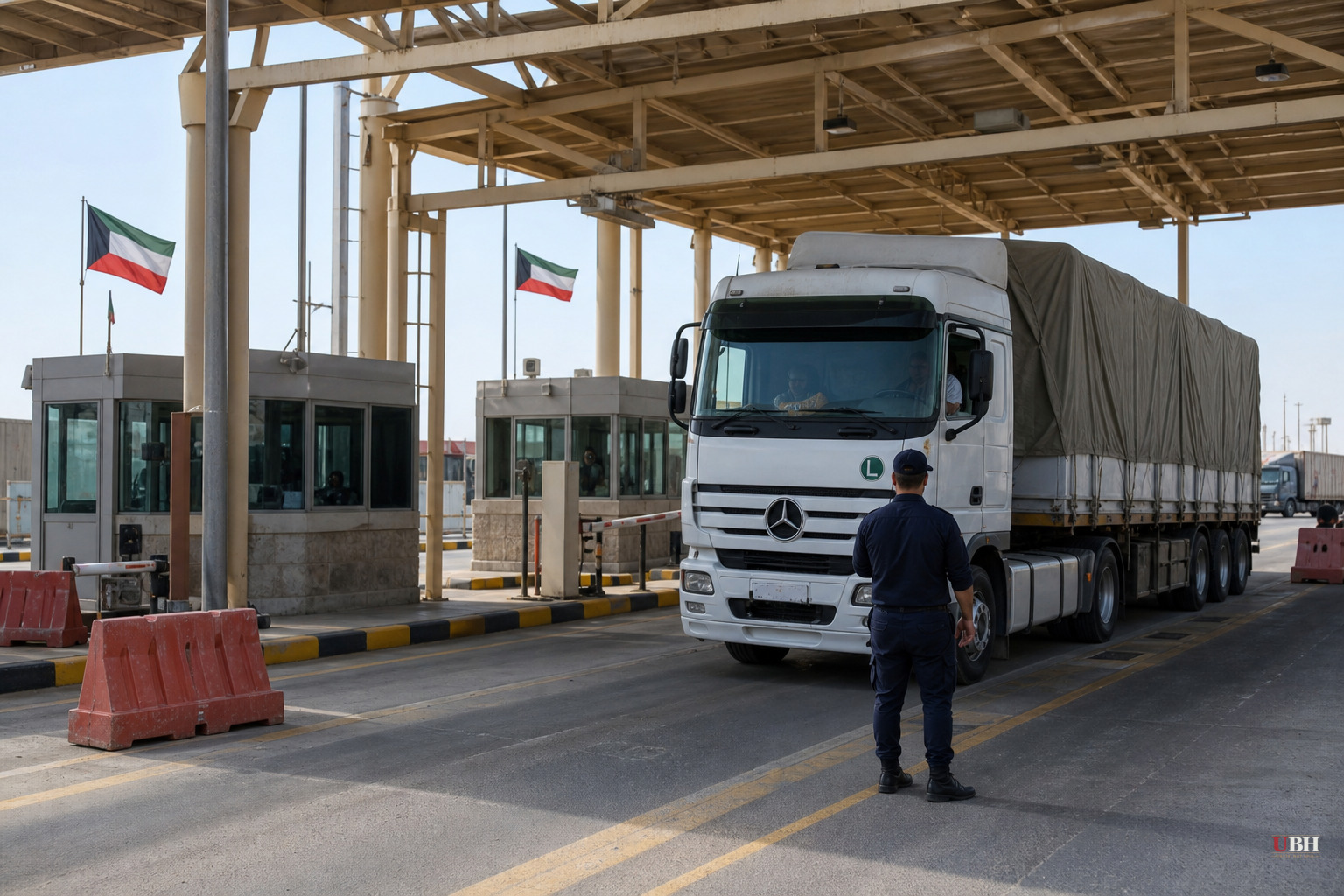
The crossing is open again
Iraq's state news agency reported Sunday, July 26, that the Abdali border crossing with Kuwait has reopened, citing the country's border crossings authority, according to Reuters. The crossing had been shut since Thursday after a drone strike caused material damage. No one was hurt, according to the Kuwaiti army.
Abdali sits in Kuwait's northern Al-Jahra Province. It's the main artery for passenger cars and commercial trucks moving between the two countries. Shutting it down for even a few days backs up trade and travel across a border that normally sees heavy daily traffic.
Nobody has claimed responsibility for the drones. Reuters reported it's still unclear who launched them. In a region where Iran-backed militias, Gulf rivals, and now Ukraine are all lobbing weapons at each other's infrastructure, an unclaimed drone strike on a civilian border crossing could mean almost anything, from a stray weapon in a wider fight to a deliberate message aimed at Kuwait.
The bigger picture: Washington hits pause
The Abdali strike didn't happen in a vacuum. It landed in the middle of what Livemint described as an active US-Iran war, now stretching into its third week as of July 26. The US carried out strikes on Iran for nearly two weeks before pausing them, a shift that Livemint said has raised fresh questions about President Donald Trump's strategy.
US Central Command said Sunday it's continuing a naval blockade against Iran, according to Livemint. CENTCOM posted footage on X showing Marines from the 11th Marine Expeditionary Unit boarding the tanker M/T Wen Yao in the Gulf of Oman on July 16, part of enforcing that blockade.
Pausing strikes while keeping the blockade running suggests the administration wants economic pressure to keep grinding on Iran's oil exports without opening new fronts of direct combat right now. Whether that's a deliberate de-escalation or a tactical pause ahead of something else, the sources don't say. Nobody in the administration has laid out publicly, according to available reporting, what triggered the halt in strikes.
Houthis and Saudi Arabia trade fire
While the US dialed back, the Houthis didn't. The Iran-backed group in Yemen said Saturday it fired missiles and drones at facilities tied to Saudi Aramco in the Red Sea port cities of Jizan and Yanbu, according to Livemint. Saudi Arabia and Aramco hadn't confirmed the attack as of Saturday. Emergency warnings were issued in the target areas and then withdrawn, Livemint reported.
An unconfirmed Houthi claim isn't proof of a successful strike on Aramco infrastructure. It's a claim made by a combatant with an obvious interest in projecting strength that Saudi officials haven't verified either way.
Iran threatens Ukraine over Caspian Sea strike
Separately, Iran's Foreign Ministry condemned what it called a Ukrainian attack on an Iranian commercial vessel in the Caspian Sea early Saturday, according to Livemint. Iranian state media said the strike killed one person and injured another. Tehran called it a violation of Article 2(4) of the UN Charter and said it will "not hesitate to defend its national interests and security."
Kyiv, for its part, confirmed a series of long-range strikes on Russian military logistics and supply chains, including maritime operations in the Caspian Sea, according to Livemint's reporting on Ukraine's own statement. If Iran is supplying weapons or logistics support to Russia through Caspian shipping routes, as Ukraine has alleged in the broader war, that would put Iranian vessels in the crosshairs of a conflict most Americans think of as confined to Ukraine and Russia. Iran summoned Ukrainian diplomats over the incident, Livemint reported.
IRGC threatens Britain
Iran's Islamic Revolutionary Guard Corps also warned Britain on Saturday that it could become a target if London extends further support to the US campaign against Iran, according to Livemint. No specifics were given about what kind of British support would trigger that threat, or what retaliation might look like.
What's actually verified versus what's still a claim
Confirmed and sourced: the Abdali crossing closure and reopening, the US blockade continuing per CENTCOM's own statement, the Marine boarding of the Wen Yao on July 16, Iran's condemnation of the Caspian Sea strike, and Ukraine's confirmation of strikes on Russian logistics. Unconfirmed: the Houthi claim of a successful strike on Aramco facilities, since Saudi Arabia and Aramco haven't verified it. Unattributed: who launched the drones at Abdali.
The immediate question is whether the US strike pause on Iran holds or whether it's a brief lull before renewed action, something the administration hasn't clarified publicly as of this writing. The border reopening in Kuwait is a small sign of normalcy returning to one corner of a region where several separate conflicts, Iran-US, Houthi-Saudi, and now Iran-Ukraine, are running on parallel tracks with no clear resolution to any of them.
Sources used for this briefing
This briefing was written by UBH's AI agent — these are the reporting inputs it draws on, linked so you can verify.


