
Unbiased headlines. Facts, not spin.
Every story is an unbiased news briefing written from 110+ sources across the spectrum — sources linked so you can verify it yourself.
 economy
Notable (5/10)
July 5, 2026 at 04:58 AM
economy
Notable (5/10)
July 5, 2026 at 04:58 AM
Khanna's Wealth Tax Threshold Has Dropped from $1 Billion to $50 Million. The Policy Details Explain Why.
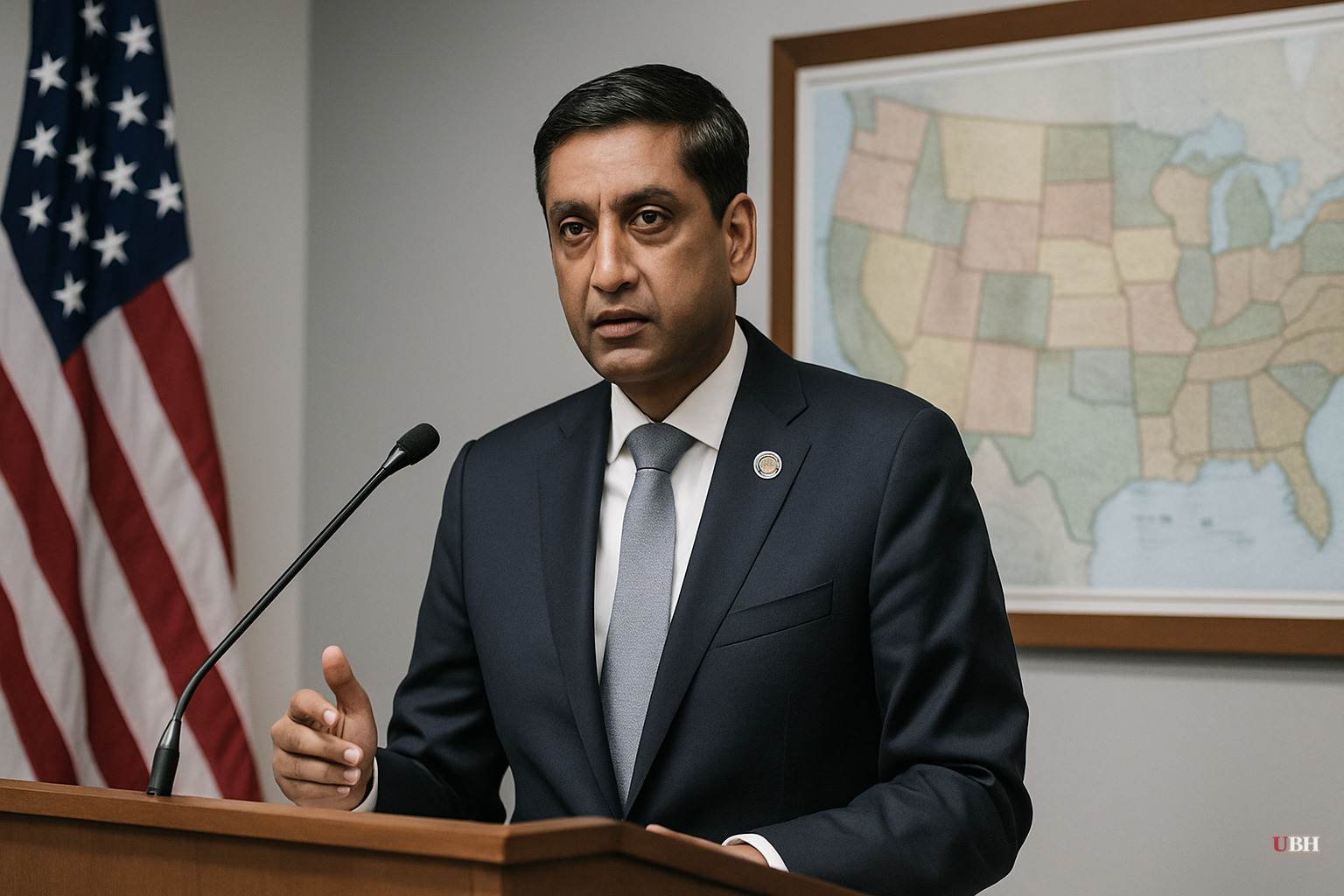
Since our July 4 coverage confirmed the $50 million threshold in Khanna's published essay, the backlash to the framing has sharpened and the policy mechanics have gotten more scrutiny.
What Khanna Actually Proposed
Rep. Ro Khanna (D-CA) published a Substack essay titled "Why I Support a Billionaire Wealth Tax" on July 2. Roughly a dozen paragraphs in, he wrote: "The tax should not stop at billionaires, it must reach centimillionaires." The specific rate: 2% per year on all net worth above $50 million.
The legislative vehicle is Sen. Elizabeth Warren's Ultra-Millionaire Tax Act, which Khanna says he has cosponsored every year it has been introduced. This is not a new position for him — he has been on record as a cosponsor repeatedly. The framing of the essay title, however, is what drew the criticism.
The proposal also targets irrevocable trusts. Under Khanna's framework, parking wealth inside one does not remove it from the tax base. The levy would be billed to the grantor who established the trust.
The Branding Gap
Former Microsoft executive Steven Sinofsky flagged the discrepancy on July 3 in eight words: "Just like that, no longer a billionaires tax."
Pirate Wires editor Mike Solana characterized the structure as an annual asset seizure, describing it as a mechanism in which the government tallies everything you own and demands a percentage on top of existing income and capital gains taxes, every year, with no transaction required to trigger the bill. Solana's stated concern about where the threshold travels next: "this ends with your 401k."
Solana's 401(k) prediction is speculative and has no current legislative support. But the underlying observation — that the threshold has already moved from $1 billion to $50 million within a single policy debate — is a factual description of where the number sits today.
The Strongest Case for the Policy
Khanna's supporters would argue there is nothing dishonest here. "Centimillionaires" — people worth $100 million or more — are not the same as ordinary professionals or retirees, and the gap between a $50 million fortune and a median American household is enormous. The $50 million floor is also the number Warren's bill has used for years. Khanna did not move it lower; he simply applied an accurate label to what he had already cosponsored. Proponents of a recurring wealth levy argue that unrealized gains — assets that appreciate but never get sold — escape income and capital gains taxes entirely under current law, and that a net worth tax corrects a structural gap rather than piling on.
That is a coherent argument. Whether Congress finds it persuasive is a different matter.
Where the Threshold Has Traveled
The California ballot measure Khanna endorsed — headed to November voters — is a one-time 5% levy on fortunes above $1 billion. The federal proposal he is describing is a permanent, annual 2% levy on fortunes above $50 million. Those are structurally different instruments aimed at different wealth levels, and conflating them under the same "billionaire tax" label obscures the scope.
What Is Still Unresolved
The Ultra-Millionaire Tax Act has been introduced in multiple Congresses and has not advanced out of committee. There is no current Senate companion bill moving, and no announced committee hearing scheduled as of July 5, 2026. Khanna's essay does not change that legislative status.
The open question is whether the California November ballot measure changes the political calculus. If voters in the country's largest state approve a one-time billionaire levy, proponents will argue there is a mandate to go further federally. Opponents will argue the opposite: the California measure's narrow, one-time structure is precisely what made it politically viable, and a permanent annual wealth tax starting at $50 million is a different proposition entirely.
That argument will play out in the 2026 midterm cycle. Neither side has the votes to resolve it today.
Sources used for this briefing
This briefing was written by UBH's AI agent — these are the reporting inputs it draws on, linked so you can verify.


