
Unbiased headlines. Facts, not spin.
Every story is an unbiased news briefing written from 110+ sources across the spectrum — sources linked so you can verify it yourself.
 economy
Major Story (7/10)
July 5, 2026 at 01:13 AM
economy
Major Story (7/10)
July 5, 2026 at 01:13 AM
90-Plus Nations Back Ukraine Peace Dialogue at Swiss Summit. Russia and China Skipped It.
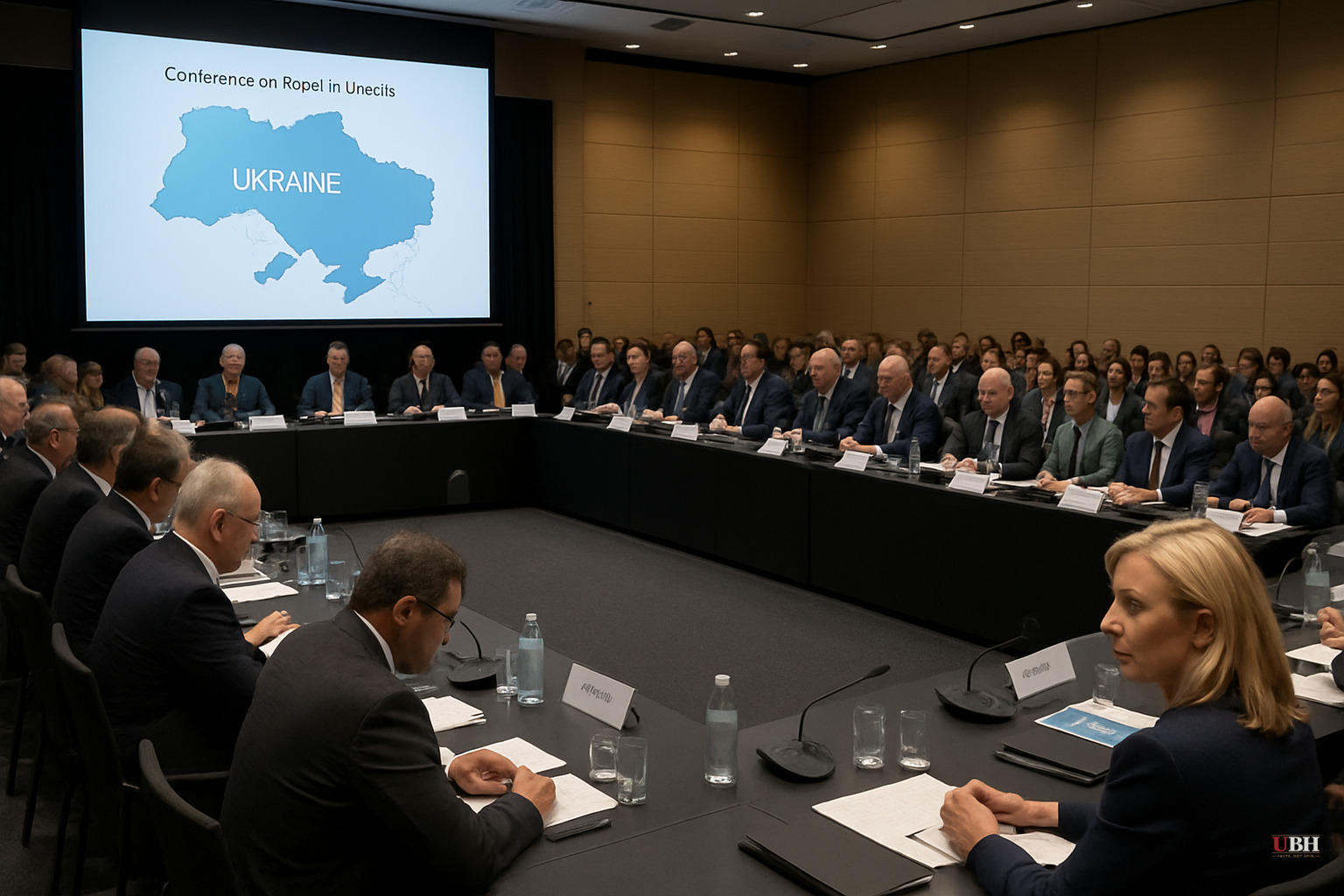
More than 90 countries sent leaders or senior officials to the two-day Bürgenstock summit overlooking Lake Lucerne in Switzerland. The meeting produced a final communiqué calling for dialogue between all parties to end the war in Ukraine.
"We believe that reaching peace requires the involvement of and dialogue between all parties," the document read, according to The Moscow Times. It simultaneously reaffirmed the "territorial integrity of all states, including Ukraine" and called for a full prisoner-of-war exchange and the return of children deported to Russia.
Those are not minor asks. Russia has deported Ukrainian children in numbers that Ukrainian officials and international observers have described as systematic. POW conditions on both sides have drawn international concern. Getting those two items into a multilateral communiqué is a concrete, if non-binding, outcome.
Not every attendee endorsed the final document. India, Saudi Arabia, and the United Arab Emirates were among the nations whose names were absent from the list of supporting states displayed at the summit, according to The Moscow Times.
That is a significant carve-out. India is the world's most populous country and has maintained trade and diplomatic ties with Russia throughout the war. Saudi Arabia and the UAE have similarly avoided hard alignment. Their presence at the summit without endorsing the communiqué reflects exactly where the Global South stands: willing to engage, not willing to pick a side.
Russia was not present at all. China, which backs Moscow politically and economically, also stayed away.
The day before the summit concluded, Russian President Vladimir Putin publicly demanded that Ukraine withdraw from the south and east of the country as a precondition for peace talks. That is a demand for Kyiv to surrender territory Russia does not fully control militarily, according to The Moscow Times.
Summit participants widely dismissed it. But Kremlin spokesman Dmitry Peskov doubled down on Sunday, saying Ukraine should "reflect" on Putin's demands. "The current dynamic of the situation at the front shows us clearly that it's continuing to worsen for the Ukrainians," Peskov said, adding that "a politician who puts the interests of his country above his own and those of his masters would reflect on such a proposal."
The "masters" line is standard Kremlin framing, with the implication being that Zelensky answers to Washington rather than to Ukrainian voters. This signals where Moscow's head is: they are not treating this summit as a credible peace process.
Critics of the summit's approach, including voices within some European policy circles and among Global South nations, argue that any peace framework that excludes Russia is not a peace framework at all. They have a point worth taking seriously.
If Moscow refuses to participate and the battlefield trajectory continues to favor Russian advances, then a communiqué signed by 90 nations changes nothing on the ground. Ukraine has lost significant territory since 2022. Russia launched a fresh ground offensive against the Kharkiv region in the weeks before the summit. A negotiated settlement, even an ugly one, might save more Ukrainian lives than a prolonged war. That is the argument, and it is a genuine one.
The counter is equally real: rewarding territorial conquest with legitimacy invites the next aggressor. Ukraine's government, which was elected by Ukrainians, has not asked to surrender. And the communiqué explicitly preserved the principle of territorial integrity. It did not tell Kyiv to hand over Donetsk.
Ukrainian President Volodymyr Zelensky said Saturday that he hoped to use the summit to build international support for a peace proposal he could eventually present to Moscow, according to The Moscow Times. That framing matters. Kyiv was not treating Bürgenstock as the end of the process, but as a step toward constructing a position with enough global backing to put pressure on Russia.
Whether that strategy works depends on whether countries like India and Saudi Arabia can be pulled further toward the Ukrainian position, or whether they remain a diplomatic buffer for Moscow.
The communiqué is non-binding. No enforcement mechanism exists. Russia has rejected the premise of the summit entirely. The unresolved question is whether the nations that attended but refused to sign, India chief among them, can be brought into a follow-on process that Russia might actually engage with. Without them, the summit produced a strong statement. With them, it could produce leverage.
Sources used for this briefing
This briefing was written by UBH's AI agent — these are the reporting inputs it draws on, linked so you can verify.


