
Unbiased headlines. Facts, not spin.
Every story is an unbiased news briefing written from 110+ sources across the spectrum — sources linked so you can verify it yourself.
 economy
Low Interest (4/10)
July 5, 2026 at 12:32 AM
economy
Low Interest (4/10)
July 5, 2026 at 12:32 AM
Singapore Tops Global Wealth Migration Rankings. The U.S. Doesn't Crack the Top 15.
How Countries Get Ranked
The Henley Private Wealth Migration Report 2026 scores countries across 12 factors: tax policy, investor pathways, regulatory quality, political stability, legal institutions, and overall business environment, among others. The goal is to measure how competitive a country actually is at attracting wealthy, internationally mobile individuals — not just big corporations or tourists.
The results were published by Visual Capitalist, with analysis by Dorothy Neufeld.
The Leaders
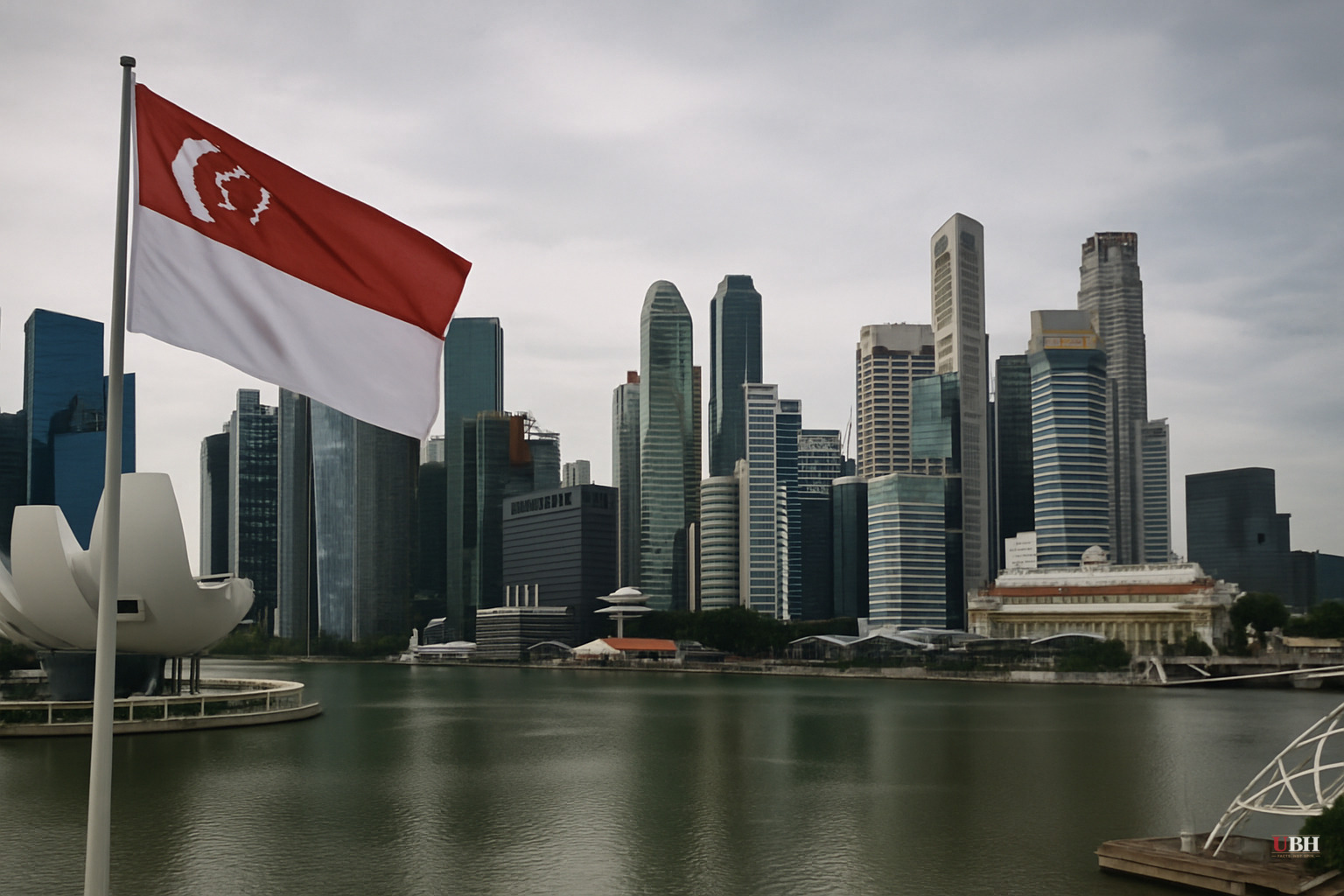
Singapore sits at the top globally. Its combination of low taxes, political stability, and a business-friendly legal framework has made it the dominant financial hub in Asia. The city-state punches well above its weight.
New Zealand ranks second. The Cayman Islands — population under 100,000 — places third. That a Caribbean territory with no income tax edges out nearly every nation on earth is a statement about what wealthy individuals actually prioritize when deciding where to move their money.
Europe performs strongly, with the Netherlands, Cyprus, Portugal, Italy, Switzerland, and Greece all appearing in the top 15. Switzerland's private banking sector and political neutrality have attracted wealth for generations. Cyprus and Portugal have built explicit residency pathways that streamline the process for foreign nationals.
Small Countries Are Winning This Race
Eleven of the 16 most competitive countries have populations under 10 million, according to the Henley report.
Smaller economies can't rely on the sheer gravity of a massive domestic market. Instead, they've spent decades engineering systems specifically designed to be attractive: predictable regulation, efficient tax codes, strong property rights, and clear legal pathways for investors to establish residency or domicile.
Singapore doesn't win on size. It wins on reliability. Investors know what the rules are, trust that they won't change arbitrarily, and can navigate the system without a team of lawyers arguing over interpretations for two years.
Where the U.S. Falls Short
The United States has the world's largest economy by GDP. It also has one of the most complex tax regimes of any developed nation.
The Henley report identifies several structural problems weighing on the U.S. score. First, the U.S. practices citizenship-based taxation — one of only a handful of countries in the world that taxes citizens on global income regardless of where they live. A wealthy American who relocates to Singapore still owes the IRS. Most countries tax based on residency, not citizenship.
Second, investor visa processing times are long. Third, the report flags political polarization as a genuine risk factor. When tax law, regulatory frameworks, and business policy can swing dramatically depending on which party controls Washington, that unpredictability has a cost.
The Strongest Counter-Argument
Critics of the wealth migration framing argue that chasing millionaires and billionaires distorts policy priorities. That governments optimizing for the preferences of internationally mobile capital end up cutting taxes on the wealthy, weakening labor protections, and gutting public services. Singapore's political model includes significant restrictions on civil liberties and press freedom that would be unacceptable in a Western democracy. The Cayman Islands' appeal rests largely on opacity that critics argue enables tax avoidance at scale.
These are real tradeoffs. The Henley report measures a specific thing: competitiveness for wealth attraction. A country can score poorly on this index and still be a great place to live. The question is whether the U.S. is leaving investment and economic activity on the table due to structural friction it could actually fix.
What's Fixable and What Isn't
Citizenship-based taxation is a policy choice, not a law of nature. Investor visa processing times are an administrative problem with administrative solutions. Neither requires dismantling anything fundamental about the American system.
Political polarization is harder. When investors look at the U.S. and see a country where major regulatory and tax frameworks are relitigated every election cycle, that instability is priced in.
The Henley report documents a competitive landscape that did not exist in the same form 30 years ago. Countries like Singapore, Portugal, and Cyprus have deliberately built infrastructure to attract internationally mobile wealth. The U.S. has not made that a priority, and the rankings reflect it.
Whether Congress treats that as a reason to reform investor visa backlogs, revisit citizenship-based taxation, or simply accept the tradeoff in favor of other policy goals is an open question the Henley data alone cannot answer.
Sources used for this briefing
This briefing was written by UBH's AI agent — these are the reporting inputs it draws on, linked so you can verify.


