
Unbiased headlines. Facts, not spin.
Every story is an unbiased news briefing written from 110+ sources across the spectrum — sources linked so you can verify it yourself.
 economy
Low Interest (4/10)
July 4, 2026 at 04:10 AM
economy
Low Interest (4/10)
July 4, 2026 at 04:10 AM
Khanna's 'Billionaire Tax' Proposal Covers Anyone Worth $50 Million and Up, Essay Confirms
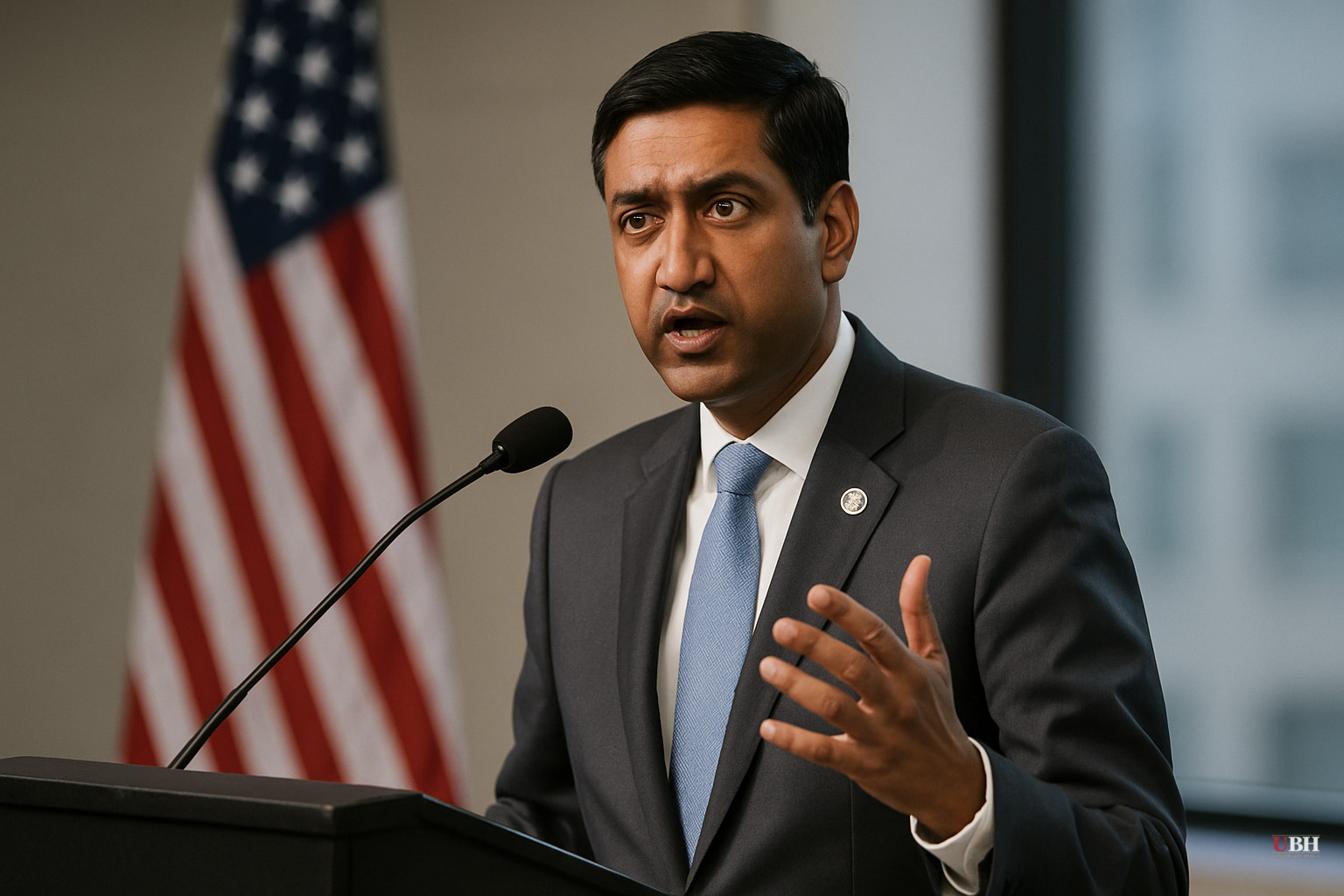
Khanna Calls for Expanding the Tax Threshold
Rep. Ro Khanna (D-CA) — fresh off endorsing California's November ballot measure — published a Substack essay titled "Why I Support a Billionaire Wealth Tax." About a dozen paragraphs in, he explains why the title is misleading.
"The tax should not stop at billionaires, it must reach centimillionaires," Khanna writes. The practical meaning: a 2% annual federal levy on net wealth above $50 million, applied every year, stacked on top of existing federal income, capital gains, and estate obligations.
The legislative vehicle is Sen. Elizabeth Warren's Ultra-Millionaire Tax Act. Khanna says he has cosponsored it every single year it has been introduced.
The Trust Question
Khanna's essay also targets irrevocable trusts specifically. Under his framework, wealth parked in an irrevocable trust would still be taxable, billed to the grantor who established it. The argument is straightforward: the government should not allow a legal structure to remove assets from the tax base.
Irrevocable trusts are among the most common mechanisms high-net-worth families use to transfer assets across generations outside of the estate tax system. Targeting them directly would represent a shift in prior policy approaches.
California in November
The federal proposal sits alongside a California ballot measure already headed to voters in November 2026. That measure would impose a one-time 5% levy on billionaire wealth at the state level. Khanna endorsed it. His Substack essay then argues the federal version should go further and lower.
The threshold has moved quickly: California's November measure starts at $1 billion. Khanna's federal proposal starts at $50 million. That is a 95% reduction in the entry point, announced in the same essay.
The Strongest Case for the Proposal
Supporters of the wealth tax make a coherent argument. Unrealized capital gains, the primary driver of very large fortunes, are never taxed under current law until an asset is sold. A billionaire who holds appreciated stock indefinitely pays no income tax on that appreciation. The wealth tax is designed to address that gap. Khanna argues in his essay that Newsom's version amounts to an income tax billionaires will never feel — since they take no salary, borrow against their stock, and pass fortunes to their kids without selling a share — while his and Bernie Sanders's approach taxes the wealth itself, to the tune of a claimed $4.4 trillion.
Khanna's framing is also internally consistent: if the policy goal is reducing extreme wealth concentration, drawing the line at $1 billion is somewhat arbitrary. The economic literature on wealth concentration, including work from economists Gabriel Zucman and Emmanuel Saez, underpins the sponsors' own math. When the Warren bill debuted, backers said it touched the top 0.05% of American households; the 2026 reintroduction, per the same Saez-Zucman analysis the sponsors tout, now reaches 260,000 households — the top 0.15%. Same words, triple the coverage, five years.
The Practical Criticism
The concerns on the other side are also substantial and not purely partisan.
Former Microsoft executive Steven Sinofsky, responding to Khanna's essay on July 3, summed up the threshold shift in eight words: "Just like that, no longer a billionaires tax."
Pirate Wires' Mike Solana was sharper, describing the proposal not as a tax but as "an asset seizure in which he tallies everything you own, then demands a percentage on top of what you're taxed — every single year." Solana's prediction: "this ends with your 401k."
The bill's $50 million threshold is a flat statutory number that hasn't moved since 2019 — meaning inflation has already quietly cut the real threshold by more than a fifth. Congress just has to sit still and the escalator does the broadening automatically.
There is also a pre-drafted escalator buried in the bill itself: a provision doubling the top rate to 6% automatically in any year that qualifying trigger legislation is on the books.
And for anyone curious where a "normalized" wealth tax eventually settles, the international comparisons are instructive. Norway's wealth tax kicks in around $160,000 of net worth. The Netherlands taxes deemed returns on assets above roughly €57,000. Swiss cantons start in the low six figures. The European wealth taxes that stayed rich-only — France, Sweden, Germany, Austria, Denmark — were repealed as revenue duds. The ones that survived did so by reaching the middle class.
The more immediate legal concern is valuation. A wealth tax requires the federal government to annually assess the fair market value of illiquid assets: private business stakes, real estate, art, farmland, intellectual property. Whether a recurring tax on unrealized wealth is constitutional under existing law remains an unresolved question.
Where This Goes
The California ballot measure is on a separate track with its own November timeline. The replies to Khanna's essay were not kind. Christopher Rufo suggested Washington recover the estimated half-trillion dollars a year lost to fraud before inventing new revenue streams. The most-liked response, from James Hafner, noted that the essay's "philosophical case" never actually argues its one load-bearing premise — that one man's need constitutes a claim on another man's property. "There is arithmetic, and there is need," Hafner wrote of the piece's actual contents. Khanna's comeback — asking Hafner what he thinks of property taxes — was the last word in the thread.
Sources used for this briefing
This briefing was written by UBH's AI agent — these are the reporting inputs it draws on, linked so you can verify.


