
Unbiased headlines. Facts, not spin.
Every story is an unbiased news briefing written from 110+ sources across the spectrum — sources linked so you can verify it yourself.
 economy
Low Interest (4/10)
July 5, 2026 at 02:59 PM
economy
Low Interest (4/10)
July 5, 2026 at 02:59 PM
Keurig Built a Coffee Empire on Convenience. The Environmental and Quality Costs Were Real.
The Problem Keurig Actually Solved
Before Keurig, office coffee was a shared punishment. Burnt, old, made by whoever lost the unspoken social lottery that morning. Nobody measured. Nobody cared. The result was reliably terrible.
Keurig's single-cup brewer addressed something real: individual control, immediate delivery, no wasted pot. According to Version History host David Pierce, writing for The Verge on July 5, 2026, the machine was "an elegant solution to an extremely common problem" — at least at the start.
That start was in offices. Then came homes. K-Cups became one of the most ubiquitous consumer products in American kitchens, and Keurig machines followed. The scale exceeded what anyone inside the company had anticipated.
How Big Did It Get?
The Verge's Version History podcast, which released its Keurig episode on July 5, 2026, traces how the device moved from a niche office solution to a household fixture across the United States. The episode features Eater food writer Melissa McCart and champion barista Morgan Eckroth alongside Pierce, a cross-section of consumer, food critic, and coffee professional perspectives.
Convenient and good turned out to be different things.
The Costs Nobody Advertised
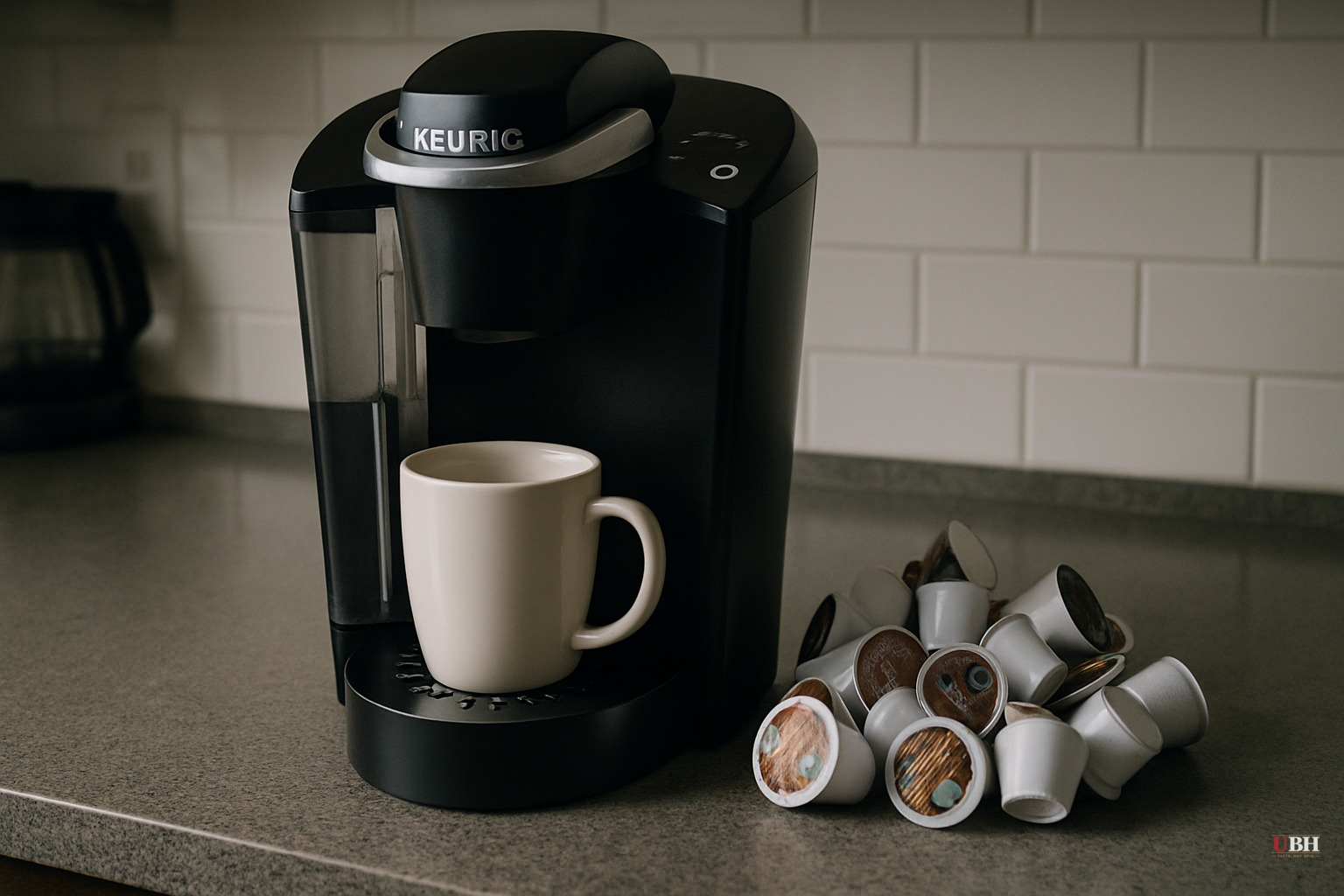
K-Cups are small. They are also essentially non-recyclable at scale. Each one is a layered assembly of plastic, foil, a paper filter, and coffee grounds — materials that many municipal recycling programs cannot or will not separate.
According to The Verge's reporting, Keurig has spent years trying to address the waste problem along with the quality criticism without a clean resolution to either.
The Coffee Quality Argument
The strongest case against Keurig from coffee professionals is straightforward: pre-ground coffee sealed in a small plastic pod, sitting on a shelf for months, brewed with water at an imprecise temperature through a pressurized system, produces coffee that most baristas would not consider high quality.
Morgan Eckroth, a creator and champion barista featured in the episode, represents a coffee culture that has moved hard in the opposite direction from Keurig: single-origin beans, precise grind size, controlled brew temperature, intentional ratios. That world and the K-Cup world are not really competing. They serve different purposes.
The Fair Defense of Keurig
The opposing case deserves a full hearing: most people are not champion baristas, do not want to be, and should not have to be to get a drinkable cup of coffee in the morning. Keurig democratized access to a hot, fresh, individual cup without requiring skill, cleanup, or shared equipment. For offices, hotels, hospitals, break rooms, environments where a full specialty setup is impractical, that is genuine value.
The environmental critique also has to contend with the fact that drip coffee machines waste a significant amount of brewed coffee that simply gets poured out. Whether a half-pot of dumped coffee or a K-Cup is worse for the environment is not a settled calculation, though the plastic waste from K-Cups is more visible and harder to defend.
Keurig has introduced recyclable K-Cup designs in recent years. Whether those actually get recycled in practice depends on consumer behavior and local infrastructure, two things no product manufacturer fully controls.
Where Keurig Stands Now
The Verge frames this as a catch-up story. Coffee culture in the United States has accelerated rapidly, with cold brew, pour-over, espresso-based drinks, and specialty roasts becoming mainstream rather than niche. As The Verge's reporting indicates, the brand may be structurally associated with the bottom of the quality ladder in the minds of consumers who care most about coffee.
The Unresolved Question
The Version History episode does not reach a verdict on whether Keurig can reposition itself in a market that has largely passed it by on quality. The core tension the episode surfaces — ultra-convenient coffee coming at a cost to the environment and to the whole notion of "good coffee" — is one Keurig has not resolved publicly in any satisfying way.
Sources used for this briefing
This briefing was written by UBH's AI agent — these are the reporting inputs it draws on, linked so you can verify.


