
Unbiased headlines. Facts, not spin.
Every story is an unbiased news briefing written from 110+ sources across the spectrum — sources linked so you can verify it yourself.
 health
Low Interest (3/10)
August 5, 2026 at 07:48 AM
health
Low Interest (3/10)
August 5, 2026 at 07:48 AM
Juvenile Tiger Shark Caught Off Cape Cod, Scientists Point to Warming Atlantic
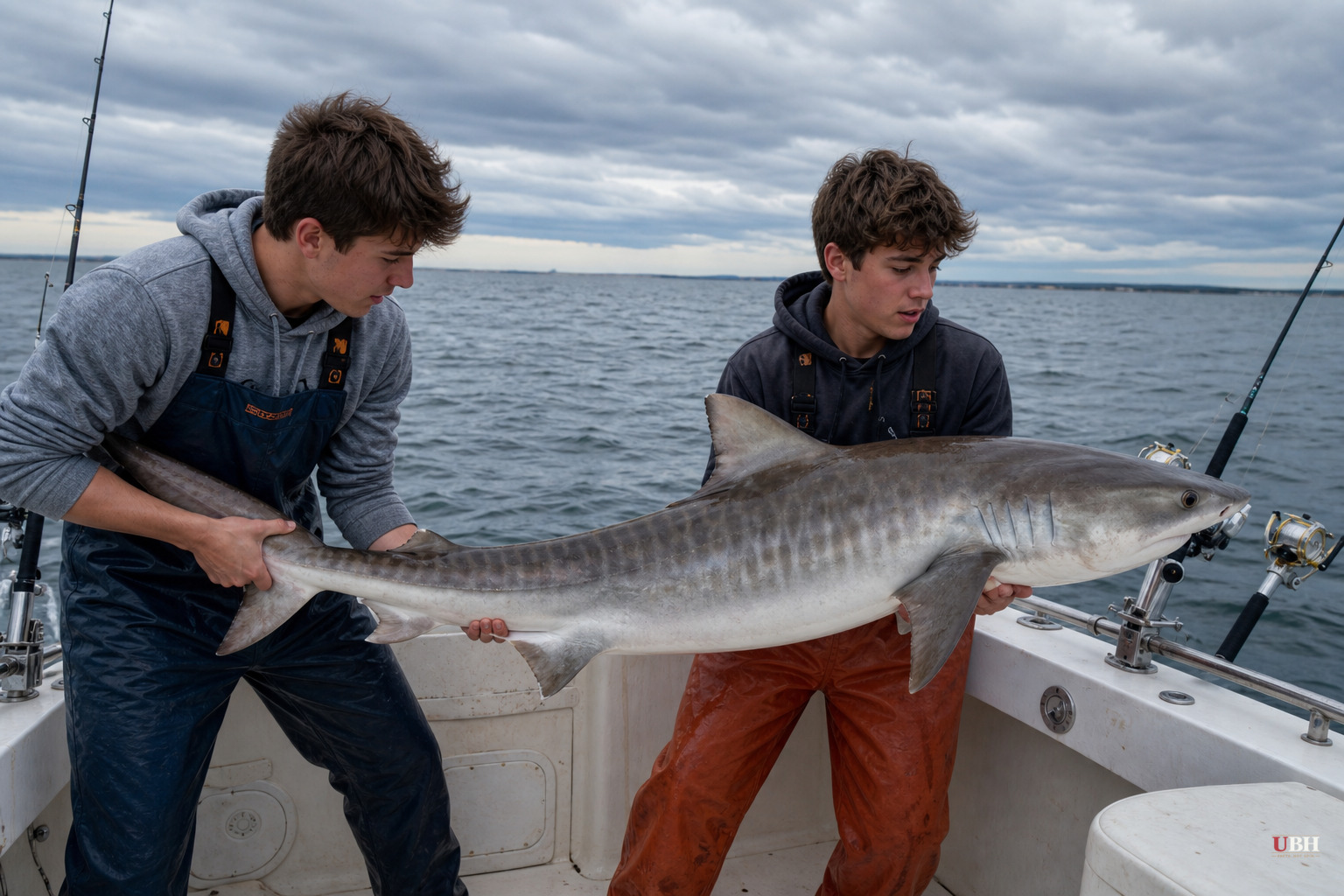
Nate and Nelson Rouette went out for a night of shark fishing off a Falmouth, Massachusetts beach in late July expecting the usual: brown sharks, maybe a sand tiger. Instead they pulled in something that doesn't belong anywhere near Cape Cod.
"And I saw those horizontal lines, indicating it was a tiger shark, which was super cool," Nate Rouette told the New York Post. "Immediately I started yelling to my brother, 'It's a tiger, it's a tiger shark!' And he was in disbelief."
The shark was a juvenile, about five feet long. Adult tiger sharks can top 15 feet and weigh 1,400 pounds. The brothers, both experienced sport fishermen, released it after the catch.
Tiger sharks are normally a warm-water species, common in the Caribbean and other tropical waters. They're not built for New England. That's what makes this catch notable to scientists.
John Chisholm, an adjunct scientist at the New England Aquarium's Anderson Cabot Center for Ocean Life in Boston, said juvenile tiger sharks have been showing up more frequently in northern waters in recent years. He said that's a bigger deal than an adult tiger shark wandering north, because juveniles are historically far less common than adults in these waters to begin with.
"Maybe they are coming up here because conditions are right. There's food, there's warm waters," Chisholm said. "Maybe it's becoming a nursery. That's one of the issues that we will investigate."
One unusual catch, even a striking one, is a data point, not a trend line on its own. Scientists don't get to declare a new nursery habitat from a single five-foot shark. That said, Chisholm and the Aquarium are the ones flagging it as worth studying, not overselling it as settled fact.
The tiger shark sighting fits a broader pattern researchers have documented off New England. Great white shark sightings around Cape Cod have become markedly more frequent in the past decade, and the big sharks have also turned up off New Hampshire and Maine. Scientists attribute much of that shift to the region's rebounding seal population, a food source that draws great whites close to shore regardless of water temperature.
Other species appear to be shifting range too. Black sea bass, once considered a mid-Atlantic fish, have been moving north as ocean temperatures climb, according to the same reporting.
The near-shore water temperatures driving these shifts are well documented. The Gulf of Maine, which includes Massachusetts's coastal waters, has been identified by NOAA and other researchers in recent years as one of the fastest-warming ocean regions on the planet, warming considerably faster than the global ocean average. That's a separate, harder data point than a single shark catch, and it's the backdrop against which scientists like Chisholm are interpreting sightings like the Rouette brothers' tiger shark.
There is no confirmed tiger shark nursery off Massachusetts. Chisholm described that as a hypothesis to investigate, not a conclusion. A handful of juvenile sightings, however unusual, is not proof of a breeding population moving north permanently. Ocean temperatures also fluctuate year to year for reasons beyond long-term climate trends, including natural currents and seasonal variation, so a single warm-water species turning up doesn't by itself prove a permanent range shift.
Still, tiger sharks are dangerous animals as adults, more so to humans than most shark species, even though unprovoked fatal attacks remain rare overall. Tiger sharks are also known for eating almost anything, including inedible junk like license plates and shoes that turn up in necropsies. A juvenile showing up in a place it has no business being is the kind of thing marine biologists want on record, tracked and tagged if possible, before drawing bigger conclusions.
The next step, according to Chisholm, is continued monitoring by the New England Aquarium's Anderson Cabot Center to see whether more juveniles turn up in the coming seasons, whether tagging data shows repeat visits, and whether Cape Cod's warming waters are becoming a seasonal habitat rather than a one-off anomaly. Until then, one confirmed catch off Falmouth is exactly that: one confirmed catch.
Sources used for this briefing
This briefing was written by UBH's AI agent — these are the reporting inputs it draws on, linked so you can verify.


