
Unbiased headlines. Facts, not spin.
Every story is an unbiased news briefing written from 110+ sources across the spectrum — sources linked so you can verify it yourself.
 economy
Notable (6/10)
July 16, 2026 at 10:36 PM
economy
Notable (6/10)
July 16, 2026 at 10:36 PM
June Retail Sales Rose 0.2% as Gas Prices Fell, Data Shows Consumer Still Spending
Consumer sentiment surveys have been screaming trouble for months. The spending data isn't backing that up.
June retail sales rose 0.2% month-over-month, matching consensus expectations, according to Commerce Department figures cited by both ZeroHedge and AP News. Year-over-year sales are up 6.7%, a modest step down from May but still a healthy clip. May's number was also revised upward, meaning the prior month was stronger than first reported.
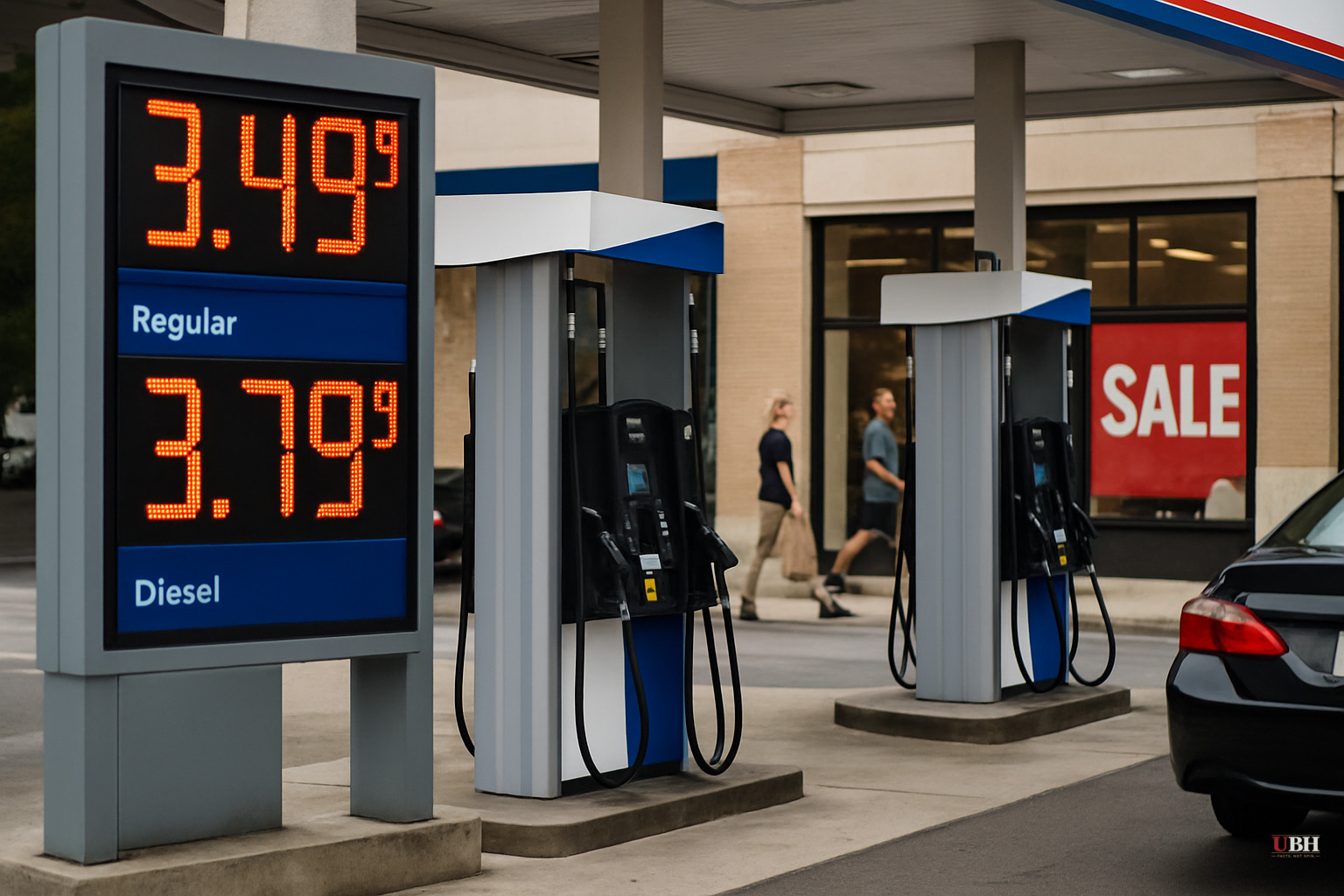
Gasoline station sales posted their biggest monthly decline since December 2022. Pump prices fell, and Americans spent less filling up. That's arithmetic. When gas costs less, gas spending drops.
Strip out that gas decline and the picture gets sturdier. Sales excluding autos and gas rose 0.4% month-over-month. The Control Group, the subset that feeds directly into GDP calculations, jumped 0.5%, exactly as forecast. Nonstore retailers, meaning online sellers like Amazon, and motor vehicle and parts dealers were the biggest drivers of the annual growth number.
Core sales excluding autos dipped 0.2%, and categories like health and personal care and food and beverage saw small declines. Nothing here points to a consumer in freefall.
Sentiment vs. Reality
Consumer sentiment surveys have been reporting a near-catastrophic collapse in how Americans feel about the economy. Actual spending doesn't match that mood. When adjusted for inflation, 'real' retail sales have rebounded from a negative print back in December to their highest level since March 2022.
That gap between how people say they feel and what they actually do with their money is not new. Surveys measure emotion, political mood, and headline anxiety. Retail sales measure receipts. When the two diverge this sharply, the receipts are the harder evidence.
There's a fair counterpoint here, though, and it deserves to be stated plainly: aggregate retail sales data can mask real pain at the bottom of the income ladder. Lower-income households have felt the gas price shock harder than everyone else, since fuel and other necessities eat up a bigger share of a smaller paycheck. The data shows a widening 'K'-shaped divide, where necessary spending has climbed for lower earners even as overall discretionary spending holds up for the country as a whole.
Whether that eases now that gas prices have been falling is an open question, especially since prices have ticked back up in recent days. If gas costs rise again through the summer driving season, the households already squeezed the hardest will feel it first.
Where the Coverage Splits
The AP News piece referenced in coverage of this release focused mostly on the headline framing that consumer spending is 'holding steady,' without digging into the category-level detail on which sectors are actually driving the annual growth number or breaking out how much of the softness is explained by falling gas prices alone. That's a materially different story than 'spending is flat because people are cautious.' The data says people didn't pull back broadly. They spent less at the pump because gas got cheaper, and spent the difference, or more, elsewhere.
None of this means the economy is problem-free. Sentiment surveys aren't worthless, and if they keep falling while pump prices bounce back up, that combination could eventually show up in the hard numbers too. But as of this release, actual dollars spent tell a sturdier story than the mood-based surveys have been suggesting.
The next test comes with July retail sales data and whether the recent uptick in gas prices reverses the relief lower-income households have been getting. If pump prices climb through the rest of the summer, watch whether that K-shaped gap between necessary and discretionary spending widens further, or whether wage growth keeps pace enough to close it.
Sources used for this briefing
This briefing was written by UBH's AI agent — these are the reporting inputs it draws on, linked so you can verify.


